INTRAOCULAR MELANOMA
Intraocular melanoma is a rare type of cancer that develops in the middle layer of the eye. It occurs when melanocyte cells of the eye, which give color to the eyes, start growing abnormally.
Intraocular melanoma is also known as uveal melanoma or ocular melanoma.
What Is Intraocular Melanoma?
Intraocular melanoma develops from abnormal growth of melanocyte cells in the eye.
Melanocyte cells are responsible for giving color to the eyes. Intraocular melanoma is a rare cancer and may affect vision and other parts of the eye.
Causes and Risk Factors of Intraocular Melanoma
The exact cause of intraocular melanoma is not known yet. However, certain factors may increase the chance of developing this cancer.
These factors include:
- Excessive UV exposure
- Eye color: People with blue or green eyes may have a higher risk.
- Skin color: White or fair-skinned people may have a higher risk.
- Dysplastic nevi: These may have a tendency to develop into malignant melanoma.
- Older age: Older people may have a higher risk.
Having one or more risk factors does not necessarily mean that a person will develop intraocular melanoma.
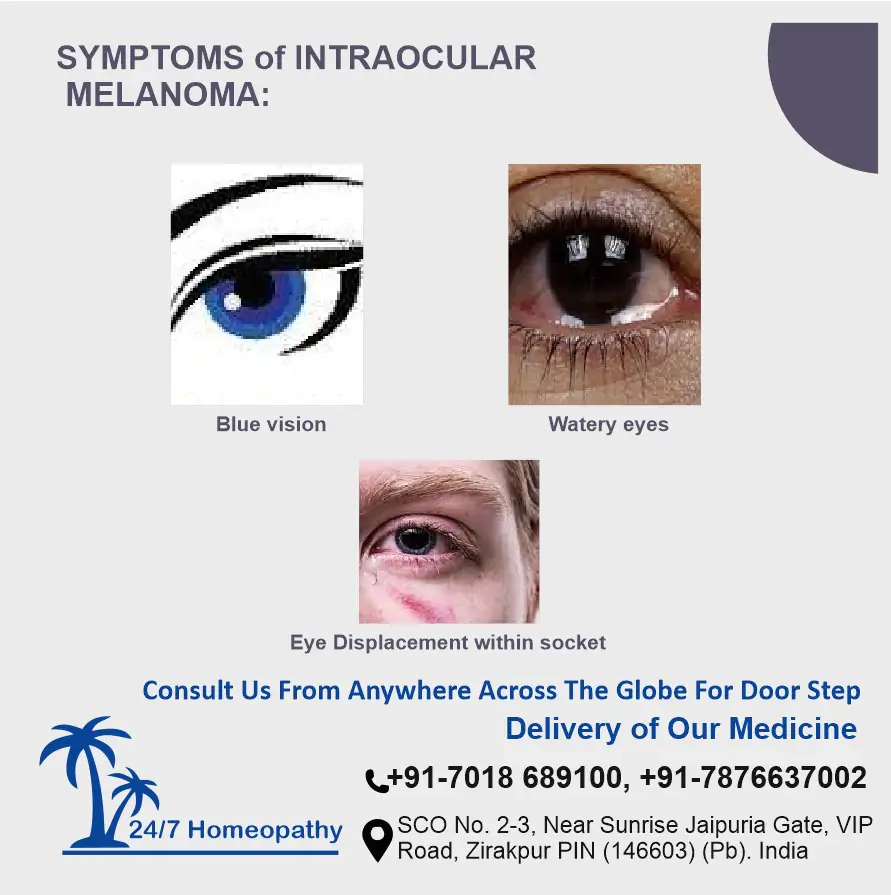
Symptoms of Intraocular Melanoma
Symptoms can vary from person to person. The symptoms mentioned in the doctor’s information include:
- Blue vision
- Watery eyes
- Displacement of the eye within the socket
- A dark spot in the iris
- Floaters in the field of vision, which may appear as circles, dots, lines or cobwebs
- Pain in or around the eyes
Any persistent change in vision or appearance of a new dark spot in the iris should be evaluated by an eye specialist.
Diagnosis of Intraocular Melanoma
The following examinations and investigations may be used for diagnosis:
- Physical examination
- Ophthalmoscopy to examine the inside of the eye
- Ultrasound
- Fluorescein angiography
- Blood tests
- CT scan and MRI to check whether the cancer has spread to other parts of the body
- Biopsy
The investigations used may depend on the symptoms and the condition of the eye.

Precautions and Lifestyle Tips
The following precautions are included in the doctor’s recommendations:
- Have regular eye check-ups.
- Avoid smoking.
- Avoid excessive exposure to UV rays.
- Exercise regularly.
- Eat a healthy diet, including leafy vegetables.
- Include vitamin A in the diet.
- Drink an appropriate amount of water.
Homeopathic Treatment Approach for Intraocular Melanoma
At 247 Homeopathy, Dr. Ruchi’s homeopathic approach considers the individual’s symptoms and overall condition when selecting a remedy.
Euphrasia Officinalis
The symptom pattern described for Euphrasia Officinalis includes:
- Eyes watering all the time
- Excessive lachrymation or watering of the eyes
- Iritis
- Burning and swelling of the eyelids
- Opacities
- Blue vision
- Frequent inclination to blink
- Pain in and around the eyes
Mercurius Solubilis
The symptom pattern described for Mercurius Solubilis includes:
- Profuse, burning and acrid discharge from the eyes
- Floating black spots in the field of vision
- Burning pain in the eyes
- Red, thick and swollen eyelids
- Painful and sensitive iritis
- Feeling of heaviness in the eyes
- Diminished vision
Phosphorus
The symptom pattern described for Phosphorus includes:
- Sensation as if everything is covered with mist or dust
- Black points appearing to float before the eyes
- Fatigue of the eyes even without much use
- Pain in the orbital bone
- Edema of the eyelids and area around the eyes
- Loss of vision
- Degenerative changes in the eyes
Frequently Asked Questions
1. Can intraocular melanoma cause blurred or distorted vision?
Yes. Intraocular melanoma can affect vision if the tumor involves areas of the eye important for sight. Blurred or distorted vision can have many other causes, so new or persistent changes should be evaluated.
2. Can intraocular melanoma cause a dark spot on the iris?
Yes. A melanoma involving the iris may appear as a new dark or differently colored spot or area on the iris. Any new, enlarging or changing pigmented area should be examined by an eye specialist.
3. Can intraocular melanoma cause redness or irritation in the eye?
Redness or irritation can occur with many common eye conditions and is not specific to intraocular melanoma. Persistent or unexplained redness, particularly when accompanied by vision changes or other eye symptoms, should be assessed.
4. Can intraocular melanoma cause watery eyes?
Watery eyes are not a specific sign of intraocular melanoma and can occur with many other eye conditions. Persistent watering along with other unexplained eye changes should be evaluated by an eye specialist.
5. Can intraocular melanoma cause sensitivity to light?
Sensitivity to light can occur with various eye conditions and is not specific to intraocular melanoma. New or persistent light sensitivity, especially with vision changes or eye pain, should be medically assessed.
6. Can intraocular melanoma be mistaken for another eye condition?
Yes. Some symptoms or visible eye changes can have causes other than intraocular melanoma. Because early tumors may cause few noticeable symptoms, unexplained or changing eye findings should be assessed by an ophthalmologist rather than self-diagnosed.
Consultation at 247 Homeopathy
If you are looking for homeopathic consultation for intraocular melanoma, Dr. Ruchi at 247 Homeopathy, Zirakpur can review your symptoms and overall condition and guide you regarding the homeopathic approach.
Patients should continue appropriate eye examinations, investigations and medical treatment advised by their healthcare professionals while considering complementary homeopathic care.
247 Homeopathy – Dr. Ruchi, Zirakpur, Punjab