Shoulder Pain
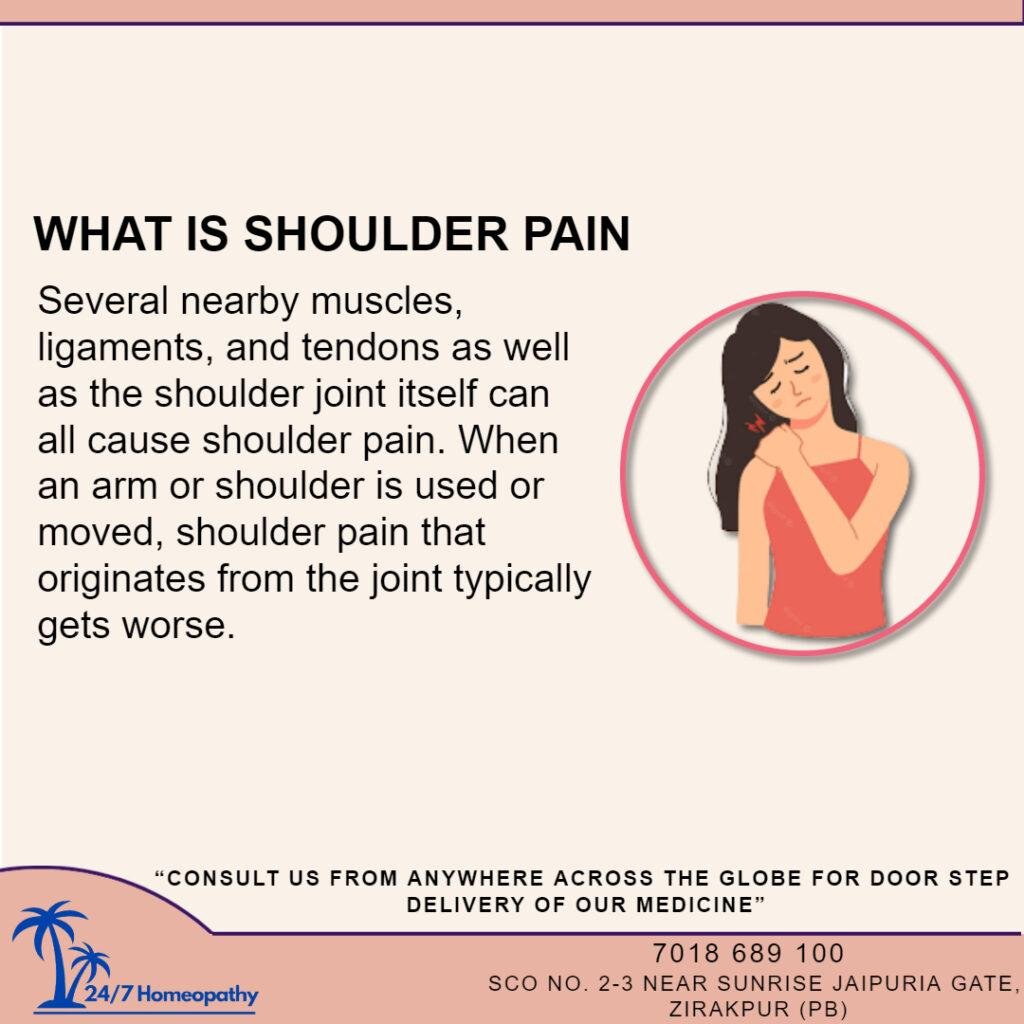
Several nearby muscles, ligaments, and tendons, as well as the shoulder joint itself, can cause shoulder pain. When shoulder pain originates from the joint, it typically gets worse when the arm or shoulder is used or moved.
Shoulder pain is one of the common musculoskeletal problems. Sometimes, shoulder pain may be confused with pain arising from other medical conditions, such as liver or heart disease or conditions affecting the cervical spine. Pain that originates from another structure or area of the body is called referred pain.
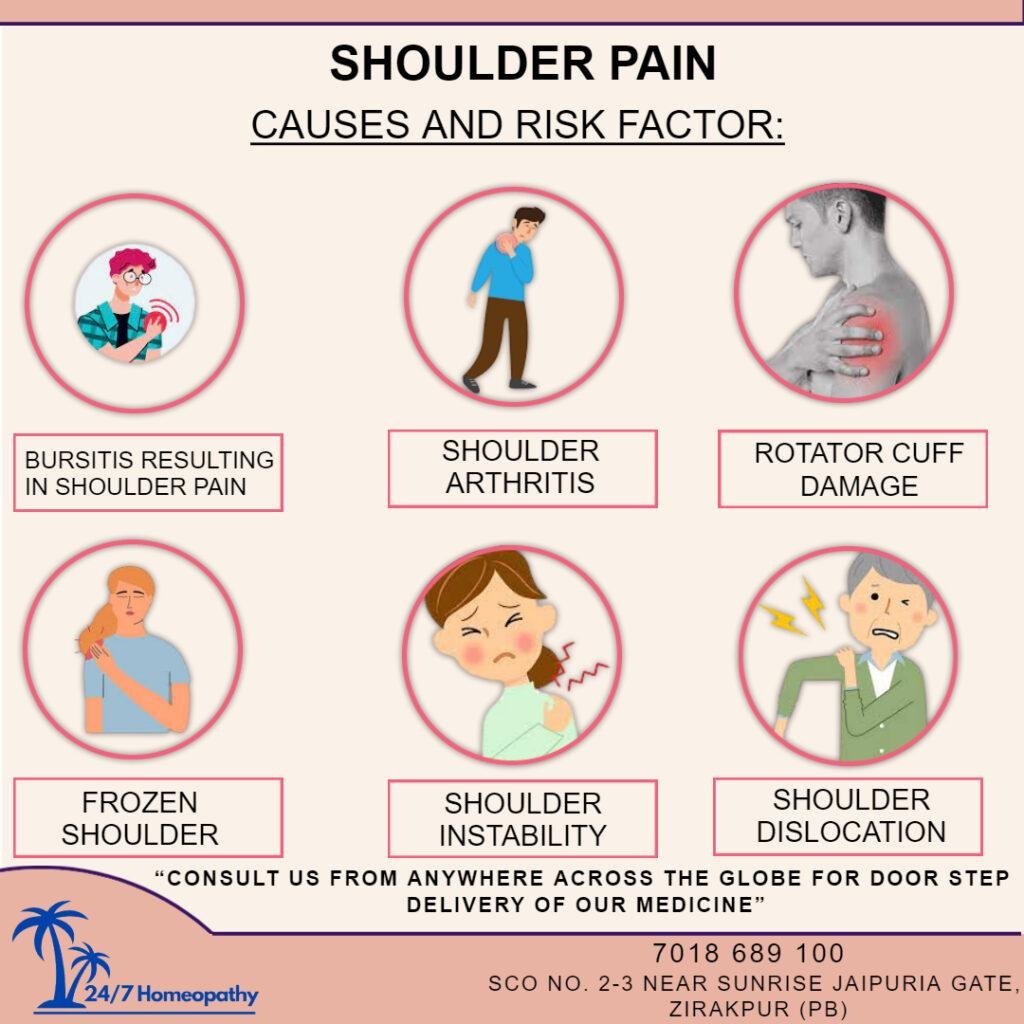
Causes of Shoulder Pain
Some common causes of shoulder pain include:
- Bursitis: Bursitis is one of the common causes of shoulder pain. It is inflammation of the fluid-filled sac called a bursa, which lies between a tendon and the skin or between a tendon and bone.
- Shoulder Arthritis: Arthritis can affect different joints of the body and may also cause shoulder pain.
- Rotator Cuff Damage: Injury or damage to the rotator cuff can cause pain and difficulty moving the shoulder.
- Sports Injury: Shoulder pain may occur following a sports-related injury.
- Frozen Shoulder: This condition causes pain and stiffness of the shoulder joint and may restrict movement.
- Calcific Tendinitis: Calcium deposits within the tendons can cause pain in the shoulder.
- Shoulder Instability: Trauma may cause loosening or instability of the shoulder joint.
- Shoulder Dislocation: This occurs when the top of the humerus becomes displaced from its normal position in the shoulder joint.
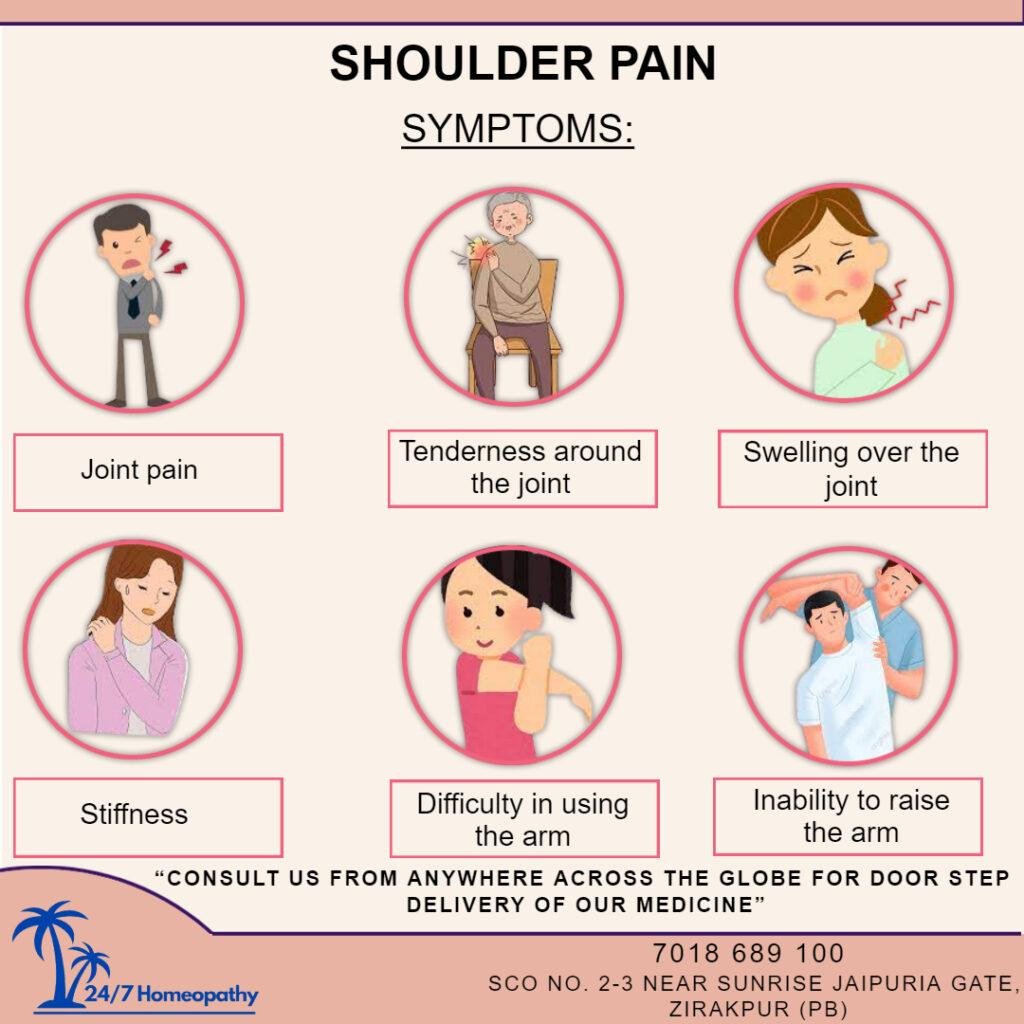
Shoulder Pain Signs and Symptoms
Common signs and symptoms of shoulder pain include:
- Joint pain.
- Tenderness around the joint.
- Aching during movement of the joint.
- Swelling around the joint.
- Stiffness.
- Difficulty using the arm.
- Trauma causing deformity of the joint.
- Shoulder pain even at rest.
- Persistent shoulder pain.
- Inability to raise the arm.
- Bruising around the shoulder joint.
- Signs of infection such as fever and redness.
- Weakness.
Investigations for Shoulder Pain
Depending on the symptoms and suspected cause, investigations may include:
- X-ray
- Arthrogram
- MRI
Prevention and Self-Care for Shoulder Pain
Poor posture or working habits, such as slouching at a desk, can make shoulder problems worse.
- When sitting, avoid leaning forward or resting too much on your arms.
- Try to keep your shoulders relaxed.
- Sit in an upright position.
- Change your position regularly.
- When lying down, lying on the unaffected side with appropriate pillow support may help provide comfort.
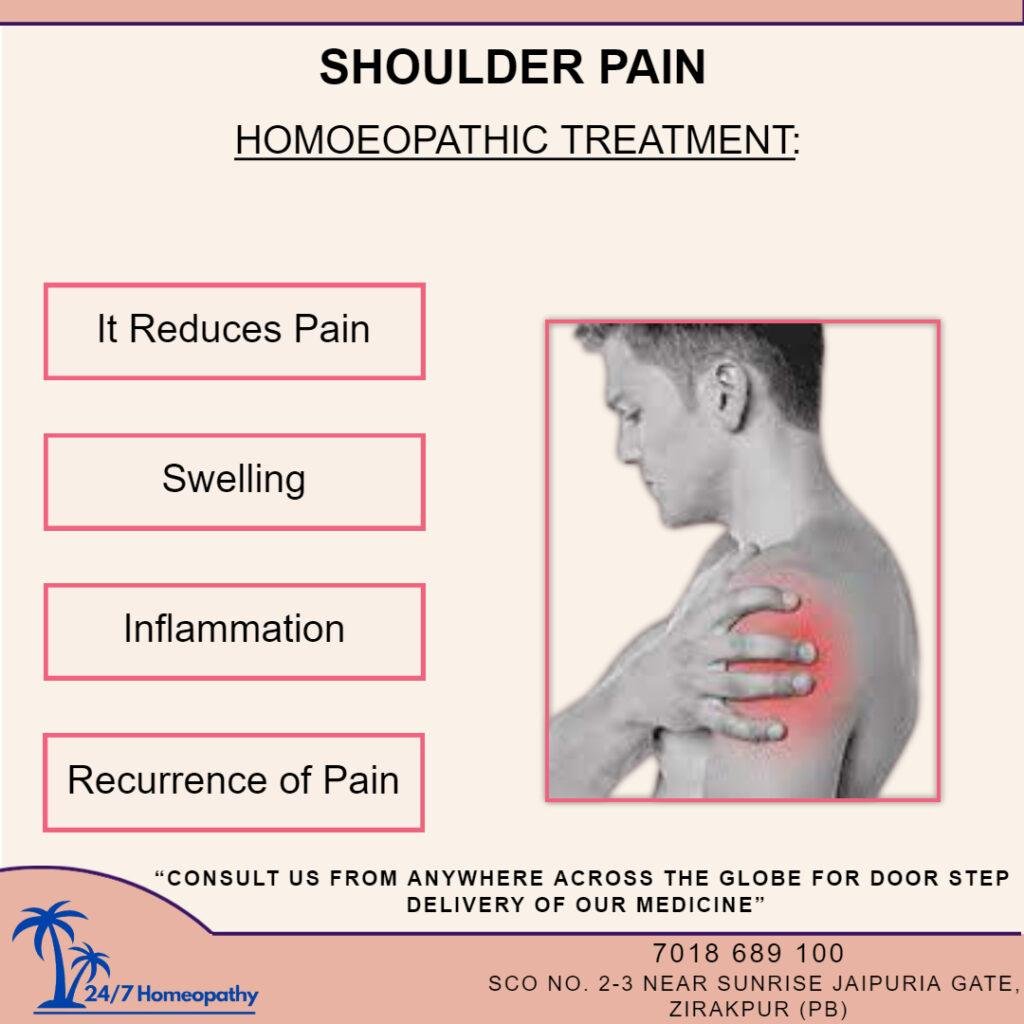
Shoulder Pain Homeopathic Medicine and Treatment in Zirakpur
At 247 Homeopathy, homeopathic medicines are selected according to the individual’s symptoms and overall condition. The following medicines are retained from the doctor’s original content.
1. Belladonna
- Bursitis with a feeling of warmth and trembling, along with severe pain.
- The affected area may become red and swollen.
2. Arnica Montana
It may be considered when shoulder bursitis or pain is associated with trauma or overexertion.
- Numbness of the arms.
- Pain in the back of the arms.
- Sensitivity to touch.
- Soreness of the shoulder after overexertion.
- Sensation of dislocation or sprain in the shoulder.
3. Kalmia
- Pain that starts in the shoulder and spreads downward.
- Bursitis of the right shoulder.
- Pain that increases with movement.
- Pain that gets worse at night and in the morning.
4. Rhus Tox
- Pain may be tearing, shooting, stitching, or burning in nature.
- Stiffness, swelling, and cracking in the shoulder joint.
- Shoulder pain that is worse at rest and better with movement.
- Complaints associated with overstraining or overstressing of muscles or tendons.
- Inflamed tendons and joint inflammation.
5. Bryonia
- Pain that gets worse with the slightest movement.
- Rest may help ease the pain.
- The shoulder may appear shiny, red, and swollen.
- A sensation of tightness in the shoulder.
- Pain that starts in the shoulder and extends down the arm.
- May be considered when shoulder pain is associated with an inflamed joint.


