Increased Uric acid
Uric acid is a waste product produced by the body when it breaks down purines. Normally, uric acid is removed from the blood by the kidneys and passed out of the body through urine.
When the body produces too much uric acid or does not remove enough of it, uric acid can build up in the blood. This condition is called hyperuricemia.
High uric acid levels can increase the risk of gout, a form of arthritis, and uric acid may accumulate in joints and tissues.
What Is High Uric Acid?
Uric acid is normally present in the blood. However, when its level becomes higher than the healthy range, it can contribute to health problems.
Some people with high uric acid may not have noticeable symptoms. Symptoms may appear when elevated uric acid persists and contributes to problems such as gout or urinary complications.
Low uric acid levels are less common.
How Does Uric Acid Build Up in the Body?
Purines are chemical substances that occur naturally in the body and are also found in some foods.
When the body breaks down purines, uric acid is produced as a waste product. The kidneys normally remove uric acid from the blood and expel it through urine.
High uric acid can occur when:
- The body produces too much uric acid.
- The body does not excrete enough uric acid.
This can result in hyperuricemia, or an increased level of uric acid in the blood.

Causes of High Uric Acid
High uric acid levels can have different causes, and the reason may not always be obvious.
The doctor’s information mentions hereditary and environmental factors as possible contributors, along with diet and overall health.
Risk Factors for High Uric Acid
Risk factors mentioned include:
- Metabolic syndrome
- Alcohol consumption
- Hypertension
- Diabetes
- A high-purine diet
- Use of diuretics
Having one or more risk factors does not necessarily mean that a person will develop gout or other problems related to high uric acid.

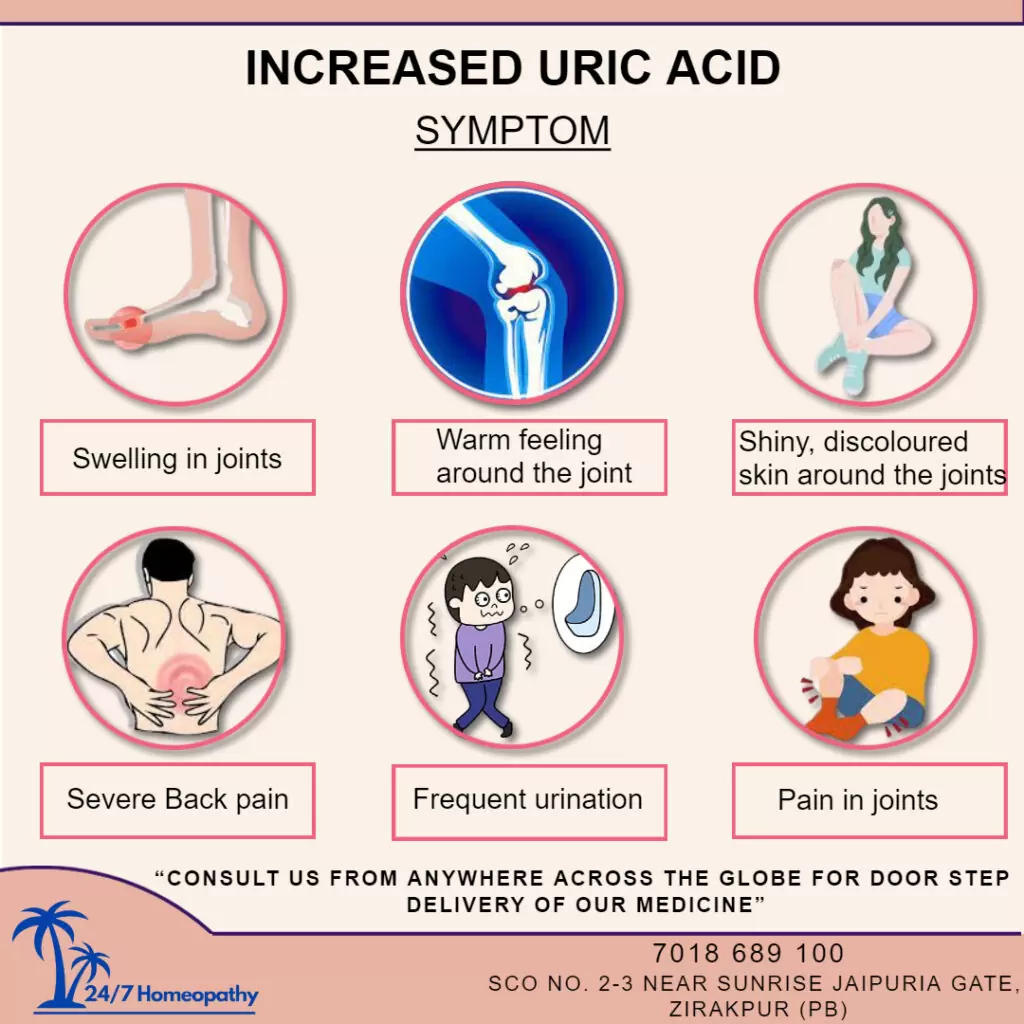
Symptoms of High Uric Acid
A person with high uric acid may not always have symptoms. Symptoms may become noticeable when elevated uric acid levels persist or contribute to health problems.
Symptoms mentioned in the doctor’s information include:
- Swelling in the joints
- Warmth around the affected joint
- Shiny or discoloured skin around the joints
- Severe back pain
- Frequent urination
- Nausea and vomiting
- Cloudy or unusually smelling urine, sometimes with blood
- Joint pain
When uric acid contributes to gout, joint pain and swelling may become particularly troublesome.
Prevention and Lifestyle Tips
Managing high uric acid may require a long-term approach. Depending on the individual’s condition, medical treatment may be recommended to help control uric acid levels and reduce gout flares.
The following lifestyle measures are included in the doctor’s recommendations:
Maintain a Healthy Weight
If weight loss is required, gradual weight management may help as part of an overall health plan.
Watch Your Diet
Pay attention to foods and drinks that may contribute to high uric acid levels. The doctor’s information recommends limiting:
- High-fructose corn syrup
- Organ meats
- Red meat
- Certain fish
- Alcohol-containing beverages
Follow Your Treatment Plan
People with persistent high uric acid or gout may require long-term medical management. Do not stop prescribed medicines without discussing this with your doctor.
Stay Physically Active
Regular physical activity can be included as part of a healthy lifestyle, according to your individual health condition.

Homeopathic Treatment Approach for High Uric Acid
At 247 Homeopathy, Dr. Ruchi’s homeopathic approach considers the individual’s symptoms and overall condition when selecting a remedy.
The following remedies are included in the doctor’s existing homeopathic treatment section for the symptom patterns described below.
Colchicum
Colchicum is described in the doctor’s homeopathic approach for raised uric acid levels, particularly when high uric acid is associated with gout.
The symptom pattern includes:
- Sharp pain in the great toe
- Red, swollen and very hot affected joints
- Extreme sensitivity to touch because of severe pain
Ledum Palustre
Ledum Palustre is described for cases of high uric acid with a particular pain pattern.
The symptoms mentioned include:
- Pain that shifts from downward to upward
- Feeling chilly while not wanting to be covered
- Pain that is relieved by cold
- An initial attack of pain after consuming meat and alcohol
Guaiacum
Guaiacum is described in the doctor’s content for chronic cases where deformities and contractures develop.
The symptom pattern includes:
- Intolerance of heat
- Rheumatic pain in the hands, arms and shoulders
- Gouty pains described as tearing or lancinating
- Pain worse from movement
- Symptoms affected by heat, cold and wet weather
- Pain aggravated by touch or pressure
- Symptoms occurring particularly in the evening and night
Lithium Carb
Lithium Carb is described for raised uric acid associated with stiffness throughout the body.
The symptom pattern includes:
- Unusual stiffness throughout the body
- Pain relieved by pouring hot water
- Uric acid deposits in joint spaces
- Nodules that may be felt externally
- Nodes that may occur around the finger joints or, in severe cases, the ear pinna
Benzoic Acid
Benzoic Acid is described particularly when urinary symptoms are prominent.
The symptom pattern includes:
- Urinary symptoms associated with high uric acid
- Uric acid crystal deposits in the kidneys or urinary tract
- Possible urinary stones
- High levels of uric acid in urine
- Joint complaints
The choice of a homeopathic remedy should be individualized according to the person’s complete symptom picture and should not be based on uric acid levels alone.
Frequently Asked Questions
1. Can high uric acid cause joint swelling?
High uric acid itself may not cause swelling, but uric acid crystals can build up in a joint and trigger gout. This may cause sudden swelling, warmth, redness and significant pain.
2. Can high uric acid cause pain at night?
High uric acid does not usually cause pain by itself. However, a gout attack caused by uric acid crystals can cause sudden and severe joint pain, which may begin at night.
3. Can high uric acid cause pain in the big toe?
Yes. Uric acid crystals can trigger gout in the big toe, causing sudden, intense pain, swelling, warmth and tenderness. Big-toe pain can also have other causes and should be evaluated if persistent or severe.
4. Can high uric acid cause frequent urination?
High uric acid is not usually a direct cause of frequent urination. Frequent urination can have many causes, including urinary conditions, diabetes and increased fluid intake, so persistent symptoms should be assessed.
5. Can high uric acid cause nausea or vomiting?
High uric acid itself does not typically cause nausea or vomiting. These symptoms may occur when an associated condition, such as a kidney stone, causes significant pain or discomfort. Persistent vomiting should be medically evaluated.
6. Can high uric acid cause back or side pain?
High uric acid itself does not usually cause back or side pain. However, uric acid kidney stones can cause severe pain in the side or back. Sudden or severe pain, particularly with blood in the urine or difficulty urinating, requires medical evaluation.
Consultation at 247 Homeopathy
If you are looking for homeopathic management for high uric acid, Dr. Ruchi at 247 Homeopathy, Zirakpur can review your symptoms, lifestyle and overall health and guide you regarding an individualized homeopathic approach.
247 Homeopathy provides consultations at its Zirakpur clinic as well as online, making consultation accessible to patients from different locations.
Homeopathic care should be considered complementary to appropriate medical evaluation and treatment, particularly when high uric acid is associated with gout or urinary problems.
247 Homeopathy – Dr. Ruchi, Zirakpur, Punjab