Lower Back Pain
Lower back pain is a very common problem that can affect people of different ages. It may occur due to strain or injury to the muscles, tendons or other structures of the back.
Lower back pain may also be associated with arthritis, structural problems of the spine, disc discomfort or disc injuries. The pain can be mild or severe and may develop suddenly or gradually.
Regular physical activity, maintaining a healthy weight and taking appropriate care of the back can help support overall back health.
At 247 Homeopathy, Zirakpur, Dr. Ruchi provides individualized homeopathic consultation based on the patient’s symptoms and overall health. Consultation is available both in person and online for patients from nearby areas and worldwide.
What Is Lower Back Pain?
Lower back pain refers to pain or discomfort affecting the lower portion of the back.
It may occur after a particular movement or activity, such as bending down to pick something up, lifting something heavy or making a sudden movement. In some cases, the exact cause may not be immediately known.
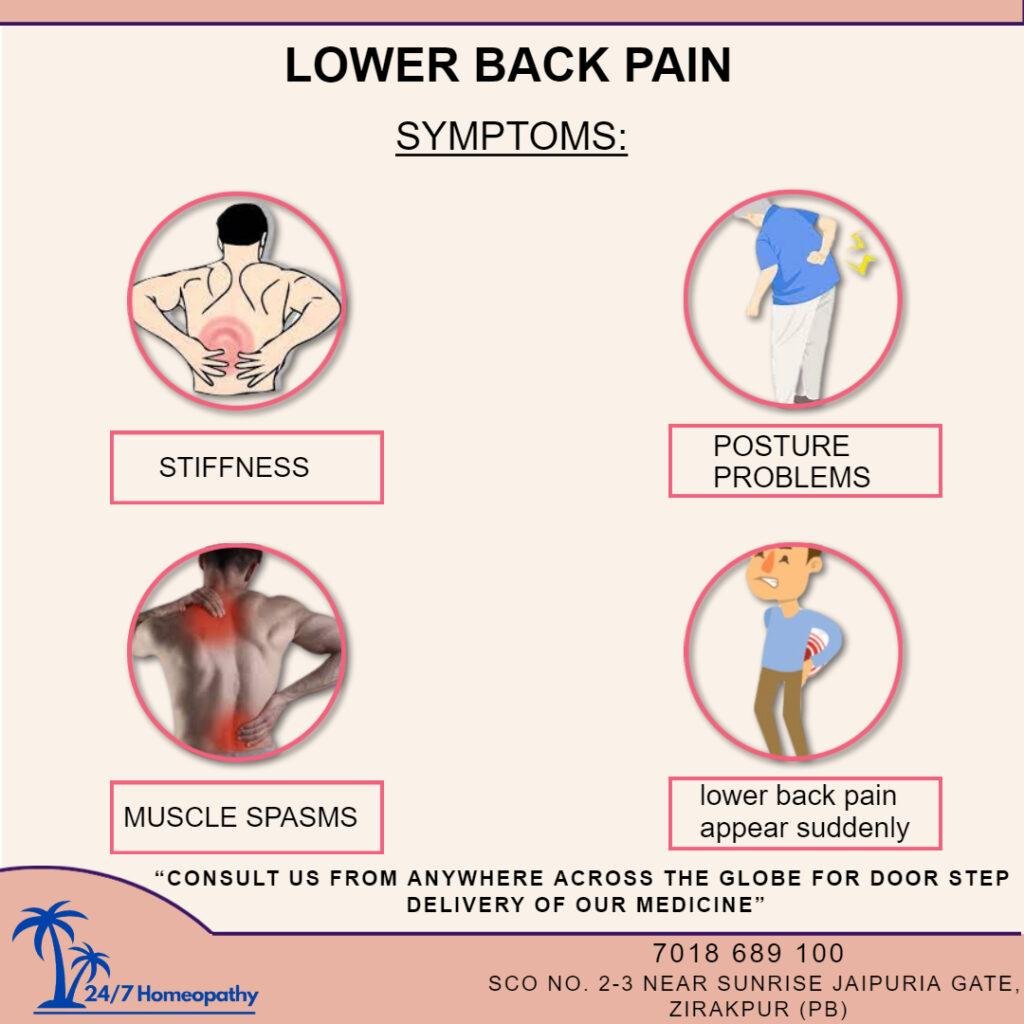
Depending on the cause, lower back pain may be associated with stiffness, muscle spasms, difficulty standing straight or difficulty moving comfortably.
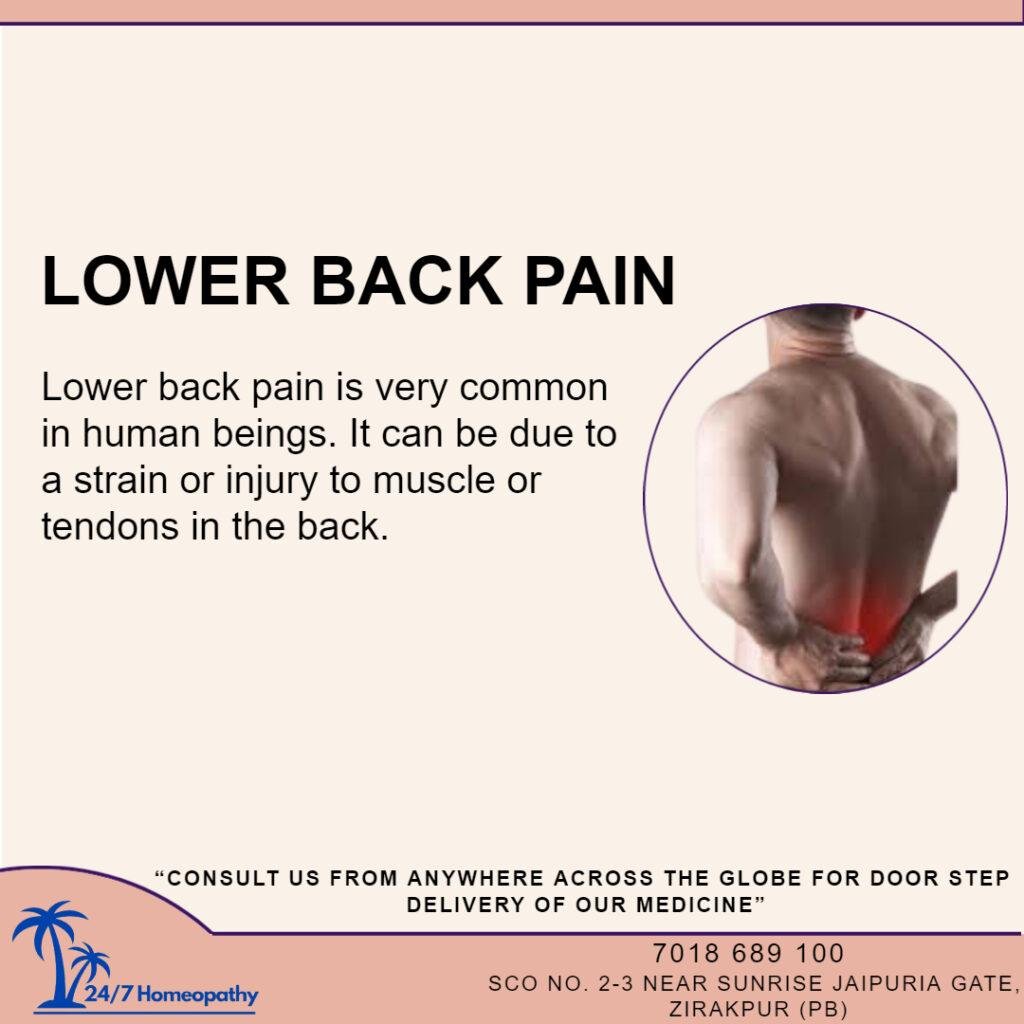
Lower back pain is a very common problem that can affect people of different ages. It may occur due to strain or injury to the muscles, tendons or other structures of the back.
Lower back pain may also be associated with arthritis, structural problems of the spine, disc discomfort or disc injuries. The pain can be mild or severe and may develop suddenly or gradually.
Regular physical activity, maintaining a healthy weight and taking appropriate care of the back can help support overall back health.
At 247 Homeopathy, Zirakpur, Dr. Ruchi provides individualized homeopathic consultation based on the patient’s symptoms and overall health. Consultation is available both in person and online for patients from nearby areas and worldwide.
What Is Lower Back Pain?
Lower back pain refers to pain or discomfort affecting the lower portion of the back.
It may occur after a particular movement or activity, such as bending down to pick something up, lifting something heavy or making a sudden movement. In some cases, the exact cause may not be immediately known.
Depending on the cause, lower back pain may be associated with stiffness, muscle spasms, difficulty standing straight or difficulty moving comfortably...
Causes of Lower Back Pain
There are several possible causes of lower back pain.
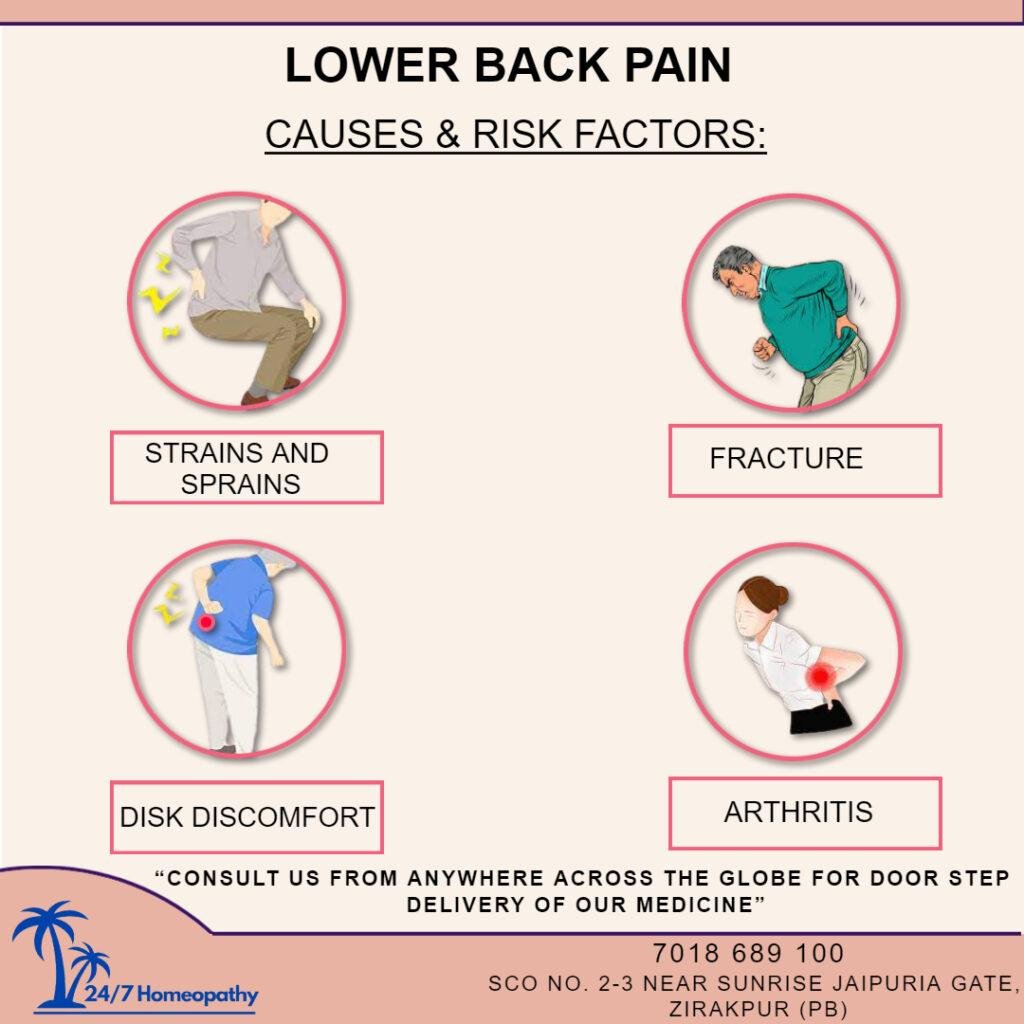
Strains and Sprains
Strains and sprains are common causes of back pain. Lifting something too heavy or using an improper lifting technique can injure muscles, tendons or ligaments in the back.
Fracture
A spinal fracture can occur after an accident, such as a car crash or a fall. Certain conditions that weaken the bones can also increase the risk of fractures.
Disc Problems
Discs act as cushions between the vertebrae. A disc may swell, bulge or become herniated and put pressure on a nearby nerve. Disc changes may also occur with age.
Structural Problems
Structural problems of the spine can contribute to back pain. For example, spinal stenosis occurs when the space within the spine becomes narrowed and may put pressure on nerves or the spinal cord.
Arthritis
Osteoarthritis can contribute to back pain. Conditions such as ankylosing spondylitis can also cause inflammation and pain affecting the spine.
Other Causes
Lower back pain can have many possible causes. Persistent or severe pain should be evaluated to identify the underlying problem.
Risk Factors for Lower Back Pain
Factors that may contribute to lower back pain include:
- Excess body weight
- Lack of physical activity
- Poor lifting technique
- Muscle weakness
- Previous back injury
- Age-related changes in the spine
- Certain forms of arthritis
- Prolonged sitting or physical strain
Prevention and Lifestyle Tips
Some simple measures can help reduce unnecessary strain on the lower back.
Maintain a Healthy Weight
Excess weight can place additional pressure on the spine and discs. Maintaining a healthy weight can help reduce this strain.
Strengthen the Abdominal Muscles
Exercises such as Pilates and other appropriate strengthening exercises can help strengthen the muscles that support the spine.
Use the Right Lifting Technique
When lifting heavy objects:
- Lift using your legs rather than your back.
- Keep heavy objects close to your body.
- Avoid twisting your torso while lifting.
- Avoid lifting objects that are too heavy for you.
Stay Physically Active
Regular appropriate physical activity can help maintain strength, flexibility and mobility of the back.
When Should You Seek Medical Attention?
Lower back pain can have many causes, and some require medical evaluation.
Seek medical attention if your pain is severe, persistent, follows a significant injury, or is accompanied by concerning symptoms such as:
- New weakness or numbness in the legs
- Loss of bladder or bowel control
- Numbness around the groin or inner thighs
- Fever
- Unexplained weight loss
- Severe pain after a fall or accident
- Pain that continues to worsen
If you have a known serious medical condition and develop new or unexplained back pain, appropriate medical evaluation is important.
Homeopathic Treatment for Lower Back Pain
At 247 Homeopathy, Zirakpur, Dr. Ruchi follows an individualized homeopathic approach for lower back pain.
The following remedies are included in Dr. Ruchi’s original homeopathic treatment section:
Aesculus
Aesculus is considered for pain in the very low back, particularly around the sacral or sacroiliac region.
The symptom pattern described includes:
- Pain that is worse when standing up from a sitting position
- Pain aggravated by stooping
- Pain that may be associated with the sacral region
- A tendency towards venous congestion and haemorrhoids
Bryonia Alba
Bryonia Alba is included for back pain with the following symptom pattern:
- Pain that becomes worse with even slight movement
- Pain aggravated by changing position
- Pain aggravated by coughing, turning or walking
- Sharp or severe pain
- Backache following an injury
- Back pain occurring during illness
Calcarea Phosphorica
Calcarea Phosphorica is included for:
- Stiffness and soreness of spinal muscles and joints
- Complaints involving the neck and upper back
- Symptoms aggravated by drafts and cold
- Symptoms aggravated by exertion
- Aching bones
- Feelings of weariness
Natrum Muriaticum
The symptom pattern described for Natrum Muriaticum includes:
- Back pain that improves when lying on something hard
- Relief from pressure against a hard surface
- Back pain associated in the original content with suppressed emotions, particularly hurt or anger
Rhus Tox
Rhus Tox is included for pain affecting the joints, neck, shoulders and lower back.
The symptom pattern described includes:
- Pain that is worse with the initial movement
- Improvement with continued movement
- Difficulty remaining still for a long time
- Restlessness despite pain
- A tendency to move or pace because remaining still is uncomfortable
Frequently Asked Questions About Lower Back Pain
1. Can lower back pain spread to the buttocks or legs?
Yes. Lower back pain may sometimes extend into the buttocks or legs, particularly when a nearby nerve is irritated or compressed.
2. Can lower back pain cause numbness or tingling in the legs?
Yes. Numbness or tingling in the legs can occur when a nerve in the lower back is irritated or compressed. New, severe or worsening numbness should be medically evaluated.
3. Can lower back pain get worse after sitting for a long time?
Yes. Sitting for prolonged periods can aggravate lower back pain in some people. Changing position regularly and staying gently active may help, depending on the cause of the pain.
4. Can lower back pain make it difficult to bend?
Yes. Pain, stiffness or muscle spasms can make bending forward or backward uncomfortable or difficult. Persistent or worsening difficulty with movement should be assessed by a healthcare professional.
5. Can lower back pain cause muscle spasms?
Yes. Muscle spasms can occur along with some types of lower back pain and may cause sudden tightening, stiffness or difficulty moving normally.
6. Can lower back pain improve without treatment?
Yes. Some episodes of lower back pain, particularly those caused by minor strain, may improve with time. However, pain that persists, keeps returning or becomes worse should be evaluated to determine the underlying cause.
Consultation at 247 Homeopathy, Zirakpur
If you are experiencing lower back pain and are looking for an individualized homeopathic consultation, you can consult Dr. Ruchi at 247 Homeopathy, Zirakpur, Punjab.
The clinic serves patients from Zirakpur and nearby areas, including Chandigarh, Panchkula, Mohali and surrounding regions. Online consultations are also available for patients from other parts of India and worldwide.
During consultation, Dr. Ruchi can review your symptoms, the nature and pattern of your pain, relevant health history and available medical information to determine an individualized homeopathic approach.
For severe, persistent or unexplained lower back pain, appropriate medical evaluation is important.
Contact 247 Homeopathy to enquire about a consultation with Dr. Ruchi.


