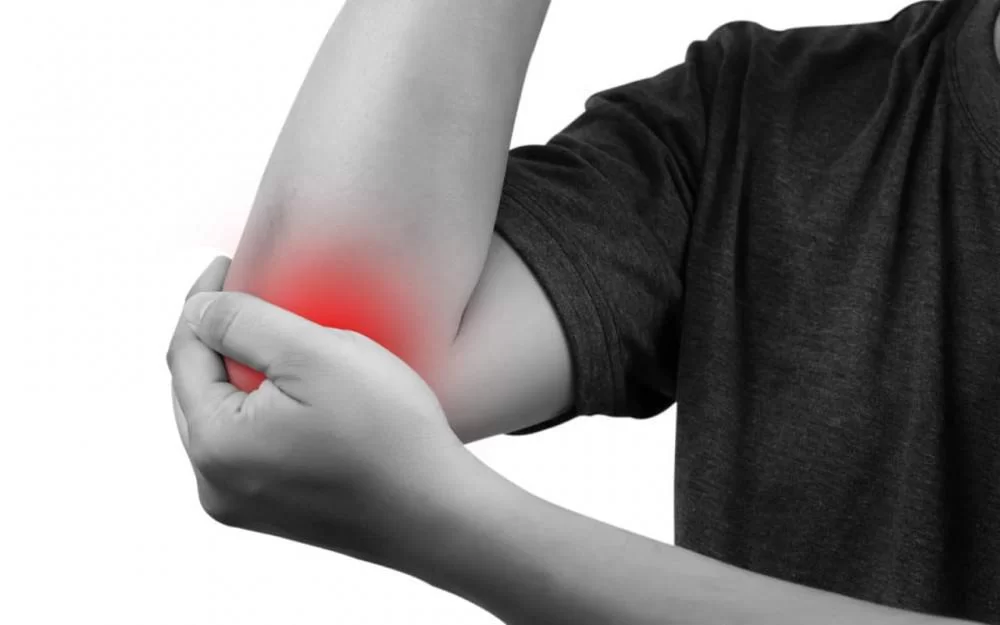
Golfers Elbow
Golfer’s elbow, medically known as medial epicondylitis, is a condition that causes pain around the inner side of the elbow. It commonly develops when the tendons that attach the forearm muscles to the inside of the elbow are repeatedly overloaded.
Despite its name, Golfer’s elbow is not limited to golfers. It can affect anyone who repeatedly uses the wrist, forearm or elbow, including athletes and people whose work involves repetitive hand movements.
The pain may become more noticeable while gripping, bending the wrist or performing activities that put stress on the forearm.
What Is Golfer’s Elbow?
Golfer’s elbow involves irritation and degeneration of the tendons connected to the medial epicondyle, the bony prominence on the inner side of the elbow.
The forearm muscles involved in gripping and moving the wrist can become overloaded through repeated activity. Over time, this may cause tendon-related pain and reduced strength or movement.
Golfer’s elbow is also called medial epicondylitis.
Causes of Golfer’s Elbow
The condition commonly develops due to repeated stress on the wrist, forearm and elbow.
Repetitive Movements
Repeated movements of the wrist, forearm and elbow can place excessive stress on the muscles and tendons around the inner elbow.
Sports
Sports and activities involving repeated wrist and forearm movements may increase the risk, including:
- Golf
- Tennis
- Baseball
- Weightlifting
- Other racquet or throwing sports
Other Musculoskeletal Conditions
The risk of elbow or forearm pain may also be influenced by other conditions, including:
- Carpal tunnel syndrome
- Lateral epicondylitis
- Rotator cuff tendinitis
Risk Factors
Certain activities and lifestyle factors may increase the likelihood of developing Golfer’s elbow.
These include:
- Age, particularly over 40 years
- Repetitive wrist and forearm movements
- Repeated activity for prolonged periods
- Smoking
- Obesity
- Sports involving repetitive arm movements
- Occupations requiring repetitive hand and arm movements
People working as butchers, plumbers, construction workers, cooks and painters may be exposed to repetitive movements that place stress on the elbow.
Regular computer use may also contribute to repetitive strain, particularly when combined with poor ergonomics or prolonged static positioning.
Golfer’s elbow can affect both men and women.
Symptoms of Golfer’s Elbow
The symptoms generally develop around the inner side of the elbow and forearm.
Common symptoms include:
- Pain around the medial epicondyle or inner elbow
- Pain that increases with certain wrist or forearm movements
- Pain while gripping or using the hand
- Stiffness of the elbow or forearm
- Weakness of the hand or forearm
- Tingling or numbness in the forearm or hand
Pain may become more noticeable during activities involving the wrist, fingers or forearm.
Persistent numbness or tingling should be evaluated because nerve compression or another condition may sometimes produce similar symptoms.
Diagnosis of Golfer’s Elbow
Diagnosis usually begins with a physical examination of the elbow, wrist and forearm.
The doctor may ask about:
- Where the pain occurs
- Which activities make it worse
- Sports or occupational activities
- Previous injuries
- Weakness, numbness or tingling
During examination, the patient may be asked to position the forearm with the palm facing upward while resistance is applied to wrist or forearm movement. Pain reproduced around the inner elbow may support the diagnosis of medial epicondylitis.
Imaging Tests
Depending on the symptoms, medical history and examination, imaging may be considered to rule out other causes of elbow pain.
These can include:
- X-ray
- MRI
- CT scan in selected situations
Precautions and Management
The aim of management is to reduce stress on the affected tendon while maintaining appropriate movement.
Apply Ice
An ice pack may be applied to the painful area for short periods to help with discomfort after aggravating activity.
Stretch the Forearm
Gentle forearm stretching may help maintain flexibility. Exercises should be performed appropriately and should not significantly increase pain.
Stretch the Wrist and Fingers
Gentle wrist and finger stretches can be incorporated into a rehabilitation routine.
Maintain Correct Posture
Maintain proper posture and technique during sports, exercise and work-related activities.
Warm Up Before Activity
Perform appropriate stretching and warm-up exercises before sports or strenuous activity.
Take Rest Between Activities
Allow adequate recovery time between exercises or repetitive activities.
Avoid Activities That Trigger Pain
If a particular movement causes significant pain, reduce or temporarily stop that activity and seek appropriate advice.
Homeopathic Management of Golfer’s Elbow
At 247 Homeopathy, Zirakpur, Dr. Ruchi follows an individualized homeopathic approach based on the patient’s symptoms, the nature of the pain and the circumstances in which the elbow problem developed.
The following medicines are included in Dr. Ruchi’s original homeopathic management section:
1. Causticum
Causticum is traditionally considered when there are recurrent or persistent pains in the arms and fingers.
The symptom picture described includes:
- Drawing pain in the arms and joints
- Bruised sensation
- Recurrent pain
- Pain that may improve with warm applications
2. Plumbum Metallicum
Plumbum Metallicum is traditionally considered when weakness and altered sensation in the hands and fingers are prominent.
The symptoms described include:
- Weakness of the hands and fingers
- Difficulty holding objects
- Trembling of the hands
- Numbness
- Tingling sensations
3. Ruta
Ruta is traditionally considered when elbow or wrist symptoms are associated with overstraining or repetitive use.
The symptom picture described includes:
- Pain in the wrist and hand
- Elbow discomfort
- Symptoms following overuse
- Tendon and muscle strain
4. Rhus Toxicodendron
Rhus Toxicodendron is traditionally considered when elbow discomfort is associated with overstraining of muscles and tendons.
The symptom picture described includes:
- Pain following overuse
- Stiffness of the inner forearm
- Muscle and tendon discomfort
Frequently Asked Questions About Golfer’s Elbow
Can Golfer’s elbow cause pain when lifting objects?
Yes. Lifting objects can aggravate Golfer’s elbow because it places stress on the tendons on the inner side of the elbow. Pain may be more noticeable when lifting with the affected arm.
Can Golfer’s elbow cause elbow stiffness?
Yes. Some people with Golfer’s elbow may experience stiffness around the elbow, particularly after periods of inactivity or following repetitive use.
Can Golfer’s elbow cause pain when turning the wrist?
Yes. Movements such as turning the wrist, gripping or twisting objects can increase pain because they involve the forearm muscles and tendons attached near the inner elbow.
Can Golfer’s elbow affect daily activities?
Yes. Pain or weakness may make everyday activities such as opening jars, carrying objects, using tools or performing repetitive hand movements more difficult.
Can Golfer’s elbow happen without playing golf?
Yes. Despite its name, Golfer’s elbow is not limited to golfers. Repetitive gripping, lifting, throwing or wrist movements during work, sports or other activities can contribute to the condition.
Can Golfer’s elbow improve without surgery?
Many cases can be managed without surgery, depending on the severity and cause of the symptoms. Reducing aggravating activities and following an appropriate rehabilitation plan may help, while persistent or severe symptoms should be evaluated by a healthcare professional.
Consultation at 247 Homeopathy
If you are experiencing inner elbow pain, forearm stiffness, wrist discomfort, weakness or pain after repetitive activity, you can consult Dr. Ruchi at 247 Homeopathy in Zirakpur, Punjab.
247 Homeopathy serves patients from Zirakpur and nearby areas, while also offering online consultations for patients across India and worldwide.
Dr. Ruchi can review your symptoms, activity history and existing medical reports and discuss an individualized homeopathic approach where appropriate.
Book a consultation with Dr. Ruchi at 247 Homeopathy, Zirakpur, or enquire about an online consultation from anywhere in the world.