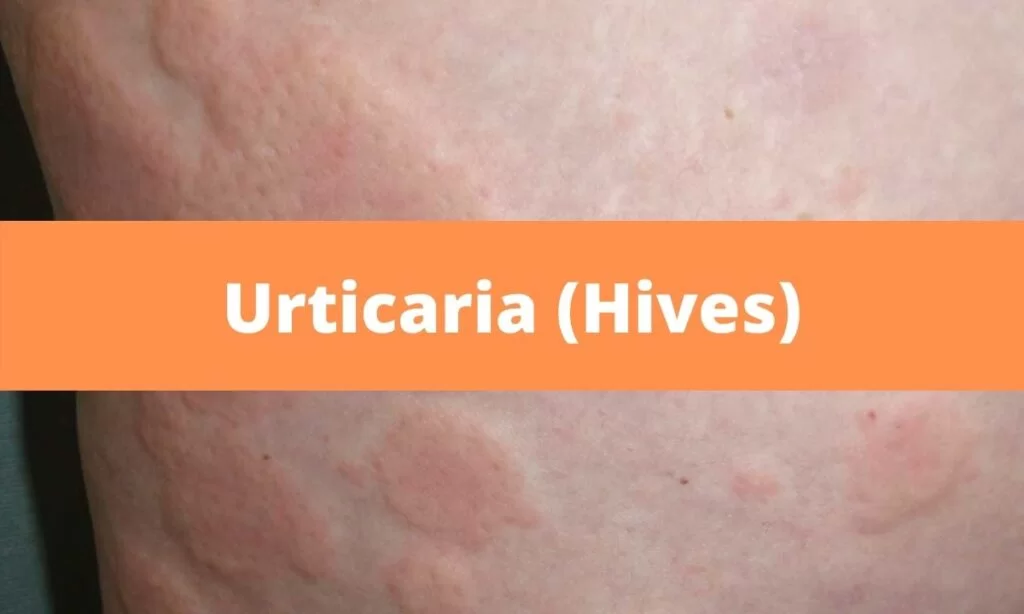
Urticaria
Urticaria, commonly known as hives, is a skin condition that causes red, raised, itchy patches or bumps on the skin. The rash can appear anywhere on the body and may cause itching, burning, or stinging.
Hives can vary in size, from small spots to larger patches. Individual hives may disappear within hours and new ones may appear elsewhere.
Urticaria is not contagious.
In some people, hives occur after exposure to a particular food, medicine, infection, environmental trigger, or physical stimulus. In many cases, however, the exact trigger may not be identified.
What Are the Types of Urticaria?
1. Acute Urticaria
Acute urticaria lasts for a short period. It may occur after exposure to certain foods, medicines, infections, insect bites, or other triggers.
2. Chronic Urticaria
Chronic urticaria is characterized by hives that occur repeatedly for more than six weeks.
The symptoms may come and go over several weeks, months, or longer. In many cases of chronic urticaria, a specific external trigger cannot be identified.
Causes and Triggers of Urticaria
Hives develop when certain cells in the skin release histamine and other inflammatory chemicals.
Possible triggers include:
- Certain foods such as nuts, eggs, or other foods that cause an allergic reaction
- Medicines
- Insect bites or stings
- Pollen
- Animal dander
- Dust mites
- Exercise
- Excessive sweating
- Exposure to sunlight
- Hot or cold temperatures
- Tight clothing or pressure on the skin
- Certain infections
- Physical or emotional stress in some people
Not every case of urticaria is caused by an allergy. This is particularly important in chronic urticaria, where the exact cause may remain unknown.
Symptoms of Urticaria
The appearance of hives can vary from person to person.
Common symptoms include:
- Red or skin-colored raised patches
- Intense itching
- Burning or stinging sensation
- Raised, bumpy skin
- Hives that change in size or shape
- Hives that disappear and reappear
- Temporary whitening of the affected area when pressed
- Restlessness because of severe itching
Individual hives may last from a short period to several hours before fading.
Hives can appear on the:
- Face
- Lips
- Ears
- Tongue
- Arms
- Legs
- Chest
- Back
- Abdomen
- Other areas of the body
Urticaria and Angioedema
Some people with hives can also develop angioedema, which is deeper swelling beneath the skin.
It may cause swelling around the:
- Lips
- Eyes
- Face
- Hands
- Feet
Seek urgent medical care if:
Urticaria accompanied by difficulty breathing, difficulty swallowing, swelling of the tongue or throat, dizziness, fainting, or severe weakness can indicate a serious allergic reaction and requires urgent medical attention.
Diagnosis of Urticaria
A doctor usually diagnoses urticaria based on the appearance of the skin, medical history, and pattern of symptoms.
During consultation, the doctor may ask about:
- When the hives started
- How long individual lesions last
- Food or medicine exposure
- Recent infections
- Environmental exposure
- Exercise or temperature changes
- Previous episodes
- Other symptoms such as swelling
Depending on the symptoms, investigations may include:
- Physical examination
- Blood tests when clinically indicated
- Allergy testing, such as skin-prick testing, when an allergic trigger is suspected
- Other tests depending on the suspected cause
Tests are not always necessary for every person with urticaria.
Prevention and Lifestyle Tips
Identifying and avoiding personal triggers can help reduce episodes of hives.
Helpful measures include:
- Avoid known triggers.
- Avoid foods or medicines that have previously caused a reaction, unless advised otherwise by your doctor.
- Avoid tight clothing if pressure triggers your hives.
- Avoid excessive heat and sweating if these trigger symptoms.
- Avoid scratching or rubbing the affected skin.
- Use gentle, fragrance-free skin products.
- Avoid harsh soaps.
- Read cosmetic and personal-care product labels carefully.
- Wash your hands after handling pets if animal exposure is a suspected trigger.
- Keep a record of foods, medicines, activities, and environmental exposures when trying to identify recurring triggers.
For chronic urticaria, avoiding unnecessary dietary restrictions is important unless a specific food trigger has been identified.
Homeopathic Treatment for Urticaria
At 247 Homeopathy in Zirakpur, Dr. Ruchi takes an individualized approach to homeopathic care.
The treatment approach considers the patient’s overall health and the pattern of symptoms rather than looking only at the skin rash.
Factors that may be considered include:
- Intensity and nature of itching
- Appearance of the hives
- Frequency of outbreaks
- Possible triggers
- Food and medicine history
- Sensitivity to heat or cold
- Sweating
- Sleep
- Stress and emotional factors
- Other associated symptoms
The original approach at 247 Homeopathy focuses on treating the patient as a whole and selecting an individualized remedy according to the person’s symptom pattern.
Frequently Asked Questions About Urticaria
Can urticaria cause hives to appear suddenly?
Yes. Hives can develop suddenly and may appear on different parts of the body. Individual hives usually fade within hours, although new ones may develop.
Can urticaria cause swelling of the face or lips?
Yes. Urticaria can sometimes occur with deeper swelling called angioedema, which may affect areas such as the lips, eyelids or face. Swelling of the tongue or throat with breathing difficulty requires emergency medical attention.
Can hives leave marks or scars on the skin?
Typical hives usually disappear without leaving scars. If a rash remains in the same place for an unusually long time, becomes painful or leaves bruising or discoloration, it should be evaluated.
Can urticaria get worse at night?
Yes. Some people may notice itching or hives becoming more troublesome at night. Identifying possible triggers and discussing persistent symptoms with a healthcare professional can help with management.
Can urticaria occur without a known trigger?
Yes. In many people with chronic urticaria, a specific trigger cannot be identified. Keeping track of symptoms and possible exposures may help a healthcare professional assess the condition.
Can urticaria cause itching without visible hives?
Itching is common with urticaria, but persistent itching without visible hives can have many other causes. If itching continues or keeps recurring, medical evaluation can help determine the underlying cause.
Consult 247 Homeopathy in Zirakpur
If you are experiencing recurrent hives, persistent itching, or unexplained urticaria, you can consult Dr. Ruchi at 247 Homeopathy in Zirakpur, Punjab.
247 Homeopathy provides consultations for patients in Zirakpur and nearby areas, as well as online consultations for patients across India and worldwide.
During consultation, your symptoms, possible triggers, medical history, and overall health can be reviewed before discussing an individualized homeopathic approach.
Do not delay urgent medical care if hives are accompanied by breathing difficulty or swelling of the tongue or throat.