Typhoid
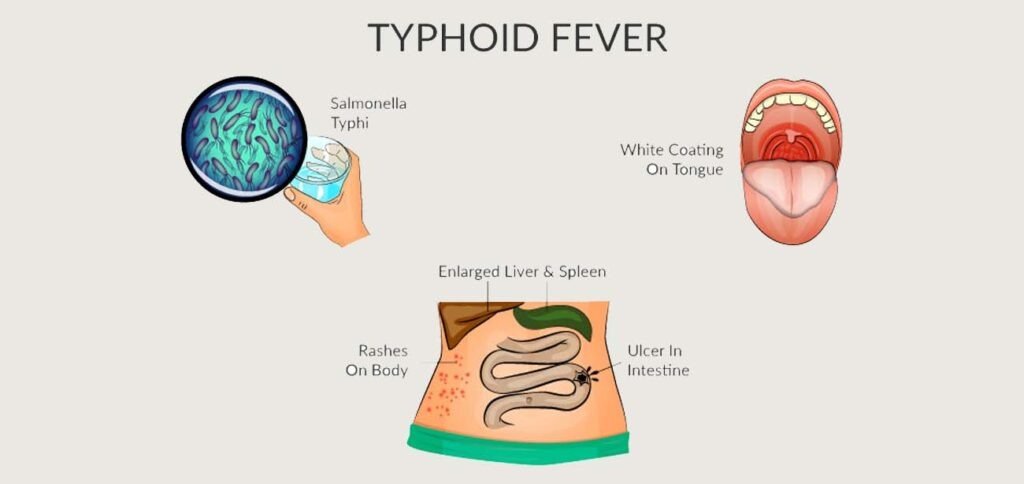
Typhoid fever is a bacterial infection that commonly spreads through contaminated food and water. It is caused by Salmonella Typhi, a type of Salmonella bacteria.
The bacteria enter the body through the mouth and can pass through the digestive system and intestinal wall into the bloodstream. From there, the infection can spread to other parts of the body.
Typhoid can cause prolonged fever, weakness, abdominal discomfort, diarrhea or constipation, vomiting, and loss of appetite. Timely diagnosis and appropriate medical treatment are important because untreated typhoid can lead to serious complications.
What Causes Typhoid?
Typhoid is caused by Salmonella Typhi bacteria. The infection generally spreads when a person consumes food or water contaminated with the feces of an infected person or carrier.
Possible sources of infection include:
- Contaminated drinking water
- Food prepared with contaminated water
- Food handled by someone carrying the bacteria
- Fruits and vegetables washed with contaminated water
- Poor sanitation and inadequate hand hygiene
The bacteria can survive in contaminated water and sewage, increasing the risk of transmission in areas where sanitation and clean water are limited.
Symptoms of Typhoid
Symptoms of typhoid usually develop after exposure to the bacteria, often within 1–3 weeks, although the timing can vary.
Common symptoms include:
- High or persistent fever
- Weakness and lethargy
- Headache
- Diarrhea or, in some people, constipation
- Abdominal pain or discomfort
- Body aches
- Poor or reduced appetite
- Vomiting
- Cough
- Rash or small rose-colored spots in some people
Symptoms During Different Stages
The doctor’s original content describes symptoms progressing over several weeks.
During the first week:
- Fever may gradually increase
- Weakness
- Headache
- Cough
- Body aches
During the second week:
- Fever may become high
- Marked weakness may occur
- Abdominal symptoms may continue
- Delirium or confusion can occur in severe illness
- Rose-colored spots may appear in some people
During the third week:
Severe or untreated typhoid can lead to complications. These may include:
- Severe dehydration
- Low platelet count
- Confusion or delirium
- Other serious complications affecting the digestive system or other organs
A person with persistent high fever should not delay medical evaluation.
Diagnosis of Typhoid
Typhoid is diagnosed based on symptoms, medical history, examination, and laboratory testing.
Tests mentioned in the doctor’s content include:
- Blood tests such as a complete blood count (CBC)
- Blood culture
- Stool culture
- Urine culture
- Widal test, where considered appropriate
Blood culture is an important test for detecting Salmonella Typhi, while other tests may be used depending on the clinical situation.
A Widal test alone should not be relied upon to confirm typhoid because its interpretation can be difficult and false-positive results can occur.
Prevention of Typhoid
Good hygiene, safe drinking water, proper sanitation, and safe food practices can reduce the risk of typhoid.
Helpful precautions include:
- Wash your hands thoroughly before eating or preparing food.
- Drink safe, treated, or properly boiled water.
- Avoid water from potentially contaminated sources.
- Wash fruits and vegetables properly with safe water.
- Maintain good sanitation and hygiene.
- Avoid food that may have been prepared in unhygienic conditions.
- Choose properly pasteurized dairy products.
- Avoid ice when the source of the water is uncertain.
- Follow recommended typhoid vaccination guidance when appropriate.
- Avoid preparing food for others if you have a confirmed typhoid infection until your healthcare professional advises that it is safe.
Typhoid Treatment and Medical Care
Typhoid is a bacterial infection and may require appropriate antibiotic treatment prescribed by a qualified healthcare professional. The choice of antibiotic can depend on local resistance patterns, test results, age, medical history, and the severity of the infection.
Adequate fluids and nutrition are also important, particularly when fever, vomiting, or diarrhea is present.
Do not stop prescribed antibiotics early just because symptoms improve. Completing treatment as directed can help reduce the risk of complications and recurrence.
Homeopathic Treatment Approach for Typhoid
At 247 Homeopathy in Zirakpur, Dr. Ruchi considers the individual’s symptoms and overall physical and mental health when discussing a homeopathic approach.
The doctor’s existing content notes factors such as:
- Fever
- Loss of appetite
- Body pain
- Digestive symptoms
- Weakness or lethargy
- Stress
Homeopathic medicines, when considered, should be selected individually according to the person’s symptoms and overall condition.
When to Seek Medical Care
Seek prompt medical attention if you or your child has:
- Persistent or high fever
- Severe weakness
- Repeated vomiting
- Significant diarrhea
- Signs of dehydration
- Severe abdominal pain
- Confusion or unusual drowsiness
- Blood in the stool
- Difficulty drinking or keeping fluids down
Severe symptoms require urgent medical evaluation.
Frequently Asked Questions
Can typhoid come back after treatment?
Yes. Typhoid can recur in some people after treatment. Persistent or returning fever or other symptoms should be discussed with a healthcare professional.
Consult 247 Homeopathy in Zirakpur
247 Homeopathy, Zirakpur, Punjab, provides homeopathic consultations for patients from Zirakpur and nearby areas, as well as patients who prefer online consultation.
If you are experiencing persistent fever, weakness, digestive symptoms, or other symptoms associated with typhoid, discuss your condition with a qualified healthcare professional and arrange appropriate testing when required.
Dr. Ruchi can review your symptoms and medical history during a consultation and discuss whether complementary homeopathic care is appropriate alongside necessary medical treatment.


