NASOPHARYNGEAL CANCER
Nasopharyngeal cancer is a type of cancer that develops in the nasopharynx, the upper part of the throat located behind the nose.
It occurs when cells lining the nasopharynx undergo abnormal changes and begin to grow uncontrollably.
Because the nasopharynx is located close to the nose, ears, throat and surrounding structures, symptoms may involve several of these areas.
What Is Nasopharyngeal Cancer?
The nasopharynx is the upper portion of the throat situated behind the nasal cavity. It connects the back of the nose with the throat.
Nasopharyngeal cancer develops when cells in this area become abnormal and multiply uncontrollably.
Early symptoms can sometimes resemble common nose, throat or ear problems. Persistent or recurrent symptoms should therefore be medically evaluated.
Causes and Risk Factors of Nasopharyngeal Cancer
The exact cause of nasopharyngeal cancer is not always known. However, several factors may increase the risk.
Epstein-Barr Virus (EBV)
The doctor’s content mentions Epstein-Barr virus (EBV) as an important infection associated with the development of nasopharyngeal cancer.
Human Papillomavirus (HPV)
HPV infection has also been mentioned as a possible risk factor.
Family History
Having a family history of nasopharyngeal cancer may increase the risk.
Smoking and Alcohol
The doctor’s content identifies:
- Smoking
- Heavy alcohol consumption
as risk factors.
Diet
The doctor’s content mentions heavily salted or preserved foods. Some traditional salt-preserved foods can contain compounds that may contribute to cancer risk.
Other Factors
The doctor’s content also mentions:
- Exposure to certain chemicals or toxins
- Other environmental factors
Having a risk factor does not mean that a person will definitely develop nasopharyngeal cancer.
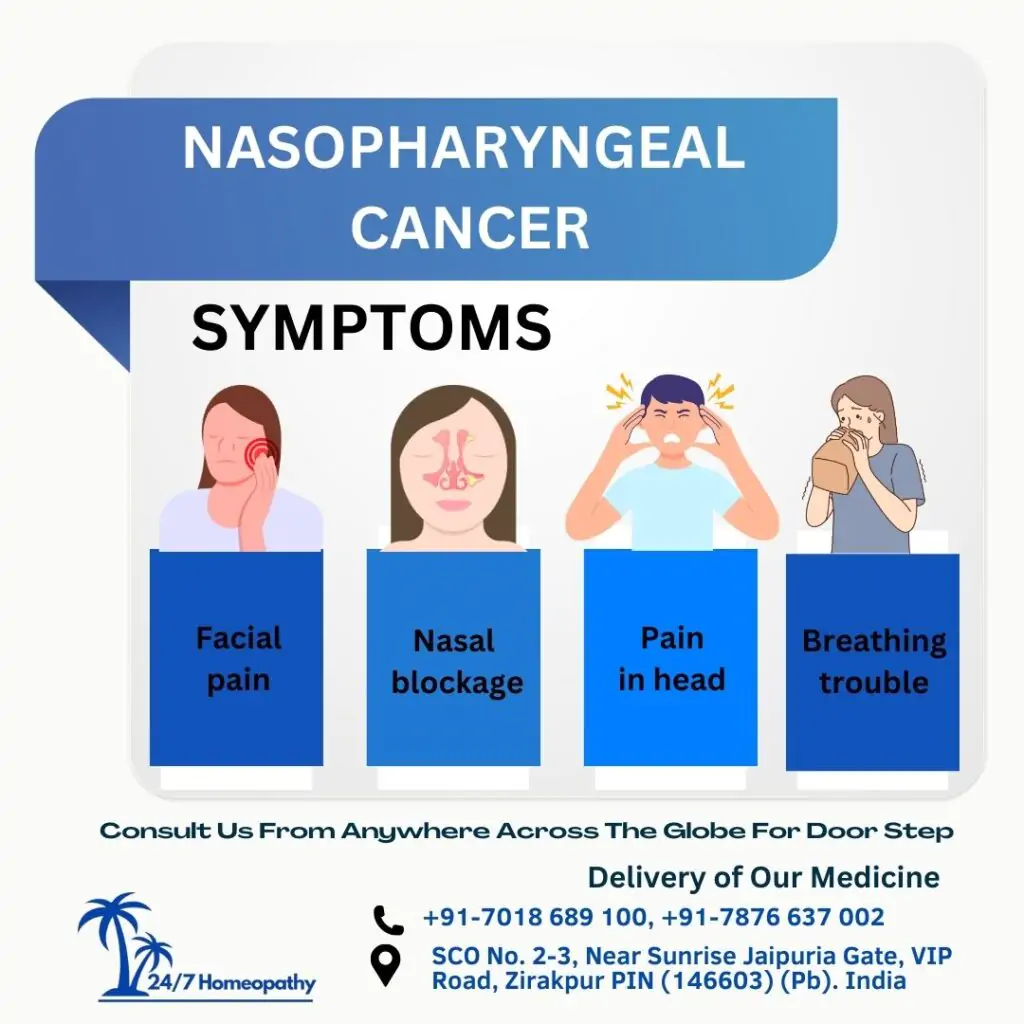
Symptoms of Nasopharyngeal Cancer
The symptoms mentioned in the doctor’s content include:
- Facial pain
- Persistent nasal blockage
- Nosebleeds
- Recurrent ear infections
- Hearing loss
- Ringing in the ears (tinnitus)
- A feeling of fullness in the ear
- Headache
- Difficulty speaking or changes in the voice
- Breathing difficulty
- Difficulty opening the mouth
- Fever
- Irritation involving the eyes or nose
Ear-Related Symptoms
Because the nasopharynx is close to the structures connecting the nose and middle ear, some patients may develop:
- Recurrent ear problems
- Hearing changes
- Ringing in the ears
- A sensation of ear fullness
Persistent or unexplained ear symptoms, particularly when associated with nasal blockage or nosebleeds, should be assessed by an ENT specialist.
Diagnosis of Nasopharyngeal Cancer
The doctor’s content mentions the following investigations:
1. Physical Examination
A doctor may examine the nose, throat, ears, mouth and neck for abnormalities or swollen lymph nodes.
2. Nasopharyngoscopy
Nasopharyngoscopy allows a healthcare professional to directly examine the nasopharynx.
It may be performed using an appropriate endoscopic technique to look for an abnormal growth or suspicious area.
3. CT Scan
A CT scan can help evaluate the location and extent of an abnormal growth.
4. MRI
MRI can provide detailed images of the nasopharynx and surrounding soft tissues.
If a suspicious growth is identified, a biopsy may be needed to confirm whether cancer is present and determine its type.
Precautions and Lifestyle Tips
The following precautions are based on the doctor’s existing content:
- Quit smoking.
- Avoid or quit alcohol consumption.
- Maintain a balanced and nutritious diet.
- Include fruits and adequate vitamins in the diet.
- Avoid unnecessary exposure to chemicals and toxic substances.
- Maintain a healthy weight.
- Exercise regularly according to your health condition.
- Follow appropriate medical advice for persistent nose, throat or ear symptoms.
These measures support overall health but cannot guarantee prevention of nasopharyngeal cancer.

Homeopathic Treatment Approach
The following medicines are included in Dr. Ruchi’s existing homeopathic treatment section. The symptom indications have been retained and organized for easier patient understanding.
Arsenicum Album
The doctor’s content mentions the following symptom indications:
- Headache with sensitivity of the head or scalp
- Burning eyes with acrid tears
- Raw or burning sensation involving the ear
- Ear infection with offensive discharge
- Roaring sounds or pain in the ear
- Tearing or needle-like facial pain
- Swollen throat with difficulty swallowing
- Bloody saliva
- Unhealthy gums that bleed easily and mouth ulceration
- High-grade fever
Calcarea Carb
The symptom indications mentioned include:
- Headache with a sensation of weight on the top of the head
- Dry nostrils and nasal blockage
- Swelling at the root of the nose
- Nosebleeds
- Facial swelling and facial pain
- Pale appearance with deep-set eyes and dark rings around them
- Bleeding gums
- Dryness of the tongue
- Difficulty swallowing
- Swollen submandibular glands
- Swollen tonsils
- Eye irritation and easy eye fatigue
- Dimness of vision and itching of the eyelids
- Cracking sounds in the ears
- Diarrhea and enlarged glands around the ears
- Extreme shortness of breath
- Fever with sweating
Phosphorus
The doctor’s content mentions:
- Pain around the orbital bones
- Dimness of vision
- Swelling of the eyelids and area around the eyes
- Difficulty hearing and re-echoing of sounds
- Ear infection with pus-like discharge
- Pale or unhealthy complexion with blue rings around the eyes
- Tearing pain in the facial bones and muscles
- Nosebleeds that may heavily stain a handkerchief
- Polyps that bleed easily
- Periostitis involving the nasal bone
- Marked pain in the larynx
- Difficulty speaking because of laryngeal pain
Important: These medicines are included as part of the doctor’s homeopathic approach and should not be self-prescribed. Nasopharyngeal cancer requires appropriate ENT and oncology evaluation. Homeopathy should not replace biopsy, surgery, radiotherapy, chemotherapy, immunotherapy or other cancer treatment recommended by qualified specialists.
Frequently Asked Questions
What is nasopharyngeal cancer?
Nasopharyngeal cancer is cancer that develops in the upper part of the throat behind the nose, called the nasopharynx.
What are the symptoms of nasopharyngeal cancer?
Symptoms may include persistent nasal blockage, nosebleeds, facial pain, recurrent ear problems, hearing loss, tinnitus, headache, voice changes, difficulty breathing or difficulty opening the mouth.
What causes nasopharyngeal cancer?
The exact cause is not always known. Risk factors mentioned in the doctor’s content include Epstein-Barr virus, HPV, family history, smoking, heavy alcohol consumption, certain dietary factors and exposure to chemicals or toxins.
Is Epstein-Barr virus associated with nasopharyngeal cancer?
Yes. Epstein-Barr virus (EBV) is associated with the development of some types of nasopharyngeal cancer.
How is nasopharyngeal cancer diagnosed?
Evaluation may include physical examination, nasopharyngoscopy, CT scan and MRI. A biopsy may be required to confirm the diagnosis.
Can a blocked nose be a sign of nasopharyngeal cancer?
Nasal blockage is very common and usually has causes other than cancer. However, persistent or one-sided blockage, particularly when accompanied by recurrent nosebleeds, hearing changes or facial symptoms, should be medically evaluated.
Which homeopathic medicines are mentioned for nasopharyngeal cancer?
Dr. Ruchi’s existing homeopathic section includes Arsenicum Album, Calcarea Carb and Phosphorus, selected according to the individual symptom picture.
Can homeopathy cure nasopharyngeal cancer?
Homeopathy should not be presented as a cure for nasopharyngeal cancer. Confirmed cancer requires appropriate specialist treatment. Homeopathic care, if chosen, should only be complementary and should not delay or replace cancer treatment.
When should I see an ENT specialist?
Persistent nasal blockage, repeated nosebleeds, unexplained hearing loss, recurrent ear problems, a neck lump, facial pain or difficulty opening the mouth should be evaluated by a healthcare professional.
Consultation at 247 Homeopathy
If you have persistent nose, throat or ear symptoms, or have already been diagnosed with nasopharyngeal cancer and want to discuss complementary homeopathic care, you can consult Dr. Ruchi at 247 Homeopathy, Zirakpur, Punjab.
247 Homeopathy serves patients from Zirakpur and nearby areas, as well as patients seeking consultation from other parts of India and worldwide.
For suspected or confirmed cancer, homeopathic consultation should complement—not replace—appropriate ENT, oncology and specialist medical care.
Consult Dr. Ruchi at 247 Homeopathy, Zirakpur, to discuss your individual symptoms and complementary homeopathic care approach.


