LANGERHANS CELL HISTOCYTOSIS
Langerhans Cell Histiocytosis (LCH) is a rare disorder characterized by the abnormal proliferation and accumulation of Langerhans cells, a type of white blood cell.
LCH can affect different organs and tissues of the body. The symptoms and severity can vary depending on which organs are involved.
What Is Langerhans Cell Histiocytosis?
Langerhans cells are a type of white blood cell. In Langerhans Cell Histiocytosis, these cells multiply abnormally and accumulate in different tissues and organs.
Depending on the areas affected, LCH may involve the bones, skin, lymph nodes, liver, spleen, lungs, bone marrow and pituitary gland.
Because different organs can be affected, LCH symptoms can vary significantly from one person to another.
Types of Langerhans Cell Histiocytosis
The doctor’s content describes three types:
1. Eosinophilic Granuloma
This type mainly involves the bones.
2. Hand-Schüller-Christian Disease
This involves multiple bone lesions and may mainly affect the skin and pituitary gland.
3. Letterer-Siwe Disease
This form can involve multiple organs, including:
- Skin
- Bone marrow
- Spleen
- Liver
- Lymph nodes
Causes of Langerhans Cell Histiocytosis
The exact cause of Langerhans Cell Histiocytosis is unknown.
The doctor’s content mentions several factors that may be involved:
- Clonal proliferation of abnormal Langerhans cells: These cells are derived from the bone marrow and may accumulate and infiltrate different organs and tissues.
- Genetic factors
- Immune system dysfunction
- Possible triggers such as certain viruses, toxins and chemicals
The exact role of these factors can vary, and the underlying cause of LCH is not completely understood.
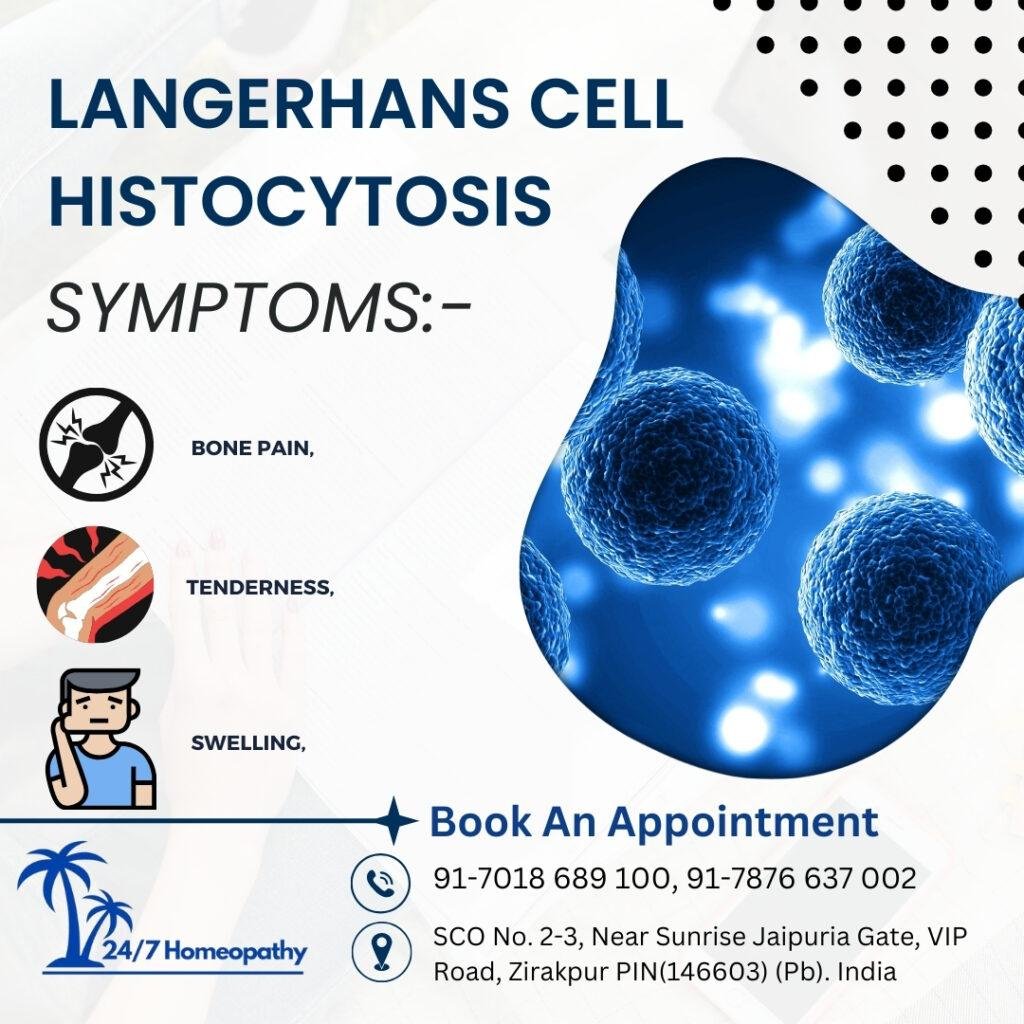
Symptoms of Langerhans Cell Histiocytosis
Symptoms depend on which organs or tissues are affected.
Bone Symptoms
When bones are involved, symptoms may include:
- Bone pain
- Tenderness
- Swelling
- Fractures
Skin Symptoms
Skin involvement may cause:
- Scaly patches
- Red papules and nodules
- Ulcers
- Crusts or sores
Lymph Node Symptoms
LCH may cause enlargement of lymph nodes, particularly around the:
- Armpits
- Neck
- Groin
Liver and Spleen
LCH may cause enlargement of the:
- Liver (hepatomegaly)
- Spleen (splenomegaly)
Respiratory Symptoms
When the lungs are involved, symptoms may include:
- Cough
- Shortness of breath
- Chest pain
Other Symptoms
Depending on the affected area, LCH may also be associated with:
- Diabetes mellitus
- Excessive thirst
- Excessive urination
- Headache
- Dizziness
- Seizures
- Balance problems
Diagnosis and Investigations
Diagnosis of Langerhans Cell Histiocytosis may require different investigations depending on the symptoms and organs involved.
The doctor’s content includes:
X-Ray
An X-ray may be used to examine affected bones and identify abnormalities.
CT Scan
A CT scan can provide detailed images of affected areas of the body.
MRI
MRI may be used to examine specific organs and tissues in greater detail.
PET Scan
A PET scan may be used to assess areas of abnormal activity in the body.
LFT
Liver function tests (LFT) may be performed when liver involvement is suspected.
CBC
A complete blood count (CBC) can help assess blood cell levels.
Biopsy
A biopsy may be performed to examine affected tissue and help establish the diagnosis.
The exact investigations required depend on the individual’s symptoms and the organs suspected to be involved.
Precautions and Lifestyle Tips
Because Langerhans Cell Histiocytosis can affect different organs, patients should maintain regular medical follow-up and discuss any new or worsening symptoms with their treating doctor.
Helpful general measures include:
- Attend recommended follow-up appointments.
- Complete investigations advised by your healthcare team.
- Report new bone pain, swelling or fractures.
- Inform your doctor about persistent skin changes.
- Seek medical attention for breathing difficulties or chest symptoms.
- Report excessive thirst or urination.
- Do not ignore new neurological symptoms such as seizures, dizziness or balance problems.
Homeopathic Management of Langerhans Cell Histiocytosis
At 247 Homeopathy, the homeopathic approach is individualized according to the patient’s symptoms and overall presentation.
The following remedies are included in Dr. Ruchi’s original content:
Conium Maculatum
The doctor’s content describes Conium Maculatum in cases presenting with:
- Dull, aching pain in the lumbar and sacral region
- Dry cough caused by a dry spot in the larynx with itching in the chest
- Gynaecomastia
- Nausea
- Acrid heartburn and acid eructation
- Tremulous weakness after every stool
- Vertigo while lying down
Phosphorus
The doctor’s content mentions Phosphorus for symptoms such as:
- Tightness across the chest
- A feeling of great weight on the chest
- Burning in the back
- Pain as if the body is broken
- Vomiting, with water being thrown up soon after it becomes warm in the stomach
- Extremely fetid stool and flatus
- Hematuria
- Menstruation that is too early, scanty and prolonged
Arsenicum Album
The doctor’s content describes Arsenicum Album with:
- Profound action on different organs or tissues
- Great exhaustion after slight exertion
- Inability to tolerate the sight or smell of food
- Nausea and vomiting after eating or drinking
- Trembling, twitching, spasms, weakness and heaviness
- Dyspnea
- Scanty expectoration
- Cough that is worse after midnight
Frequently Asked Questions
1. Can Langerhans cell histiocytosis cause a skin rash?
Yes. LCH can affect the skin and cause lesions or rashes. Persistent or unusual skin changes, particularly when accompanied by other symptoms, should be medically evaluated.
2. Can Langerhans cell histiocytosis cause bone pain or swelling?
Yes. When LCH affects the bones, it can cause localized pain, tenderness or swelling. Persistent or unexplained bone pain or swelling should be assessed.
3. Can Langerhans cell histiocytosis cause excessive thirst and frequent urination?
Yes. LCH can affect the pituitary gland and may lead to excessive thirst and urination in some people. Persistent changes in thirst or urination should be discussed with a healthcare professional.
4. Can Langerhans cell histiocytosis cause breathing problems?
Yes. When LCH affects the lungs, it may cause symptoms such as cough or difficulty breathing. Persistent or worsening breathing problems require medical assessment.
5. Can Langerhans cell histiocytosis cause an enlarged liver or spleen?
Yes. LCH can affect the liver or spleen and may cause these organs to become enlarged. This type of involvement requires specialist medical evaluation and monitoring.
6. Can Langerhans cell histiocytosis come back after treatment?
Yes. LCH can recur in some people after treatment, depending on the organs involved and other individual factors. Follow-up with the treating specialist is important to monitor for recurrence or new organ involvement.
Consultation at 247 Homeopathy
If you are looking for homeopathic consultation for Langerhans Cell Histiocytosis, you can consult Dr. Ruchi at 247 Homeopathy, Zirakpur, Punjab.
The homeopathic approach is individualized according to the patient’s symptoms and overall condition.
Because LCH can affect multiple organs, appropriate medical investigations and specialist follow-up remain important. Homeopathic consultation can be considered as complementary care alongside necessary medical management.
247 Homeopathy – Dr. Ruchi
Zirakpur, Punjab


