HAIRY CELL LEUKEMIA
Hairy cell leukemia (HCL) is a rare, slow-growing cancer of the blood and bone marrow. It affects B lymphocytes, a type of white blood cell. Under a microscope, the abnormal cells have fine hair-like projections, which is why the condition is called hairy cell leukemia.
Because abnormal B cells accumulate in the blood and bone marrow, they can interfere with the production of normal blood cells. This may result in anemia, low platelet counts and increased susceptibility to infections.
Hairy cell leukemia is a serious blood cancer and requires evaluation and monitoring by a qualified hematologist or oncologist.
What Is Hairy Cell Leukemia?
Hairy cell leukemia develops when abnormal B lymphocytes grow and accumulate in the bone marrow, blood and sometimes the spleen.
The condition generally progresses slowly. Some people may have few symptoms initially, while others may develop fatigue, recurrent infections, bleeding or a feeling of fullness in the abdomen because of an enlarged spleen.
Causes and Risk Factors of Hairy Cell Leukemia
The exact cause of hairy cell leukemia is not completely understood.
It develops when genetic changes occur in B lymphocytes, causing these cells to grow and survive abnormally.
The following factors are associated with a higher likelihood of developing hairy cell leukemia:
- Being male
- Increasing age, particularly older adults
- Certain genetic or biological factors
- Family history may be relevant in some cases
A person’s risk factors do not mean that they will definitely develop hairy cell leukemia.
Symptoms of Hairy Cell Leukemia
Symptoms can develop gradually and may initially resemble other conditions.
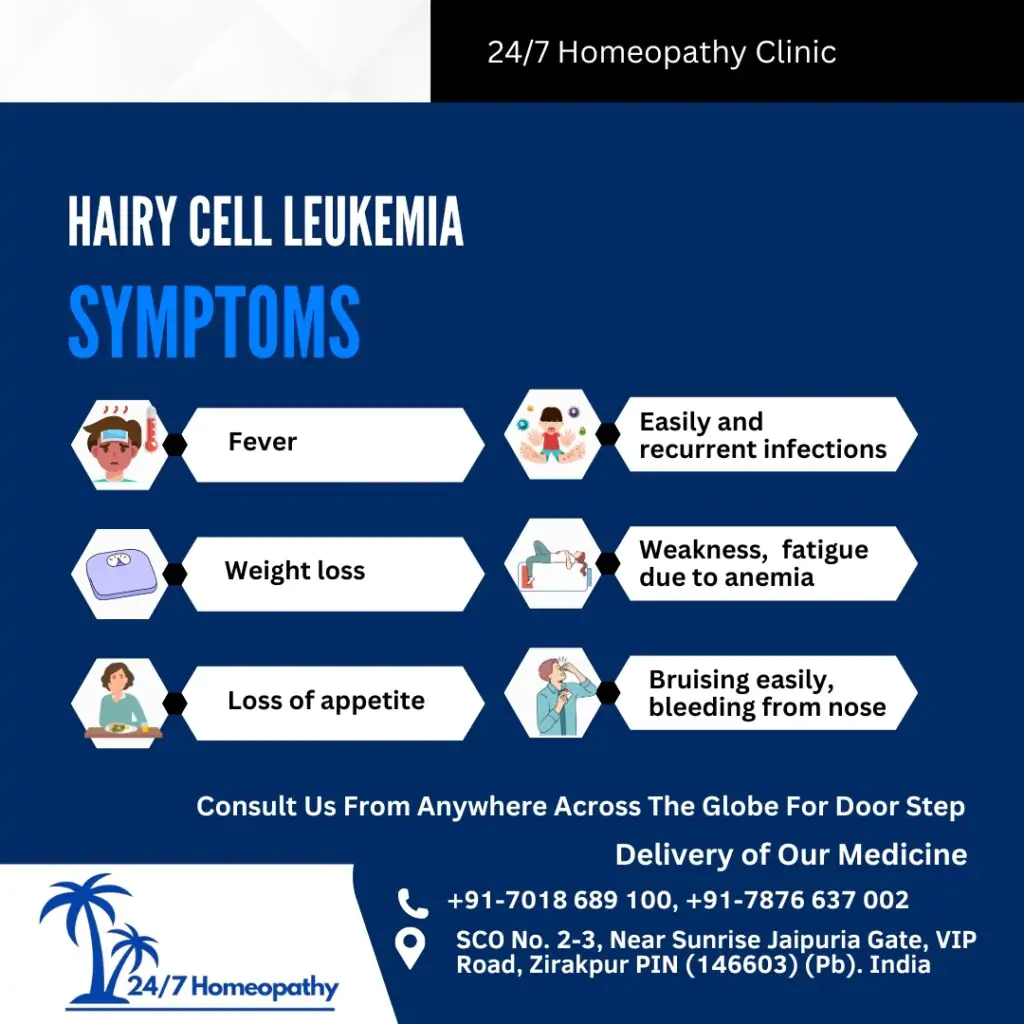
Common symptoms include:
- Persistent or recurrent fever
- Loss of appetite
- Unintentional weight loss
- Recurrent infections
- Easy bruising
- Nosebleeds or other unusual bleeding
- Shortness of breath
- Weakness and fatigue
- Symptoms related to anemia
- Fullness or discomfort on the left side of the abdomen below the ribs
- Enlarged spleen
Swollen lymph nodes can occur in some people, although they are not a defining feature of classic hairy cell leukemia.
Why Does Hairy Cell Leukemia Cause Fatigue and Infections?
As abnormal cells accumulate in the bone marrow, they can interfere with the production of normal blood cells.
This may lead to:
- Low red blood cells (anemia) → fatigue and shortness of breath
- Low normal white blood cells → increased risk of infection
- Low platelets → easy bruising or bleeding
Diagnosis of Hairy Cell Leukemia
A doctor may use several tests to confirm hairy cell leukemia and determine how extensively it is affecting the body.
1. Physical Examination
The doctor may examine for an enlarged spleen, liver or lymph nodes and assess general symptoms.
2. Complete Blood Count (CBC)
A CBC measures the levels of red blood cells, white blood cells and platelets. Abnormal blood counts can provide an important clue.
3. Peripheral Blood Smear
A blood sample is examined under a microscope. Hairy cell leukemia cells may show characteristic hair-like projections.
4. Bone Marrow Aspiration or Biopsy
A bone marrow examination can help confirm the diagnosis and assess abnormal cells in the marrow.
5. Flow Cytometry
Flow cytometry examines the characteristics of blood or bone marrow cells and helps identify abnormal B lymphocytes.
6. Imaging Tests
CT or other imaging may be used when necessary to evaluate the spleen, liver or lymph nodes.
Additional specialized laboratory tests may be performed by the treating hematology team to confirm the diagnosis.
Precautions and Supportive Lifestyle Measures
Lifestyle measures cannot prevent or cure hairy cell leukemia, but maintaining general health can be helpful during medical care.
- Avoid smoking.
- Follow a balanced and nutritious diet.
- Maintain a healthy weight.
- Choose fresh and properly prepared foods.
- Maintain good personal hygiene.
- Stay physically active according to your doctor’s advice.
- Drink adequate fluids unless your doctor has advised fluid restriction.
- Attend regular medical follow-ups.
- Take prescribed medicines as directed.
- Avoid unnecessary exposure to people with contagious infections.
- Discuss any fever, unusual bleeding or new infection symptoms promptly with your medical team.
- Manage stress and prioritize adequate rest.
Do not delay cancer evaluation or prescribed leukemia treatment in favour of dietary, herbal or alternative therapies.
Homeopathic Treatment Approach for Hairy Cell Leukemia
At 247 Homeopathy, Dr. Ruchi’s existing homeopathic approach considers the individual’s symptoms and overall presentation when selecting a remedy.
Arsenicum Album
In the doctor’s homeopathic notes, Arsenicum Album is considered when there is:
- Easy bleeding from the gums or nose
- Bleeding in stool or with coughing
- Nausea and vomiting
- Liver or spleen enlargement with discomfort
- Marked weakness and exhaustion
- Fever
- Gradual weight loss
- Poor appetite
- Nausea triggered by the smell of food
- A suffocative or constricted sensation
Kalium Carbonicum
The doctor’s notes describe Kalium Carbonicum in presentations involving:
- A sensation of a lump or fullness in the abdomen
- A feeling as though the stomach is full of water
- Epigastric pain extending toward the back
- Pain or discomfort in the left upper abdomen
- Nosebleeds, particularly in the early morning
- Significant exhaustion
- Burning sensations in the spine
- Bone pain
Phosphorus
In the doctor’s existing materia medica notes, Phosphorus is considered when there are symptoms such as:
- Bleeding after minor injury
- Nosebleeds
- Swollen or easily bleeding gums
- Weakness and trembling
- Numbness or weakness of the arms and hands
- Fever with excessive sweating
- Pale or sickly appearance
- Abdominal pain
FAQs About Hairy Cell Leukemia
Can hairy cell leukemia cause anemia?
Yes. Hairy cell leukemia can reduce the production of normal blood cells in the bone marrow, which may lead to anemia. This can contribute to symptoms such as tiredness, weakness or shortness of breath.
Can hairy cell leukemia cause low white blood cell counts?
Yes. Hairy cell leukemia can interfere with normal blood cell production and may cause low white blood cell counts, which can increase the risk of infections. Blood counts are usually monitored as part of ongoing medical care.
Hairy Cell Leukemia Consultation at 247 Homeopathy
If you are looking for homeopathic consultation for Hairy Cell Leukemia in Zirakpur, Dr. Ruchi at 247 Homeopathy can review your symptoms and overall health and discuss an individualized complementary homeopathic approach.
247 Homeopathy is based in Zirakpur, Punjab, with consultation options that can also support patients from Chandigarh, Panchkula, Mohali, nearby areas and patients seeking online consultation from other parts of India or worldwide.


