GESTATIONAL TROPHOBLASTIC DISEASE
Gestational trophoblastic disease (GTD) is a rare group of conditions involving abnormal growth of cells that normally develop into the placenta during pregnancy.
GTD can occur during pregnancy or after a pregnancy ends. Some forms are benign, while others can be malignant and require specialist medical treatment.
What Is Gestational Trophoblastic Disease?
During a normal pregnancy, cells called trophoblasts help form the placenta. In gestational trophoblastic disease, these cells grow abnormally.
GTD includes different conditions, ranging from non-cancerous forms to gestational trophoblastic neoplasia, which can behave like cancer.
Hydatidiform Mole
The doctor’s original content identifies hydatidiform mole (molar pregnancy) as the most common type of GTD and notes that it is usually benign.
A molar pregnancy occurs when abnormal placental tissue develops instead of a normal pregnancy.
Because GTD includes different conditions, diagnosis and treatment depend on the exact type and whether abnormal tissue remains or has spread.
Causes and Risk Factors of Gestational Trophoblastic Disease
The doctor’s original content lists the following factors as possible risks:
- Pregnancy at a very young age, particularly before 20
- Pregnancy at an older age, particularly after 35
- Abnormal or increased production of beta-human chorionic gonadotropin (β-hCG)
- Ovarian cysts
- Uterine tumors
- Previous history of gestational trophoblastic disease
A previous history of GTD can be particularly important because recurrence is possible in some patients and follow-up is therefore important.
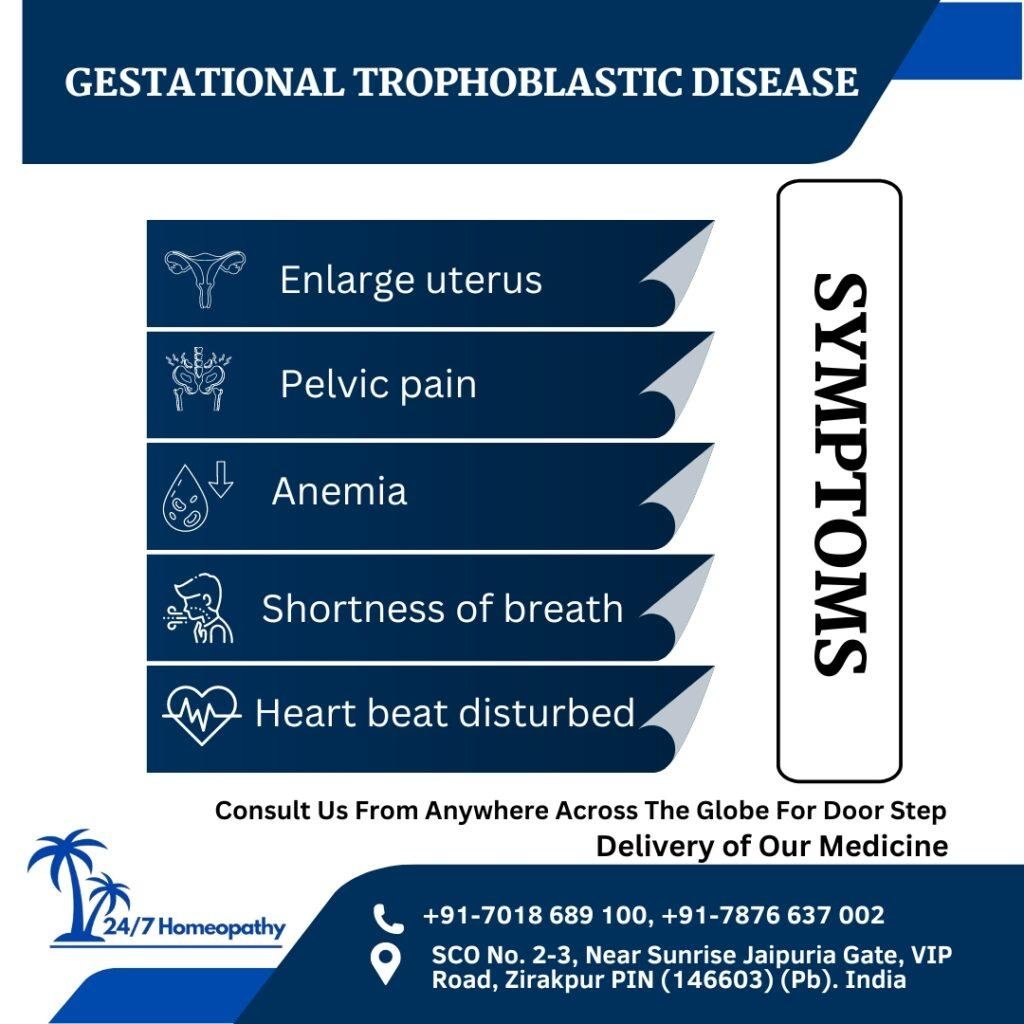
Signs and Symptoms of Gestational Trophoblastic Disease
Symptoms can vary depending on the type of GTD and the stage of the condition.
Possible signs and symptoms include:
- Enlarged uterus
- Severe nausea and vomiting during pregnancy
- Pelvic pain
- Pressure or heaviness in the pelvis or abdomen
- High blood pressure associated with pregnancy
- Headache
- Swelling of the limbs
- Anemia
- Weakness and fatigue
- Shortness of breath
- Changes in heartbeat or palpitations
- Abnormal vaginal bleeding
- Vaginal bleeding that continues or occurs after delivery or miscarriage
- A feeling of heaviness or weight in the abdomen
Abnormal Vaginal Bleeding
Vaginal bleeding during or after pregnancy should always be evaluated by a qualified healthcare professional.
Bleeding that continues for an unusually long period after pregnancy, delivery or miscarriage should not be ignored.
Diagnosis of Gestational Trophoblastic Disease
Diagnosis generally involves a combination of clinical examination, pregnancy-related hormone testing and imaging.
Physical and Pelvic Examination
A doctor may perform a physical and pelvic examination to assess the uterus, pelvic symptoms and abnormal bleeding.
β-hCG Testing
Beta-human chorionic gonadotropin (β-hCG) is an important marker in evaluating gestational trophoblastic disease.
The level and pattern of β-hCG over time can provide useful information about the condition and response to treatment.
Ultrasound
Ultrasound is commonly used to examine the uterus and pregnancy-related tissue and may help identify abnormal placental tissue.
Other Investigations
The doctor’s original content includes:
- Tumor-marker testing
- CA-125
- Urine testing
- CT scan
- MRI
- X-ray
- Lumbar puncture in selected situations
The specific investigations required depend on the patient’s symptoms, suspected type of GTD and whether there is concern that the disease has spread.
Precautions and Lifestyle Tips
The doctor’s original recommendations include:
- If you have previously had GTD, discuss future pregnancy planning with your gynecologist.
- Avoid planning another pregnancy until your treating specialist confirms that it is medically appropriate.
- Avoid very early or significantly delayed pregnancy when possible and discuss individual pregnancy planning with your doctor.
- Maintain a healthy weight.
- Eat a balanced and nutritious diet.
- Drink adequate water.
- Exercise according to your health condition.
- Manage stress.
- Maintain healthy blood pressure and blood sugar levels.
Follow-Up Is Important After GTD
If you have previously been diagnosed with GTD, regular follow-up is important. Your doctor may recommend monitoring β-hCG levels for a period of time and may advise when it is safe to attempt another pregnancy.
Do not make pregnancy-related decisions based only on online information.
HOMOEOPATHIC TREATMENT FOR GESTATIONAL TROPHOBLASTIC Cancer:
Carbo Animalis:
- Cancer of uterus
- Nausea in pregnancy worse during night
- Discharge from vagina, very offensive
- Great exhaustion can’t even speak
- Painful indurations in breast
- Heavy indurations breast
- Weakness shortness of breath, anemic
Murex:
- Sore pain in uterus
- Sensation as if something was pressing on a sore spot in the pelvis
- Pain right side of womb to left side of breast
- Bloody discharge from vagina
- Enlargement of uterus with pelvic tenesmus and sharp pain
- Weakness, fatigue
- Sinking all gone sensation in abdomen
- Pulsation in neck of the uterus
- Nausea and vomiting
Sabina:
- Uterine pain extended to thighs
- Discharge from vagina, corrosive, bloody offensive
- Retained placenta intense pain
- Inflammation of ovaries and uterus after abortion
- Pain from sacrum to pubic and from below upward
- Shooting up pain vagina
- Bursting headache, suddenly coming and going slowly
- Violent pulsations
- Bearing down, constricted pain felt in abdomen
- Nausea and vomiting
- Weakness, fatigue, paralytic weakness in back
Frequently Asked Questions
When should I see a doctor for symptoms of gestational trophoblastic disease?
Seek medical evaluation for unusual vaginal bleeding, persistent severe nausea or vomiting, pelvic pain or pressure, or pregnancy-related symptoms that seem unusual. Heavy bleeding, severe pain, fainting or significant weakness requires prompt medical attention.
Consult 247 Homeopathy in Zirakpur
If you or a family member has been diagnosed with gestational trophoblastic disease and you are considering complementary homeopathic consultation, you can consult Dr. Ruchi at 247 Homeopathy, Zirakpur, Punjab.
The consultation can be personalized according to the patient’s symptoms, pregnancy history, medical reports and overall condition.
247 Homeopathy also provides consultation options for patients who cannot visit the clinic in person.
If you experience heavy or persistent vaginal bleeding, severe abdominal or pelvic pain, severe vomiting, shortness of breath, fainting or other concerning symptoms during or after pregnancy, seek prompt medical care.


