CELLULITIS
Cellulitis is a bacterial infection of the deeper layers of the skin, usually involving the dermis and tissues beneath the skin. It can develop anywhere on the body but commonly affects the lower legs and feet.
Cellulitis usually develops when bacteria enter the skin through a cut, crack, wound, insect or animal bite, or another break in the skin. The affected area may become red, swollen, warm, painful and tender. Some people may also develop fever or feel generally unwell.
Because cellulitis can spread to deeper tissues or the bloodstream, prompt medical evaluation is important, particularly when redness and swelling are spreading or fever is present.
What Is Cellulitis?
Cellulitis is an infection caused by bacteria entering through a break in the skin and multiplying in the deeper skin tissues. Common bacteria responsible include Streptococcus and Staphylococcus species.
Although cellulitis can occur in different parts of the body, the legs are frequently affected.
Cellulitis should not be confused with cellulite, which is the harmless dimpled appearance of skin caused by changes in the underlying fat.
Causes of Cellulitis
Cellulitis can occur when bacteria enter the deeper layers of the skin through an opening or injury.
Common causes and entry points include:
- Cuts and scratches
- Puncture wounds
- Recent surgery or surgical wounds
- Cracks or breaks in dry skin
- Insect or animal bites
- Burns
- Other skin injuries
- Long-standing skin conditions such as eczema or psoriasis
- Fungal infections such as athlete’s foot, which can cause cracks between the toes
Cellulitis may sometimes develop even when the original break in the skin is small and difficult to notice.
Risk Factors for Cellulitis
Certain conditions can increase the risk of developing cellulitis or make infections more difficult to manage.
These include:
- Diabetes, particularly when blood glucose is poorly controlled
- A weakened immune system
- Chronic swelling or fluid accumulation in the legs
- Eczema, psoriasis or other conditions that damage the skin barrier
- Fungal infections of the feet
- Poor circulation
- Obesity
- Previous episodes of cellulitis
- Recent surgery or significant skin injury
- Certain cancer treatments or conditions that suppress immune function
People with diabetes, reduced immunity, poor circulation or persistent swelling should seek medical advice promptly if they notice signs of a skin infection.
Symptoms of Cellulitis
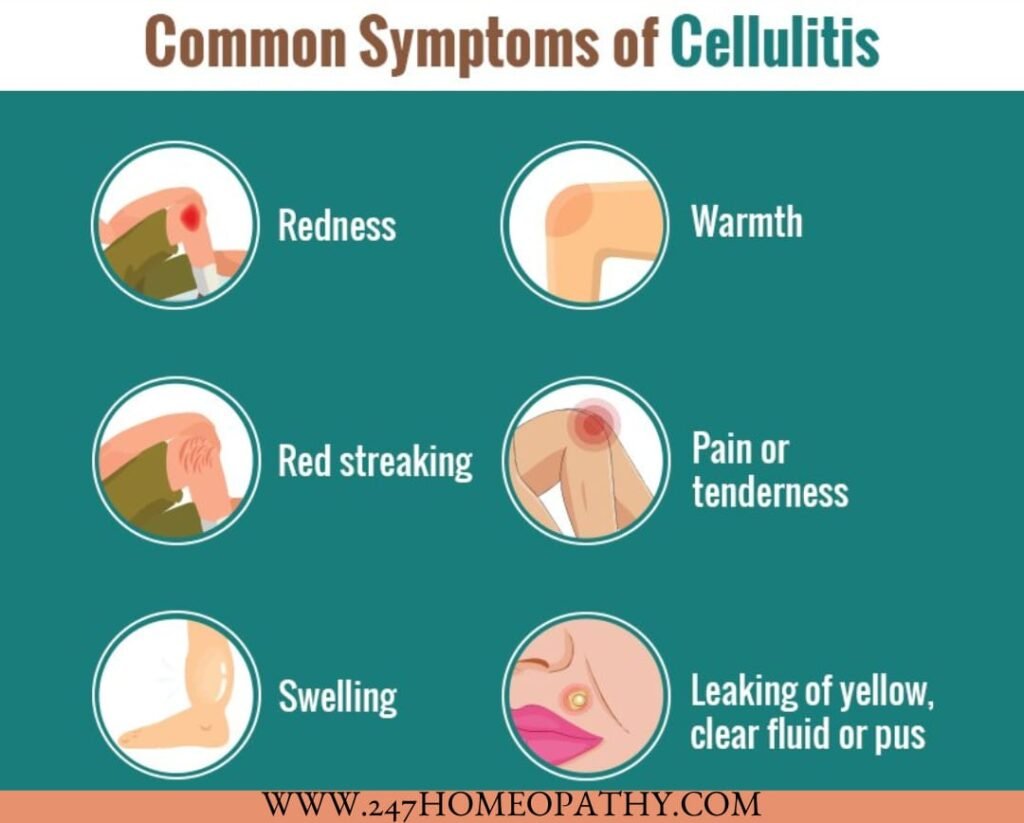
Cellulitis commonly causes changes in the affected area of skin. Symptoms may develop and spread over time.
Common symptoms include:
- Red or inflamed skin
- Swelling
- Warmth over the affected area
- Pain or tenderness
- Burning or uncomfortable sensation
- Skin that feels tight
- Increasing redness around the affected area
- Blisters in some cases
- Swollen lymph nodes
- Fever or chills
- Feeling tired or unwell
The affected skin may become increasingly painful, and the redness or swelling can spread to nearby areas.
When Should You Seek Medical Care?
Cellulitis should be medically assessed, especially if redness, warmth, swelling or pain is increasing.
Seek prompt medical attention if you have:
- Rapidly spreading redness or swelling
- Fever or chills
- Severe or increasing pain
- Pus or drainage from the affected area
- Red streaks extending from the infected area
- Significant swelling
- Cellulitis involving the face or area around the eyes
- Cellulitis after an animal bite
- A serious wound, burn or puncture injury
- Diabetes or a weakened immune system along with signs of infection
A rapidly worsening infection or symptoms such as confusion, extreme weakness or difficulty breathing require urgent medical attention.
Diagnosis of Cellulitis
Cellulitis is often diagnosed by examining the affected skin and considering the person’s symptoms and medical history.
Depending on the situation, a doctor may recommend additional investigations.
Blood Tests
Blood tests may be advised when the infection appears severe or there are concerns that the infection may have spread beyond the skin.
Culture Tests
If there is pus, an open wound or drainage, a sample may sometimes be collected for laboratory testing to identify the bacteria involved and help guide treatment.
Imaging
Imaging such as an X-ray or other scans may be considered when a deeper infection, foreign object or bone involvement is suspected.
Not every person with cellulitis requires all of these tests.
Management and Precautions
The appropriate management of cellulitis depends on its severity, location and the person’s overall health.
Medical Treatment
Because cellulitis is a bacterial infection, conventional medical treatment may include antibiotics when indicated. The choice of antibiotic and duration of treatment depend on factors such as the suspected bacteria, severity of infection, location and individual health conditions.
Do not stop prescribed antibiotics early or replace them with another treatment without discussing it with your treating doctor.
Helpful Self-Care Measures
Along with appropriate medical care:
- Keep the affected area clean.
- Follow wound-care instructions carefully after surgery or an injury.
- Rest the affected limb when possible.
- If the leg or arm is affected, elevation may help reduce swelling.
- Avoid squeezing, scratching or puncturing the affected skin.
- Keep blood glucose well controlled if you have diabetes.
- Treat underlying fungal infections and other skin conditions as advised by a healthcare professional.
- Monitor the affected area for increasing redness, swelling, pain or other changes.
Homeopathic Treatment Approach at 247 Homeopathy
At 247 Homeopathy, Zirakpur, Dr. Ruchi evaluates the patient’s symptoms, general health, medical history and individual presentation before selecting a homeopathic medicine.
The following remedies are included in Dr. Ruchi’s existing homeopathic approach to cellulitis:
Belladonna
Belladonna may be considered when the affected skin is markedly red, inflamed, hot and tender, with pain that may be aggravated by touch.
Apis Mellifica
Apis mellifica may be considered when there is prominent swelling or edema with burning or stinging pain, particularly when the affected area is red and sensitive.
Silicea
Silicea is traditionally considered by homeopathic practitioners in certain presentations involving suppuration or pus formation, including cases where blisters or localized collections develop.
Echinacea
Echinacea is traditionally used in homeopathic practice in certain presentations associated with infection and inflammation.
Important Note About Cellulitis Treatment
Homeopathy should not be used as a substitute for appropriate medical evaluation or antibiotic treatment when antibiotics are indicated. Cellulitis can sometimes progress quickly, and delaying effective treatment may increase the risk of complications.
At 247 Homeopathy, homeopathic care can be discussed as a complementary approach, while patients are advised to obtain appropriate medical treatment for an active or severe bacterial infection.
Frequently Asked Questions About Cellulitis
What is the main cause of cellulitis?
Cellulitis is usually caused by bacteria entering deeper skin tissues through a cut, wound, crack, puncture, bite or another break in the skin. Streptococcus and Staphylococcus bacteria are common causes.
Is cellulitis contagious?
Cellulitis itself is generally not contagious. It develops when bacteria enter through a break in an individual’s skin rather than through ordinary person-to-person contact.
What does cellulitis look and feel like?
Cellulitis commonly causes an area of skin to become red, swollen, warm, painful and tender. The affected area may gradually become larger. Fever and feeling unwell can also occur.
Can cellulitis go away on its own?
Cellulitis should not be assumed to resolve on its own. Because it is a bacterial infection that can spread, medical assessment is important. Antibiotic treatment may be required depending on the severity and clinical findings.
Can cellulitis cause fever?
Yes. Fever, chills and a general feeling of being unwell can occur, particularly when the infection is more significant.
Can diabetes increase the risk of cellulitis?
Yes. Diabetes can increase the risk of skin infections, particularly when blood glucose is poorly controlled or circulation and sensation in the feet are affected.
Can cellulitis come back?
Yes. Some people experience recurrent cellulitis, particularly when underlying risk factors such as chronic leg swelling, fungal foot infections, skin conditions or poor circulation are not addressed.
Should I see a doctor for cellulitis?
Yes. Suspected cellulitis should be medically evaluated, particularly when redness, swelling or pain is spreading or when fever is present. People with diabetes or weakened immunity should be especially cautious.
Can homeopathy replace antibiotics for cellulitis?
No. Homeopathy should not be presented as a replacement for antibiotics when antibiotics are medically indicated. Cellulitis is a bacterial infection and delaying appropriate treatment can allow the infection to worsen.
Consult 247 Homeopathy in Zirakpur
If you are experiencing recurrent skin infections, inflammation or other ongoing health concerns, 247 Homeopathy, Zirakpur, provides individualized homeopathic consultations with Dr. Ruchi.
During a consultation, your symptoms, medical history and overall health can be reviewed to determine whether homeopathic care may be appropriate as part of your overall healthcare plan.


