Tonsil Surgery
Tonsil surgery is medically known as a tonsillectomy. It is a surgical procedure in which the palatine tonsils at the back of the throat are removed.
Tonsils are part of the immune system and are located on either side of the throat. In some people, repeated infections, enlarged tonsils, tonsil stones, or problems with breathing during sleep may lead a doctor to consider tonsillectomy.
Tonsil surgery is more commonly considered in children and young people when recurrent or severe tonsil problems significantly affect their health or daily life.
What Is Tonsillectomy?
A tonsillectomy is a procedure to remove the palatine tonsils.
A doctor or ENT specialist may consider tonsil surgery when a person has repeated or chronic problems involving the tonsils, particularly when these problems do not improve adequately with appropriate medical management.
Why Might Tonsil Surgery Be Needed?
The reasons mentioned in the doctor’s content include:
- Recurrent or chronic throat infections
- Recurrent tonsillitis
- Persistent or troublesome tonsil stones
- Enlarged tonsils causing airway obstruction
- Loud snoring associated with enlarged tonsils
- Obstructive sleep apnea
- A collection of pus around the tonsils that does not resolve appropriately
The decision to have tonsil surgery depends on the person’s symptoms, medical history, examination findings, and the recommendation of an appropriately qualified ENT specialist.
Tonsillitis and Tonsil Surgery
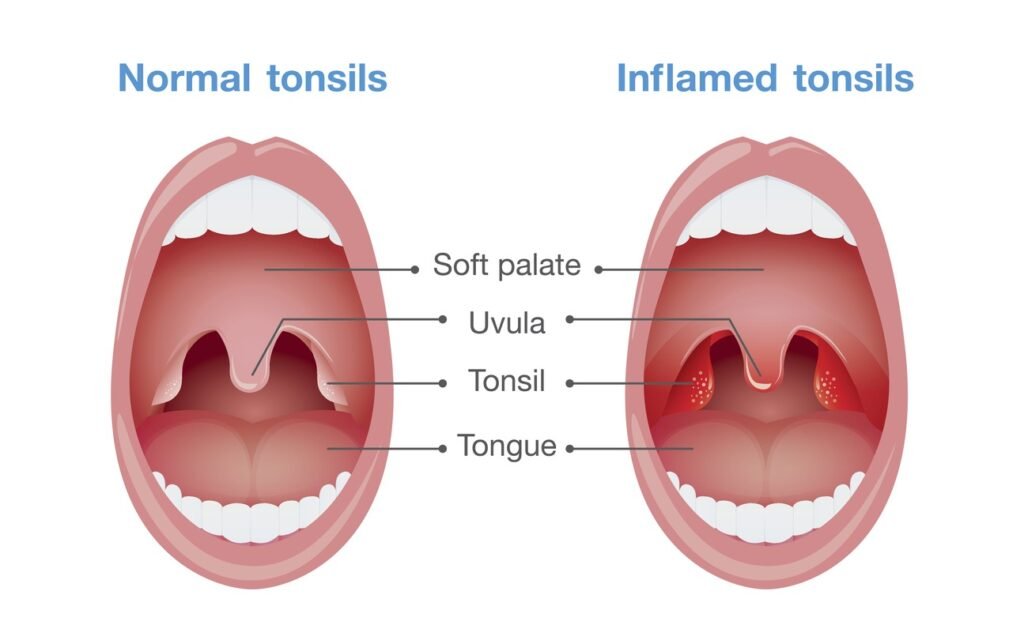
Tonsillitis is inflammation or infection of the tonsils. It can cause the tonsils to become enlarged and may result in:
- Sore throat
- Difficulty swallowing
- Redness of the throat
- Swollen tonsils
- Pain while swallowing
Tonsillitis is common in children and young people.
Not every episode of tonsillitis requires surgery. Tonsillectomy may be considered when infections are recurrent, severe, or causing significant complications or other problems.
What Are Tonsil Stones?
Tonsil stones, also called tonsilloliths, are small hardened deposits that form in the crevices of the tonsils.
They can develop when debris such as food particles, mucus, and other material becomes trapped and gradually hardens or calcifies.
Tonsil stones may cause:
- Bad breath
- A feeling of something stuck in the throat
- Throat discomfort
- Difficulty swallowing in some people
- Visible white or yellow deposits on the tonsils
Persistent or troublesome tonsil stones may require evaluation by an ENT specialist.
Recovery and Management After Tonsil Surgery
Throat pain is common during recovery from tonsillectomy. The throat may remain sore for several days, and swallowing can be uncomfortable.
The doctor’s recommendations for recovery include:
- Get adequate rest during the initial recovery period.
- Drink plenty of fluids.
- Lukewarm fluids may be more comfortable for some people.
- Choose soft foods such as oatmeal, soup, pudding, or other easy-to-swallow foods.
- Avoid very spicy foods during the early recovery period if they cause discomfort.
- Avoid foods that are difficult to swallow or may irritate the throat.
- Follow the post-operative instructions provided by your surgeon.
Recovery can vary between individuals, so follow the specific instructions given by your ENT surgeon.
When to Seek Medical Help After Tonsil Surgery
Contact your surgeon or seek urgent medical care if you experience:
- Significant or persistent bleeding from the throat
- Difficulty breathing
- Inability to drink enough fluids
- Signs of severe dehydration
- Severe or worsening symptoms
- High or persistent fever
- Any other concerning symptom during recovery
Bleeding after tonsillectomy can be serious and should not be ignored.
Homeopathic Medicines and Treatment
At 247 Homeopathy Clinic in Zirakpur, Dr. Ruchi considers the individual’s symptoms and overall health when discussing a homeopathic approach to tonsil-related complaints.
The homeopathic medicines mentioned in the doctor’s existing content include:
Belladonna
Belladonna is mentioned in the doctor’s content for symptoms associated with inflamed or enlarged tonsils and tonsil stones.
The symptom picture includes:
- Red, swollen, or enlarged tonsils
- A sensation of a lump in the throat
- A frequent desire to swallow
- Sensitivity involving the muscles used for swallowing
Baryta Carbonica
Baryta carbonica is mentioned for tonsillitis with symptoms such as:
- A sensation of a plug in the throat
- Inflamed tonsils
- Swollen veins around the tonsils
- A tendency to catch colds easily
- Stinging or sharp pain in the tonsils
Hepar Sulphuris
Hepar sulphuris is mentioned in the doctor’s content for tonsillitis and tonsil stones associated with ear pain.
The symptom picture includes:
- Throat pain extending toward the ears
- Chronic tonsillitis
- Tonsil-related discomfort
- Symptoms associated with tonsil stones
The doctor’s content also mentions Hepar sulphuris in relation to recovery following tonsillectomy.
Phytolacca Decandra
Phytolacca decandra is mentioned for tonsil stones and throat symptoms associated with difficulty swallowing.
The described symptoms include:
- Difficulty swallowing
- Difficulty tolerating hot foods or drinks
- Small yellow-white spots on the tonsils
- Sore throat
Homeopathic medicine selection should be individualized according to the person’s symptoms and overall health.
Frequently Asked Questions
Can tonsils grow back after tonsil surgery?
After a complete tonsillectomy, the tonsils generally do not grow back. However, a small amount of tonsil tissue may occasionally remain and can potentially enlarge.
Consult 247 Homeopathy in Zirakpur
If you are experiencing recurrent tonsillitis, tonsil stones, throat discomfort, or related symptoms, you can consult Dr. Ruchi at 247 Homeopathy in Zirakpur, Punjab.
247 Homeopathy serves patients from Zirakpur and nearby areas and also offers online consultations for patients from other parts of India and worldwide.
During consultation, Dr. Ruchi can review your symptoms, previous episodes of tonsillitis, medical history, and available reports before discussing an individualized homeopathic approach.
If you have severe throat swelling, difficulty breathing or swallowing, significant bleeding after tonsil surgery, or symptoms of a serious infection, seek appropriate medical or emergency care promptly.


