Toothache
A toothache is pain in or around a tooth. It can range from mild discomfort to severe, persistent pain and may occur because of a dental problem, gum irritation, tooth injury, or infection.
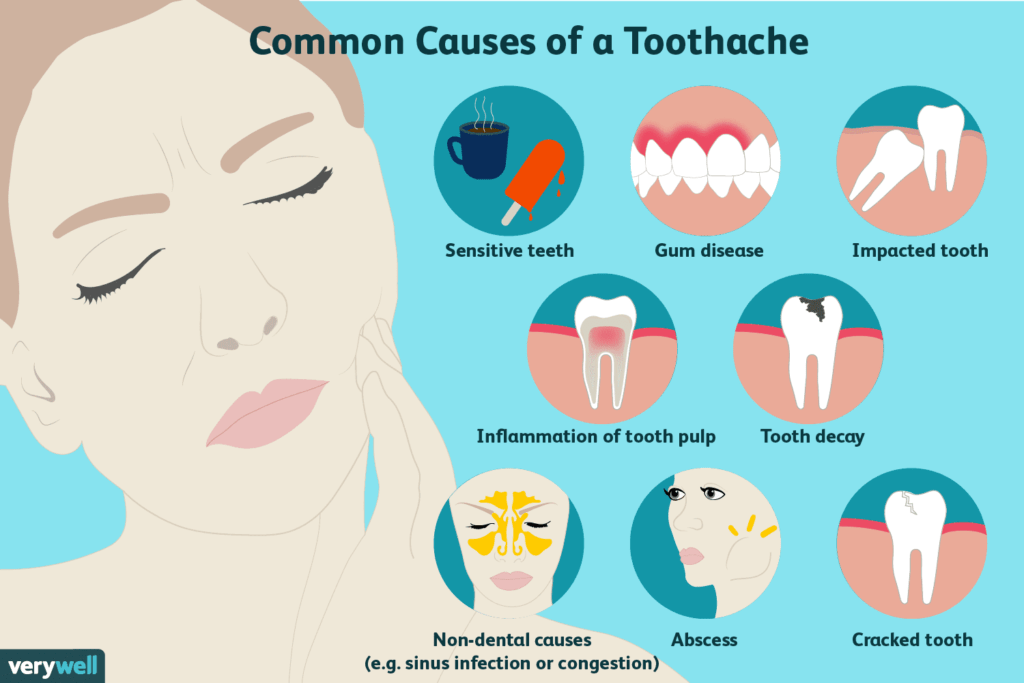
A toothache can be caused by conditions ranging from temporary gum irritation to tooth decay, a broken tooth, wisdom tooth problems, or a bacterial infection.
The inner part of the tooth, called the pulp, contains nerves, blood vessels, and connective tissue. When the pulp or surrounding tissues become irritated or infected, it can cause significant dental pain.
Toothache may also be associated with headache, swelling, difficulty eating, or sensitivity to hot and cold foods and drinks.
What Causes Toothache?
There are several possible causes of toothache.
The causes mentioned in the doctor’s content include:
- Gum irritation
- Tooth decay or cavities
- Tooth fracture
- Bacterial infection
- Wisdom tooth eruption
- Clenching or grinding of the teeth
- Dental caries
- Pain following tooth extraction
- Discomfort after root canal treatment
- Neuralgia or nerve-related pain
The cause of toothache cannot always be identified from the pain alone. A dental examination may be necessary to determine the underlying problem.
Symptoms of Toothache
Toothache symptoms can vary depending on the cause.
Common symptoms include:
- Throbbing, sharp, or constant tooth pain
- Pain around the affected tooth
- Swelling around the tooth or gums
- Headache
- Bad breath or unpleasant mouth odor
- Difficulty eating or drinking
- Sensitivity to hot or cold foods and drinks
- Fever, particularly when infection is present
Pain that continues, becomes severe, or is accompanied by swelling or fever should be evaluated promptly.
Toothache and Sensitivity to Hot or Cold
Some dental problems cause pain when consuming hot or cold foods or drinks.
Temperature sensitivity can occur with conditions such as:
- Tooth decay
- Exposed tooth surfaces
- Cracked or damaged teeth
- Irritation of the dental pulp
If sensitivity is persistent or severe, a dental examination can help identify the cause.
Prevention of Toothache
Good oral hygiene can reduce the risk of tooth decay and gum problems that can contribute to toothache.
Helpful habits include:
- Brush your teeth twice a day using a suitable toothbrush and fluoride toothpaste.
- Clean between your teeth regularly with dental floss or another recommended interdental cleaning method.
- Clean your tongue as part of your daily oral hygiene routine.
- Limit frequent consumption of sugary foods and drinks.
- Avoid tobacco and smoking.
- Replace your toothbrush regularly or when the bristles become worn.
- Have regular dental check-ups.
- Do not ignore persistent tooth sensitivity or dental pain.
Cleaning between the teeth is important because a toothbrush may not adequately reach every surface between the teeth.
Home Management of Toothache
Some measures may provide temporary relief while you arrange appropriate dental evaluation.
The doctor’s recommendations include:
- Rinse the mouth gently with warm salt water.
- Avoid foods that trigger pain.
- Choose softer foods if chewing is painful.
- Maintain regular but gentle tooth brushing.
- Avoid tobacco and smoking.
- A clove or clove-based preparation may provide temporary relief for some people.
These measures may reduce discomfort temporarily but do not necessarily treat the underlying cause of toothache.
If toothache is caused by decay, an abscess, a fractured tooth, or another dental problem, professional dental treatment may be necessary.
Diagnosis of Toothache
Diagnosis begins with a history of the symptoms and an examination of the mouth and teeth.
A dentist or healthcare professional may assess:
- Location of the pain
- Type and severity of pain
- Duration of symptoms
- Sensitivity to hot or cold
- Swelling or tenderness
- Condition of the teeth and gums
Dental X-ray
An X-ray may be recommended when the cause is not obvious or when the dentist needs to check for problems such as:
- Tooth decay
- Infection or abscess
- Problems around the root
- Other changes that cannot be seen during a routine examination
The appropriate investigation depends on the individual’s symptoms.
Homeopathic Medicines for Toothache
At 247 Homeopathy Clinic in Zirakpur, Dr. Ruchi considers the individual’s symptoms and overall health when selecting a homeopathic medicine.
The homeopathic medicines mentioned in the doctor’s existing content include:
Pulsatilla
Pulsatilla is mentioned in the doctor’s content for a toothache symptom pattern in which:
- Toothache may improve by holding cold water in the mouth
- The mouth may feel dry
- There may be little desire to drink water
- The tongue may have a yellowish or whitish coating
Mercurius Solubilis
Mercurius solubilis is mentioned in relation to tooth decay and associated symptoms such as:
- Tender or painful teeth
- A sensation that the teeth feel elongated
- Strong or unpleasant mouth odor
- A thick, moist tongue
- Yellow coating on the tongue
- A sweetish or metallic taste
Kreosotum
Kreosotum is mentioned for painful dental conditions associated with tooth decay.
The symptom picture described includes:
- Decaying teeth
- Painful dentition
- Bleeding gums
Plantago
Plantago is mentioned in the doctor’s content for toothache associated with:
- Pain extending between the teeth and ears
- Toothache that may improve while eating
- Increased salivation
- Swelling of the cheeks
Homeopathic medicine selection should be individualized according to the person’s complete symptom picture rather than based only on the diagnosis of toothache.
When Should You See a Dentist?
Do not ignore toothache that persists or becomes worse.
Seek prompt dental care if you have:
- Severe or persistent tooth pain
- Swelling of the face or jaw
- Fever with toothache
- Pus or a bad taste in the mouth
- Difficulty opening your mouth
- Difficulty swallowing
- A broken or damaged tooth
- Pain after dental treatment that does not improve
Facial swelling, difficulty breathing or swallowing, or rapidly worsening infection can require urgent medical or dental attention.
Frequently Asked Questions
When should I see a dentist for a toothache?
See a dentist if toothache is severe, persistent, keeps returning, or is accompanied by swelling, fever, difficulty opening the mouth, or other concerning symptoms. Prompt dental care can help identify and treat the underlying cause.
Consult 247 Homeopathy in Zirakpur
If you are experiencing toothache or recurring dental discomfort, you can consult Dr. Ruchi at 247 Homeopathy in Zirakpur, Punjab to discuss your symptoms and overall health.
247 Homeopathy serves patients from Zirakpur and nearby areas and also offers online consultation options for patients from other parts of India and worldwide.
During consultation, Dr. Ruchi can review your symptoms, previous treatment, and available medical information before discussing an individualized homeopathic approach.
For persistent tooth pain, swelling, fever, suspected infection, or a broken tooth, appropriate dental evaluation should not be delayed.


