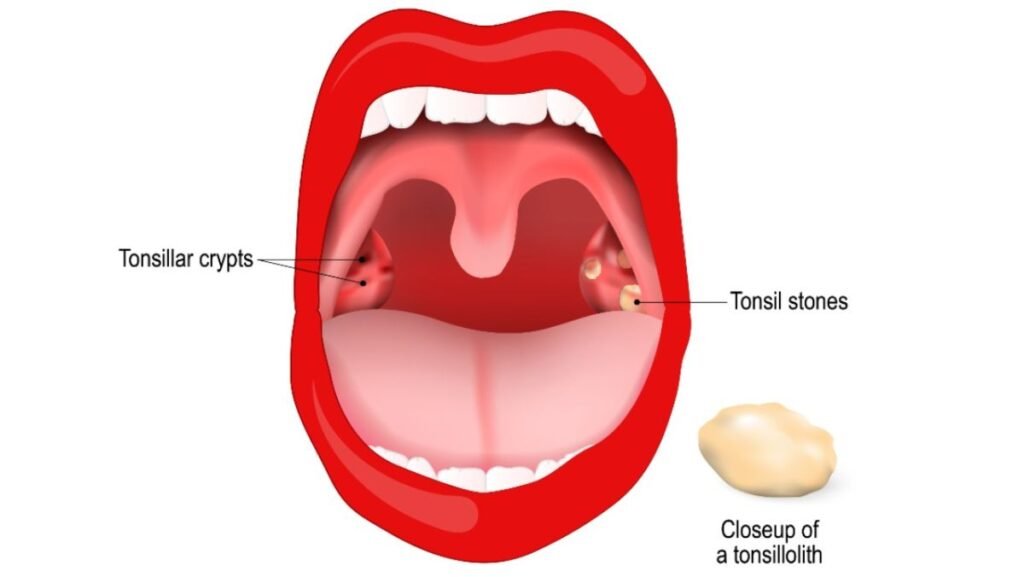
Tonsil Stones
Tonsil stones are small, hardened lumps that form in the crypts or small folds of the tonsils at the back of the throat. They are also called tonsilloliths.
Tonsil stones can develop when debris such as food particles, mucus, dead cells, and bacteria becomes trapped in the tonsillar crypts and gradually hardens or calcifies.
Many tonsil stones are small and may not cause any symptoms. However, some people experience bad breath, throat irritation, a bad taste, difficulty swallowing, or the sensation that something is stuck in the throat.
What Are Tonsil Stones?
The tonsils are two tissue structures located at the back of the throat, one on each side.
The surface of the tonsils contains small folds and openings called tonsillar crypts. These areas can trap bacteria and debris.
Over time, the trapped material can become hardened and form a tonsil stone.
Tonsil stones are usually not dangerous, but persistent or recurrent stones can be uncomfortable and may contribute to bad breath.
Causes of Tonsil Stones
Tonsil stones can develop for several reasons, including:
- Having deeper or more numerous tonsillar crypts
- Recurrent tonsil infections
- Chronic or recurrent tonsillitis
- Debris becoming trapped in the tonsils
- Bacteria accumulating in the tonsillar crypts
- Food particles, mucus, and other material becoming trapped and eventually hardening
People with deeper tonsillar crypts may be more likely to develop recurrent tonsil stones.
Symptoms of Tonsil Stones
Small tonsil stones may produce no signs or symptoms and may only be noticed during an examination.
When symptoms occur, they may include:
- Bad breath
- White or yellow spots or flakes at the back of the throat
- Sore throat
- Throat irritation
- A sensation of something stuck in the throat
- Difficulty swallowing
- Occasional pain while swallowing
- Bad or unpleasant taste in the mouth
- Ear pain or ear discomfort
Why Do Tonsil Stones Cause Bad Breath?
Tonsil stones can contain bacteria and trapped debris. This can contribute to an unpleasant odor and is one of the reasons persistent bad breath is commonly associated with tonsil stones.
However, bad breath can have many other causes, including dental and gum problems, so persistent bad breath should not automatically be attributed to tonsil stones.
Diagnosis of Tonsil Stones
Tonsil stones can often be identified during a physical examination of the mouth and throat.
A healthcare professional may:
- Examine the tonsils and back of the throat
- Look for white or yellow deposits
- Ask about bad breath, throat discomfort, swallowing difficulties, or recurrent tonsillitis
- Use a tongue depressor during examination when appropriate
Imaging Tests
Imaging is not always necessary for visible tonsil stones.
If a stone is difficult to see or another condition needs to be investigated, imaging may sometimes be used.
The doctor’s existing content mentions:
- X-ray
- CT scan
A CT scan may show a calcified area in the tonsillar region.
What Can Help With Tonsil Stones?
For small, uncomplicated tonsil stones, maintaining good oral and throat hygiene may help reduce the accumulation of debris.
Helpful habits include:
- Brush your teeth twice daily.
- Clean between your teeth regularly.
- Clean your tongue.
- Drink adequate water.
- Gargle with water or an appropriate mouth rinse if recommended.
- Maintain good oral hygiene to reduce bacterial buildup.
- Address recurrent tonsillitis with appropriate medical advice.
If tonsil stones repeatedly return, are large, cause significant symptoms, or are difficult to remove, an ENT specialist can assess the tonsils and discuss appropriate treatment options.
When Should You See a Doctor?
Consult a healthcare professional if:
- Tonsil stones keep coming back.
- You have persistent or severe throat pain.
- You have difficulty swallowing.
- You experience recurrent tonsillitis.
- You have persistent bad breath despite good oral hygiene.
- The tonsils are significantly enlarged.
- You notice unexplained bleeding or swelling.
- You have difficulty breathing.
Severe difficulty breathing or swallowing requires urgent medical attention.
Homeopathic Medicines for Tonsil Stones
At 247 Homeopathy Clinic in Zirakpur, Dr. Ruchi considers the individual’s symptoms and overall health when selecting a homeopathic medicine.
The doctor’s existing content mentions the following medicines for different tonsil-related symptom patterns:
Belladonna
Belladonna is mentioned for tonsil-related symptoms such as:
- Inflamed tonsils
- Red, swollen, or enlarged tonsils
- A sensation of a lump in the throat
- A constant desire to swallow
Hepar Sulphuris
Hepar sulphuris is mentioned for tonsil stones associated with earache and chronic tonsil problems.
The symptom pattern described includes:
- Tonsil stones
- Earache
- Throat pain radiating toward the ears
- Chronic tonsillitis
Phytolacca Decandra
Phytolacca decandra is mentioned for tonsil-related symptoms associated with difficulty swallowing.
The doctor’s content describes:
- Difficulty swallowing
- Small yellow-white spots on the tonsils
- Sore throat
Mercurius Solubilis
Mercurius solubilis is mentioned for tonsil symptoms associated with:
- Red and swollen throat or tonsils
- Offensive breath
- Sore throat
- Difficulty swallowing
- Strong thirst for cold water
- Fetid odor from the mouth
- Digestive complaints
Homeopathic medicine selection should be individualized according to the complete symptom picture rather than based only on the presence of tonsil stones.
Frequently Asked Questions About Tonsil Stones
When should I see a doctor for tonsil stones?
Seek medical advice if tonsil stones are large, keep recurring, cause significant pain or swallowing problems, or are associated with persistent swelling, bleeding, or signs of infection.
Consult 247 Homeopathy in Zirakpur
If you are experiencing recurrent tonsil stones, bad breath, throat irritation, difficulty swallowing, or recurring tonsil problems, you can consult Dr. Ruchi at 247 Homeopathy in Zirakpur, Punjab.
247 Homeopathy serves patients from Zirakpur and nearby areas and also provides online consultation options for patients from other parts of India and worldwide.
During consultation, Dr. Ruchi can review your symptoms, history of tonsil problems, previous treatment, and available medical information before discussing an individualized homeopathic approach.
If you have severe throat swelling, difficulty breathing or swallowing, significant bleeding, or symptoms of a serious infection, seek prompt medical care.