RETINOBLASTOMA
Retinoblastoma is a rare cancer of the retina, the light-sensitive tissue at the back of the eye. It mainly affects young children, most often during early childhood.
One of the most important signs parents may notice is a white or pale reflection in the pupil, particularly in photographs taken with a camera flash. This is sometimes called leukocoria.
Retinoblastoma requires prompt assessment by an eye specialist because early diagnosis and treatment are important for protecting the child’s vision and, most importantly, the child’s life.
What Is Retinoblastoma?
Retinoblastoma develops when retinal cells begin growing uncontrollably and form a tumor inside the eye.
It can affect one eye (unilateral) or both eyes (bilateral). Some children develop retinoblastoma because of changes involving the RB1 gene, while other cases occur without an inherited genetic change.
Because retinoblastoma can progress quickly, any suspicious change in a child’s eye should be evaluated promptly rather than being treated based on symptoms alone.
Retinoblastoma Symptoms
The symptoms can vary depending on the size and location of the tumor.
Common Signs and Symptoms
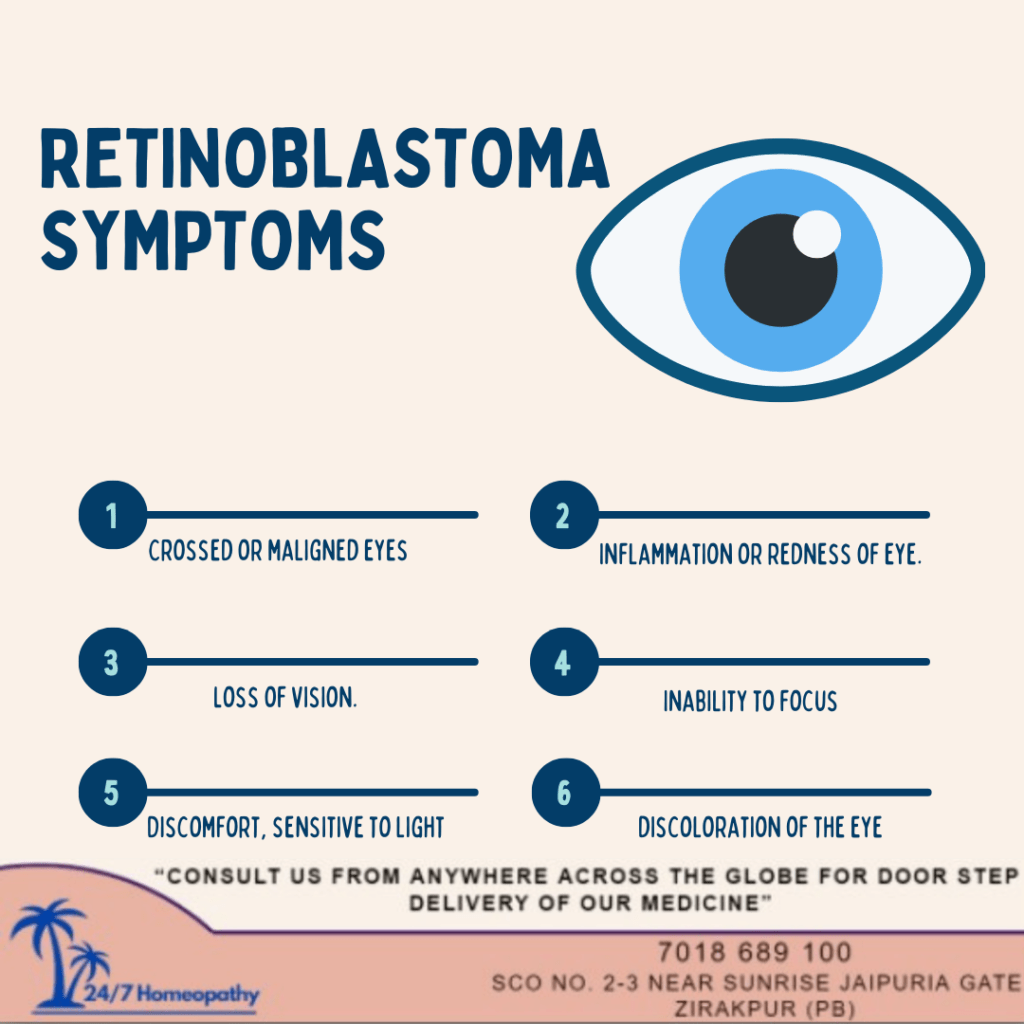
- White or pale reflection in the pupil (leukocoria).
- Crossed or misaligned eyes (strabismus).
- Redness or inflammation of the eye.
- Reduced or loss of vision.
- Difficulty focusing.
- Squinting or frequently closing one eye.
- Increased sensitivity to light.
- Change in the appearance or color of the eye.
- An unusual spot or discoloration in or around the eye.
- Eye discomfort or pain in some cases.
White Pupil in a Child: When Should Parents Be Concerned?
A white pupil is not always caused by retinoblastoma, but it can be an important warning sign.
If a child’s pupil appears white in photographs, particularly repeatedly or in one eye, prompt ophthalmological evaluation is recommended.
Early assessment can help distinguish retinoblastoma from other eye conditions that can produce a similar appearance.
How Is Retinoblastoma Diagnosed?
A specialist may use several examinations and investigations to determine whether a retinal tumor is present.
Eye Examination
An ophthalmologist may examine the retina using an instrument such as an ophthalmoscope. In young children, examination under anesthesia may sometimes be required to obtain a detailed view of the retina.
Ultrasound
Eye ultrasound can help identify a mass within the eye and may provide information about its characteristics.
MRI
MRI can help evaluate the eye and surrounding structures and assess whether the disease has extended beyond the eye.
CT Scan
CT may be used in selected circumstances, although MRI is generally preferred for many evaluations because it does not use ionizing radiation.
Genetic Testing
Testing for changes involving the RB1 gene may be recommended in appropriate cases, particularly when bilateral disease or a hereditary form is suspected.
Biopsy
A biopsy of the eye is not routinely performed to diagnose retinoblastoma, because entering the eye can potentially allow tumor cells to spread. Diagnosis is generally based on specialist eye examination and imaging.
Management and Precautions
Retinoblastoma is a serious childhood cancer and should be managed by a specialist team experienced in pediatric eye cancer.
Treatment depends on factors such as:
- Whether one or both eyes are affected.
- Tumor size and location.
- Whether the tumor has spread.
- The child’s age and general health.
- The possibility of preserving vision.
Treatment may involve specialist approaches such as chemotherapy, focal treatments, radiation in selected situations, or surgery when necessary.
Parents should:
- Seek prompt specialist assessment for an unusual white pupil or other persistent eye changes.
- Attend scheduled eye examinations.
- Follow the treatment plan recommended by the child’s oncology and ophthalmology team.
- Discuss genetic counselling when hereditary retinoblastoma is suspected.
- Ensure appropriate follow-up after treatment.
Do not delay cancer evaluation while trying homeopathic or other complementary treatments.
Homeopathic Approach to Retinoblastoma
The following remedies are retained from the doctor’s original homeopathic notes.
Retinoblastoma requires specialist pediatric oncology and ophthalmology care.
Causticum
The doctor’s notes describe Causticum in relation to eye complaints such as:
- Visual impairment or a sensation of a film before the eyes.
- Eyelid inflammation.
- Ulcerative eye complaints.
- Sparks or dark spots in the visual field.
- Certain ocular muscle disturbances.
Phosphorus
The doctor’s notes describe Phosphorus in relation to:
- Retinal complaints.
- Redness and burning of the eyes.
- Changes in visual perception.
- A sensation of mist or blurred vision.
- Dark or black spots appearing before the eyes.
Euphrasia
The doctor’s notes describe Euphrasia for eye complaints involving:
- Excessive watering of the eyes.
- Acrid tears.
- Eye irritation associated with catarrhal symptoms.
- Eye discharge.
- Pressure or discomfort in the eyes.
Frequently Asked Questions About Retinoblastoma
Can retinoblastoma cause a red or irritated eye?
Yes. Retinoblastoma can sometimes be associated with redness or irritation of the affected eye, although these symptoms have many other possible causes. Persistent or unexplained eye redness in a child should be evaluated.
Can retinoblastoma cause swelling around the eye?
Swelling around the eye can occur in some cases, particularly when the disease has progressed. Unexplained swelling or changes around a child’s eye should receive prompt medical attention.
Can retinoblastoma cause poor vision in one eye?
Yes. Retinoblastoma can affect vision in the affected eye. A child who appears to have reduced vision, does not track objects normally, or shows other changes in vision should be evaluated promptly.
Can retinoblastoma cause an enlarged or bulging eye?
Advanced retinoblastoma can sometimes cause the eye to appear enlarged or bulging. Any new change in the appearance or position of a child’s eye requires prompt specialist assessment.
Can retinoblastoma cause eye pain?
Eye pain can occur in some children with retinoblastoma, particularly in more advanced disease, but pain has many other possible causes. Persistent or severe eye pain should be evaluated promptly.
What should I do if my child has an unusual pupil reflection?
An unusual white or pale pupil reflection, especially one repeatedly noticed in photographs or different lighting, should not be ignored. Arrange prompt evaluation by an eye specialist because retinoblastoma and other eye conditions can cause this finding.
Retinoblastoma Consultation at 247 Homeopathy, Zirakpur
If your child has a white pupil, crossed eyes, unexplained redness, reduced vision or another unusual change in the eye, seek prompt evaluation from a qualified pediatric ophthalmologist.
Dr. Ruchi at 247 Homeopathy, Zirakpur, Punjab, provides consultations for patients from Zirakpur and nearby areas, with online consultation options available for patients worldwide.
For a suspected or diagnosed retinoblastoma, homeopathic consultation should only be considered complementary to appropriate specialist cancer care, never as a replacement.
Consult Dr. Ruchi at 247 Homeopathy to discuss your child’s symptoms and supportive care needs.