OVARIAN CANCER
Ovarian cancer is a type of cancer that develops in the ovaries, which are part of the female reproductive system. The ovaries produce eggs and hormones such as estrogen and progesterone.
Ovarian cancer may not cause obvious symptoms in its early stages. When symptoms do occur, they can sometimes be mistaken for common digestive or menstrual problems. Persistent or unusual symptoms should therefore be medically evaluated.
At 247 Homeopathy, Dr. Ruchi provides individualized homeopathic consultation for patients seeking complementary support alongside appropriate medical care.
What Is Ovarian Cancer?
Ovarian cancer occurs when abnormal cells in or around the ovary begin to grow uncontrollably. These abnormal cells can form a tumor and, depending on the type and stage, may spread to nearby tissues or other parts of the body.
Ovarian cancer includes several different types, and treatment depends on factors such as the cancer type, stage, overall health, and individual medical history.

Causes and Risk Factors of Ovarian Cancer
The exact cause of ovarian cancer is not always known. Changes in DNA can cause ovarian cells to grow and divide abnormally.
Factors that may increase the risk include:
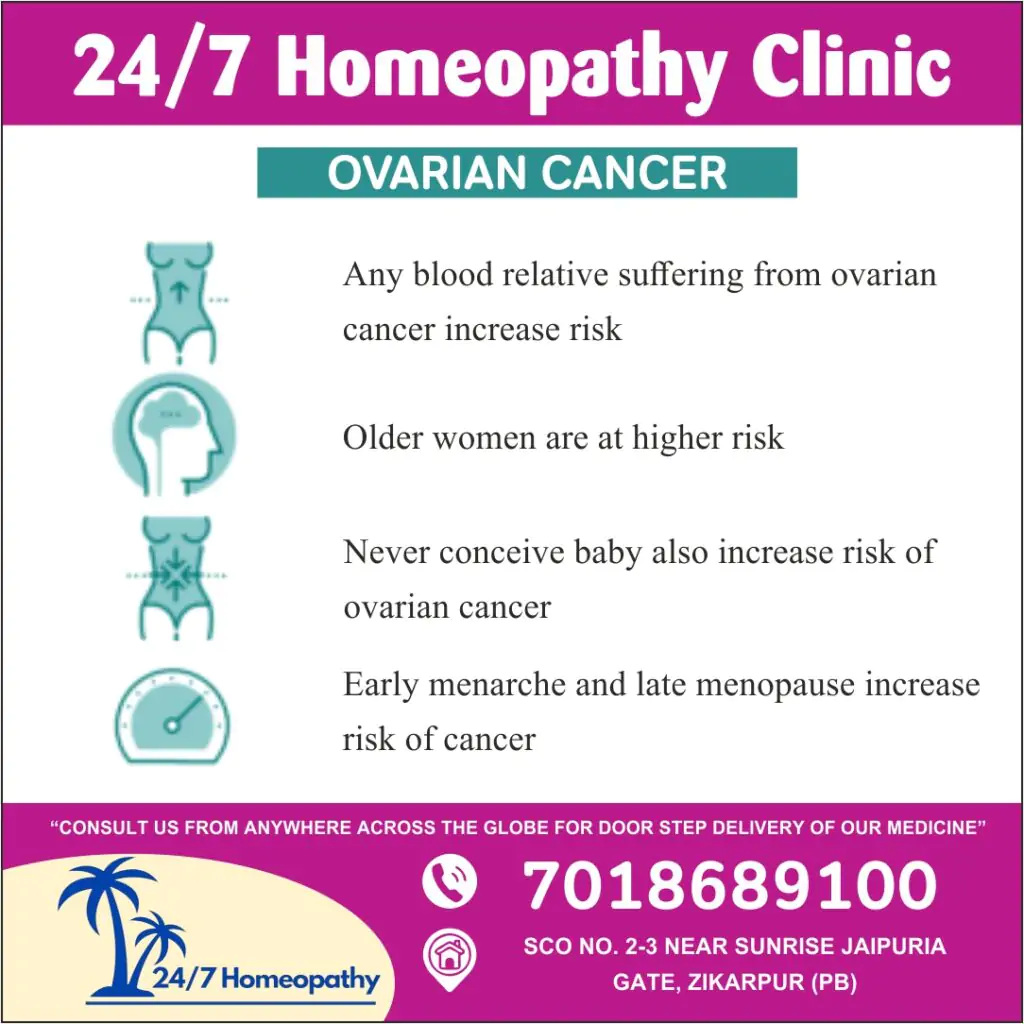
- Increasing age: The risk generally increases as women get older.
- Inherited gene changes: Certain inherited mutations, including BRCA1 and BRCA2, can increase ovarian cancer risk.
- Family history: Having close relatives with ovarian or certain other cancers may increase risk.
- Obesity: Excess body weight may be associated with increased risk.
- Hormonal factors: Some forms of hormone therapy after menopause may influence ovarian cancer risk.
- Reproductive history: Certain reproductive and hormonal factors may affect individual risk.
Having one or more risk factors does not mean that a woman will definitely develop ovarian cancer.
Symptoms of Ovarian Cancer
Symptoms can vary from person to person. Possible symptoms include:
- Persistent bloating or abdominal swelling.
- Pain or discomfort in the lower abdomen or pelvis.
- A feeling of pressure or heaviness in the pelvic area.
- Feeling full quickly after eating.
- Changes in bowel habits, such as constipation.
- Frequent or urgent urination due to pelvic pressure.
- Unexplained weight loss.
- Fatigue or weakness.
- Changes in menstrual patterns or unusual vaginal bleeding.
- Persistent abdominal or pelvic discomfort.
These symptoms can occur with many conditions other than ovarian cancer. However, persistent, new, or worsening symptoms should be evaluated by a qualified healthcare professional.
Diagnosis of Ovarian Cancer
There is no single test that confirms every case of ovarian cancer. Doctors may use several investigations depending on the symptoms and clinical findings.
These may include:
- Physical and pelvic examination
- Blood tests
- Ultrasound and other imaging tests
- CT scan
- MRI
- PET scan in selected cases
- Genetic testing when appropriate
- Laparoscopy
- Biopsy or examination of tissue when required
A specialist may recommend additional tests to determine the type and stage of the cancer.
Precautions and Healthy Lifestyle
There is no guaranteed way to prevent ovarian cancer. However, maintaining overall health is beneficial.
Helpful measures include:
- Maintain a healthy body weight.
- Follow a balanced and nutritious diet.
- Stay physically active.
- Avoid smoking.
- Limit alcohol consumption.
- Discuss the benefits and risks of hormone replacement therapy with your doctor.
- Be aware of your family history of ovarian and related cancers.
- If there is a strong family history of ovarian or breast cancer, discuss genetic counselling and testing with an appropriate healthcare professional.
Homeopathic Treatment Approach for Ovarian Cancer
Patients who choose complementary homeopathic care, Dr. Ruchi may select a medicine based on the person’s individual symptoms, medical history, constitution, and overall health.
The remedies listed in the doctor’s existing notes include:
Conium Maculatum
The doctor’s notes describe this remedy in relation to symptoms such as:
- Menstrual irregularities and scanty periods.
- Pain in the ovarian region.
- Enlarged or indurated ovary.
- Lancinating or sharp pelvic pain.
- Bearing-down sensations.
- Leucorrhoea associated with urinary symptoms.
- Abdominal tightness and pain.
Iodium
The doctor’s notes associate this remedy with:
- Significant weakness during menstruation.
- Pain extending from the ovarian region toward the uterus.
- Irregular menstrual cycles.
- Abdominal pain.
- Constipation alternating with diarrhoea.
- Hot flushes.
- Leucorrhoea.
Medorrhinum
The doctor’s notes describe symptoms including:
- Heavy, dark or clotted menstrual bleeding.
- Pelvic or ovarian pain, particularly around menstruation.
- Acrid leucorrhoea with an unpleasant odour.
- Severe abdominal pain.
- Pelvic discomfort.
FAQs About Ovarian Cancer
Can ovarian cancer cause back pain?
Yes. Ovarian cancer can sometimes cause pain in the lower back or pelvic area. Persistent or unexplained back pain, especially when accompanied by other ongoing symptoms, should be medically evaluated.
Can ovarian cancer cause constipation or diarrhea?
Yes. Ovarian cancer may be associated with changes in bowel habits, including constipation or diarrhea. Persistent or unexplained bowel changes should be assessed by a healthcare professional.
Can ovarian cancer cause frequent urination?
Yes. Ovarian cancer can sometimes cause pressure or discomfort that leads to increased urinary frequency or urgency. Persistent new urinary changes should be medically evaluated.
Can ovarian cancer cause a swollen or enlarged abdomen?
Yes. Persistent abdominal swelling or an increase in abdominal size can occur with ovarian cancer. Ongoing abdominal enlargement should be evaluated, particularly if it is accompanied by bloating or pelvic discomfort.
Can ovarian cancer cause loss of appetite?
Yes. Ovarian cancer may cause reduced appetite or feeling full sooner than usual. Persistent appetite changes or unexplained weight loss should be discussed with a healthcare professional.
Can ovarian cancer recur after treatment?
Yes. Ovarian cancer can return after treatment in some patients. The risk varies according to factors such as the cancer type, stage and response to treatment, so regular follow-up is important.
Ovarian Cancer Consultation at 247 Homeopathy
If you are looking for homeopathic consultation for ovarian cancer in Zirakpur, Dr. Ruchi at 247 Homeopathy provides individualized consultations based on the patient’s symptoms, medical history, and overall health.
Patients from Zirakpur and nearby areas such as Chandigarh, Panchkula, Mohali, Dera Bassi, Baltana, Dhakoli and Ambala can seek consultation. Online consultation can also make it possible for patients from other parts of India and worldwide to connect with the clinic.
Book a consultation with Dr. Ruchi to discuss your symptoms and existing medical reports and understand whether complementary homeopathic care may be appropriate alongside your ongoing medical treatment.


