MERKEL CELL CARCINOMA
Merkel cell carcinoma (MCC) is a rare and potentially aggressive type of skin cancer. It develops from Merkel cells, specialized cells in the skin that are involved in the sense of touch.
Merkel cell carcinoma most commonly appears on areas of skin that receive significant sun exposure, such as the head, neck and arms, although it can develop in other areas as well.
Because MCC can grow rapidly and may spread to nearby lymph nodes or other parts of the body, a new or rapidly growing skin lump should be medically evaluated without delay.
At 247 Homeopathy, Zirakpur, Dr. Ruchi provides individualized homeopathic consultations based on the patient’s symptoms and overall health. Online consultations are also available for patients from other parts of India and worldwide.
What Is Merkel Cell Carcinoma?
Merkel cell carcinoma occurs when Merkel cells undergo abnormal changes and begin to grow uncontrollably.
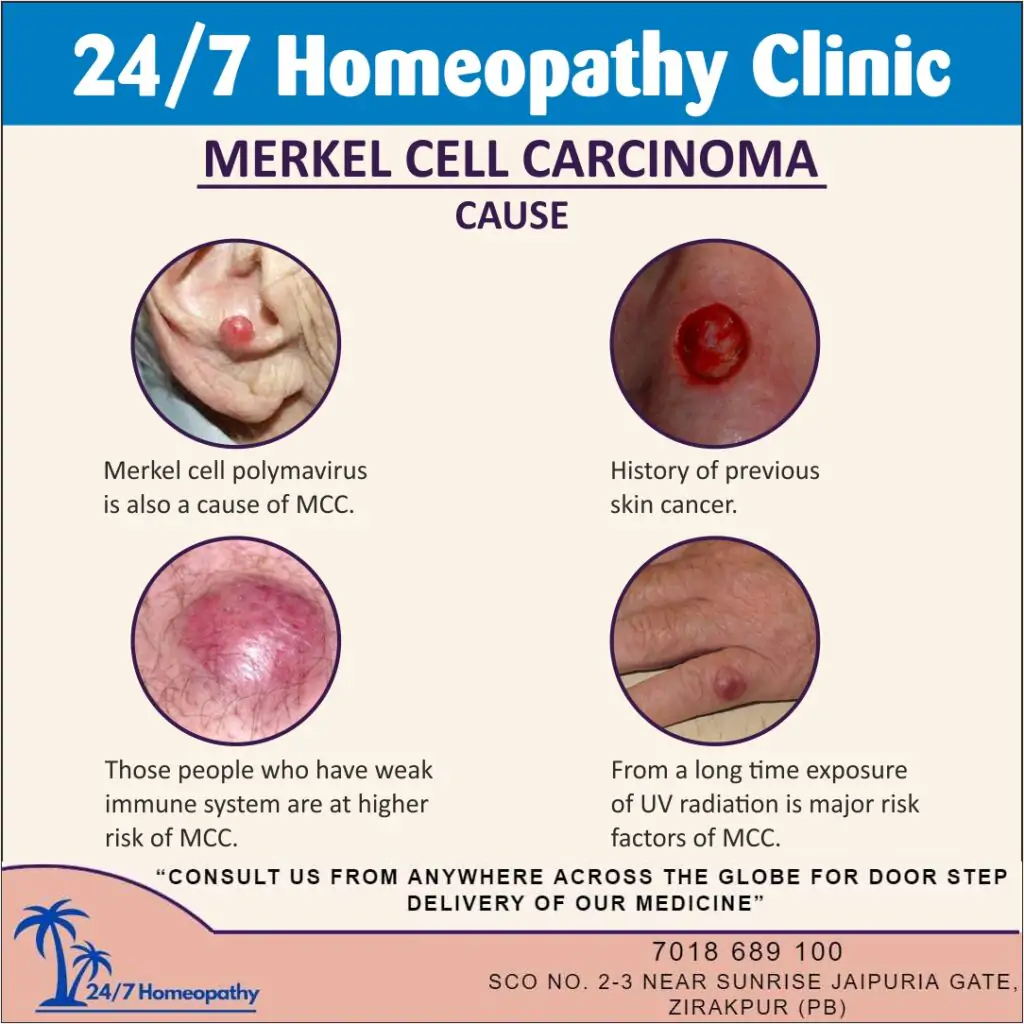
It may initially appear as a small, firm lump on the skin. The lesion can be flesh-colored, pink, red or bluish.
Unlike many common skin lesions, MCC can grow quickly. Early assessment is therefore important when a new skin lump changes rapidly or develops other concerning features.
Causes and Risk Factors
The exact cause of Merkel cell carcinoma is not always known. However, several factors can increase the risk.
1. Long-Term UV Exposure
Long-term exposure to ultraviolet (UV) radiation, particularly from sunlight, is an important risk factor for MCC.
2. Weakened Immune System
People with weakened immune systems may have a higher risk of developing Merkel cell carcinoma.
3. Age
MCC is more commonly diagnosed in people over the age of 50.
4. Previous Skin Cancer
A history of certain previous skin cancers may increase the risk of developing MCC.
5. Merkel Cell Polyomavirus
Merkel cell polyomavirus has been associated with some cases of Merkel cell carcinoma.
Symptoms of Merkel Cell Carcinoma
Merkel cell carcinoma can appear differently from person to person.
Common signs and symptoms may include:
- A flesh-colored, pink, red or bluish lump on the skin
- A rapidly growing skin lump
- Redness or soreness around the affected area
- Ulceration of the skin
- Burning or discomfort
- Swollen or enlarged nearby lymph nodes
- Numbness or tingling
- Pain or tenderness
- Itching
- Thickened or scaly skin
- A shiny appearance of the affected skin
- Bleeding from an ulcerated lesion
- Fatigue or weakness
- Unexplained weight loss
- Loss of appetite
A Rapidly Growing Skin Lump Should Not Be Ignored
One of the important features of MCC is its rapid growth. A new skin lump that increases noticeably in size over a short period should be assessed by a qualified healthcare professional.
Diagnosis and Investigations
If Merkel cell carcinoma is suspected, a healthcare professional will examine the skin lesion and may recommend additional investigations.
Physical Examination
The skin lesion is examined for its size, appearance, location, growth pattern and other suspicious features. Nearby lymph nodes may also be checked.
Biopsy
A biopsy is essential for confirming the diagnosis. A sample of the suspicious skin lesion is examined under a microscope.
The doctor’s original content also mentions sentinel lymph node biopsy, which may be used to evaluate whether cancer cells have reached nearby lymph nodes.
Imaging Tests
Depending on the individual situation, imaging may include:
- CT scan
- MRI scan
- PET scan
Blood Tests
A CBC may be performed as part of the overall medical evaluation, although blood tests alone cannot diagnose Merkel cell carcinoma.
Precautions and Lifestyle Tips
Protect Your Skin From UV Radiation
- Avoid prolonged exposure to strong sunlight.
- Use suitable sun protection when outdoors.
- Wear protective clothing and a hat when appropriate.
- Avoid unnecessary artificial UV exposure.
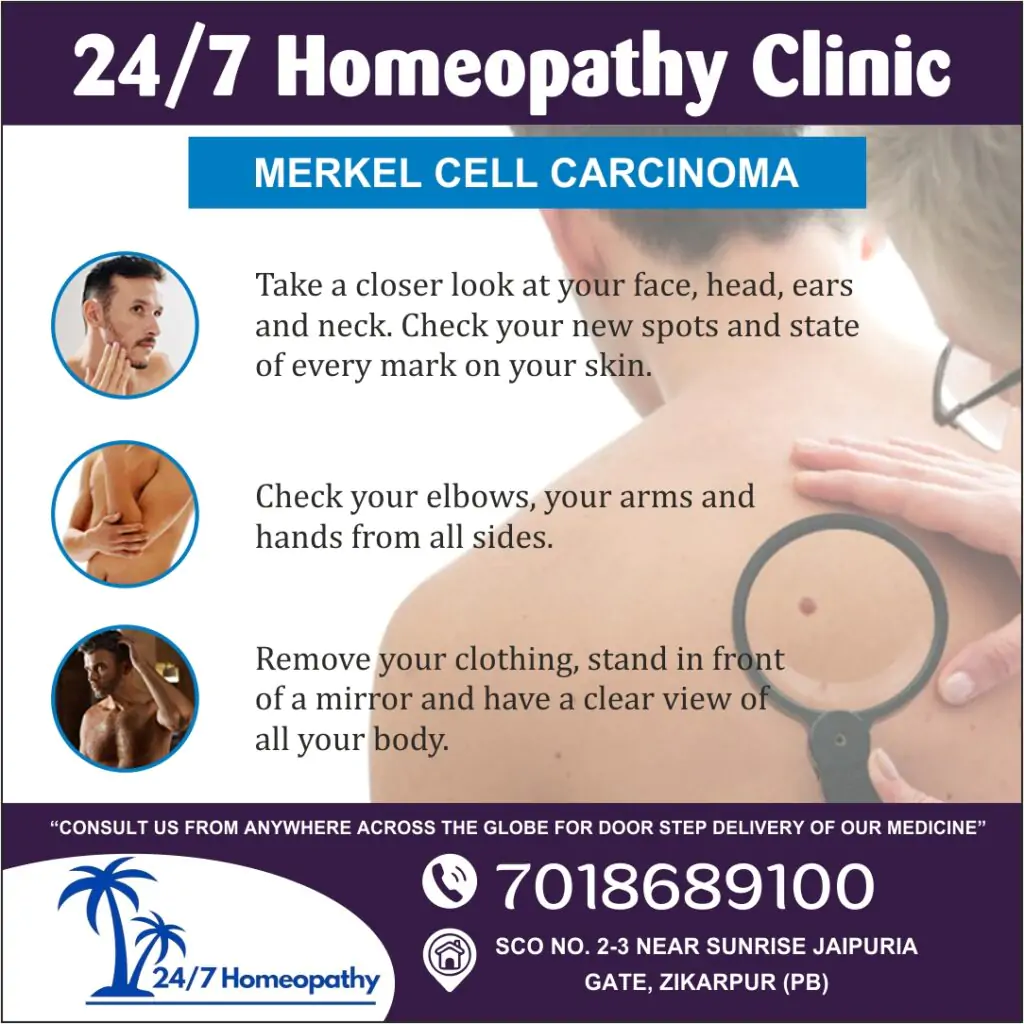
Monitor Your Skin
Pay attention to:
- New skin lumps
- Rapidly growing lesions
- Changes in existing lesions
- Bleeding or ulceration
- Persistent itching or tenderness
- Changes in nearby lymph nodes
Seek Medical Evaluation Early
Do not wait for a skin lump to become painful before seeking medical advice. MCC may grow rapidly and can sometimes be painless in its early stages.
Homeopathic Treatment Approach for Merkel Cell Carcinoma
At 247 Homeopathy, Zirakpur, Dr. Ruchi follows an individualized homeopathic approach based on the patient’s symptoms, skin condition, medical history and overall health.
The following remedies are retained from the doctor’s original content and are presented as traditional symptom patterns considered in homeopathic practice.
Sulphur
The symptom pattern described in the original content includes:
- Dry, scaly and unhealthy-looking skin
- A tendency for small injuries to suppurate
- Itching and burning
- Symptoms becoming worse from scratching and washing
- Pimply eruptions
- Pustules
- Rhagades or skin cracks
- Hangnails
Graphites
The original content describes:
- Rough, hard skin
- Persistent dryness in areas of the skin
- Early-stage keloid and fibroma-like complaints
- Skin eruptions with sticky discharge
- Unhealthy skin
- Discharge from ulcers
- Sweating of the feet
Hepar Sulphuris
The symptom pattern described includes:
- Abscesses
- Suppuration associated with prickly pain
- Unhealthy skin
- Small injuries that tend to suppurate
- Deep cracks on the hands and feet
- Ulcers that are sensitive to contact
- Burning and stinging sensations
- Easy bleeding from ulcers
- Sensitivity to exposure or being uncovered
- Offensive body odors or discharges
Frequently Asked Questions About Merkel Cell Carcinoma
1. Can Merkel cell carcinoma be mistaken for a harmless skin lump?
Yes. Merkel cell carcinoma can initially resemble a benign skin growth or other skin condition. A new lump that grows quickly, changes in appearance, bleeds or becomes tender should be evaluated by a healthcare professional.
2. Can Merkel cell carcinoma cause swollen lymph nodes?
Yes. Swollen lymph nodes near the skin lesion can occur if Merkel cell carcinoma has spread to nearby lymph nodes. New or persistent lymph node swelling should be medically assessed.
3. Can Merkel cell carcinoma cause pain or tenderness?
Yes. Some Merkel cell carcinoma lesions may become tender or painful, although the lump may also be painless. Persistent or rapidly changing skin lumps should be checked.
4. Can Merkel cell carcinoma bleed or form an ulcer?
Yes. A Merkel cell carcinoma lesion can sometimes bleed or develop an ulcer, particularly as it grows. A skin lump that repeatedly bleeds or develops an open sore should be evaluated.
5. Can Merkel cell carcinoma come back after treatment?
Yes. Merkel cell carcinoma can recur after treatment in some people. The risk varies depending on factors such as the extent and characteristics of the cancer, so regular follow-up is important.
6. When should I see a doctor for a rapidly growing skin lump?
You should arrange prompt medical evaluation if a skin lump is growing quickly, is new or unusual, changes color or appearance, bleeds, becomes painful or is associated with swollen lymph nodes. Early assessment is especially important because Merkel cell carcinoma can grow and spread rapidly.
Consultation at 247 Homeopathy, Zirakpur
If you have a new or rapidly growing skin lump, seek appropriate medical evaluation promptly. A biopsy may be necessary when Merkel cell carcinoma is suspected.
For patients seeking complementary homeopathic care, Dr. Ruchi at 247 Homeopathy, Zirakpur, Punjab, provides individualized consultations based on symptoms, medical history and available medical reports.
The clinic serves patients from Zirakpur and nearby areas, including Chandigarh, Panchkula, Mohali and surrounding regions. Online consultations are also available for patients across India and worldwide.
During a consultation, Dr. Ruchi can review your symptoms and existing medical information and determine whether complementary homeopathic care may be appropriate alongside standard medical care.
Contact 247 Homeopathy to enquire about a consultation with Dr. Ruchi.