MELANOMA
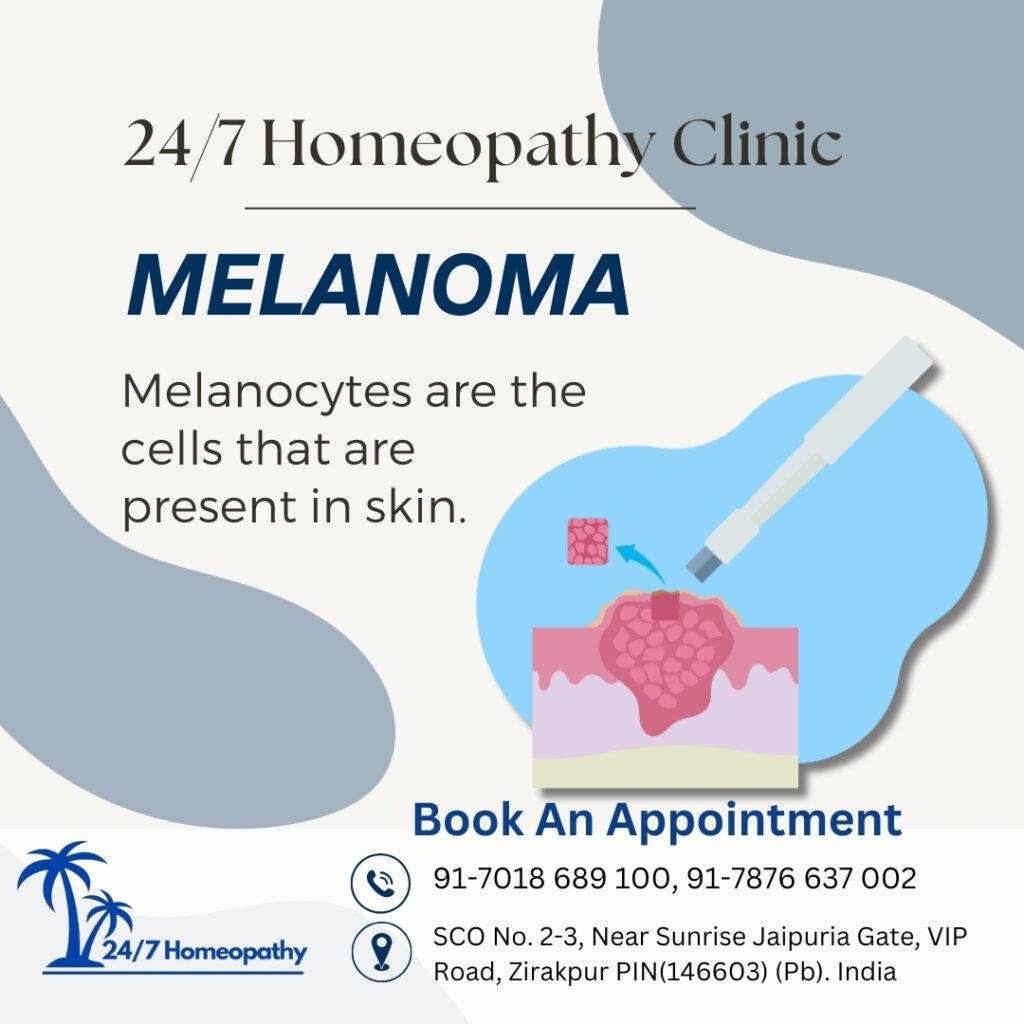
Melanoma is a type of skin cancer that develops from melanocytes, the cells responsible for producing melanin. Melanin gives color to the skin, hair and eyes.
Melanoma develops when melanocytes grow and multiply abnormally, forming a malignant tumor. It can be an aggressive form of skin cancer and may spread to other parts of the body, so early evaluation of suspicious skin changes is important.
At 247 Homeopathy, Zirakpur, Dr. Ruchi provides individualized homeopathic consultations based on the patient’s symptoms and overall health. Online consultation is also available for patients from India and worldwide.
What Is Melanoma?
Melanocytes are pigment-producing cells found mainly in the skin. When these cells undergo abnormal changes and begin multiplying uncontrollably, melanoma can develop.
A melanoma may appear as a new skin lesion or as a change in an existing mole. Changes in size, shape, color, border or texture should be medically evaluated.
Because melanoma can progress and spread, a suspicious mole or skin lesion should not be self-diagnosed or ignored.
Causes and Risk Factors of Melanoma
The main environmental risk factor mentioned in Dr. Ruchi’s content is exposure to ultraviolet (UV) radiation from the sun.
Other risk factors include:
1. Genetic Factors
Some inherited gene mutations can increase the risk of developing melanoma.
2. Fair Skin
People with fair skin may have a higher risk, particularly when exposed to significant amounts of UV radiation.
3. Multiple or Unusual Moles
Having a large number of moles or unusual-looking moles can increase the risk of melanoma.
4. Weakened Immune System
People with weakened immune systems may have a higher risk of developing certain cancers, including melanoma.
5. Age
Melanoma can occur at any age. The original content notes that it is commonly seen around 50–60 years, although younger people can also develop it.
6. Men and Women
Melanoma can affect both men and women.
Symptoms and Warning Signs of Melanoma
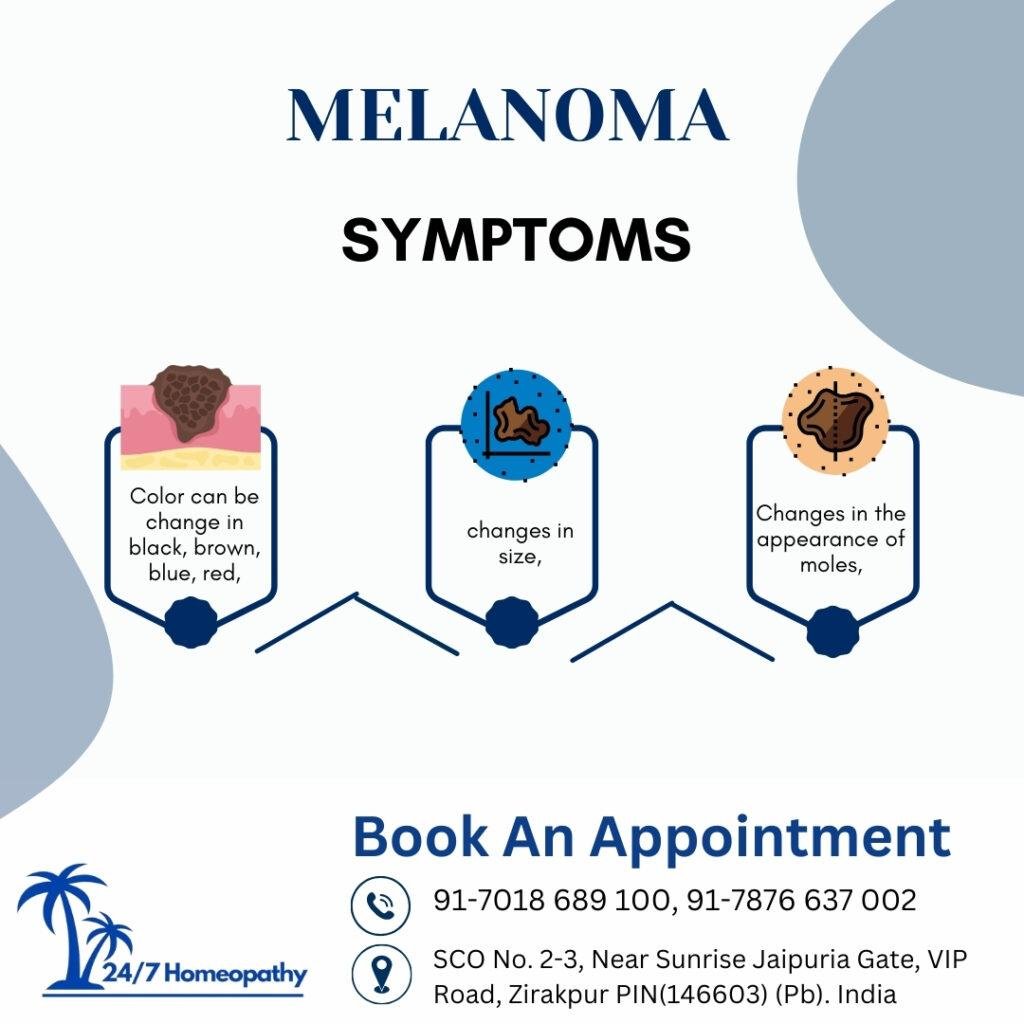
One of the most important signs is a new or changing mole or skin lesion.
Possible changes include:
- Change in the size of a mole
- Change in its shape
- Change in color
- Change in texture
- Irregular or asymmetrical appearance
- Jagged, blurred or irregular borders
- Multiple colors within the same lesion, including black, brown, blue, red or white
- Itching
- Bleeding
- Crusting or scaling
- Tenderness
- Pain
- Burning or irritation
ABCDE Warning Signs
The ABCDE approach can help people recognize suspicious changes:
A – Asymmetry: One half does not resemble the other half.
B – Border: The edges may be irregular, jagged or poorly defined.
C – Color: The lesion may contain different colors or uneven pigmentation.
D – Diameter: Larger lesions may be more concerning, although melanoma can also be smaller.
E – Evolving: Any mole that changes in size, shape, color or appearance should be checked.
Important: These features do not diagnose melanoma by themselves. A dermatologist or other qualified healthcare professional should evaluate a suspicious lesion.
Diagnosis and Investigations
If melanoma is suspected, a healthcare professional may recommend examination and testing to determine whether the lesion is cancerous and whether it has spread.
Dermatoscopy
Dermatoscopy allows a dermatologist to examine a skin lesion in greater detail.
Biopsy
A biopsy is important for confirming melanoma. A sample of the suspicious lesion is examined under a microscope.
The types of biopsy mentioned in Dr. Ruchi’s original content include:
- Punch biopsy
- Incisional biopsy
- Excisional biopsy
Imaging Tests
Depending on the diagnosis and clinical situation, investigations may include:
- CT scan
- PET scan
- Blood tests
These tests may be used when doctors need to assess the extent of melanoma or investigate possible spread.
Precautions and Skin Care
Because UV radiation is an important risk factor, protecting the skin from excessive sun exposure is advisable.
- Avoid prolonged exposure to strong sunlight.
- Use appropriate sun protection when outdoors.
- Wear protective clothing and a hat when appropriate.
- Avoid artificial tanning and other unnecessary UV exposure.
- Monitor existing moles regularly.
- Pay attention to new or changing skin lesions.
- Do not attempt to remove or treat a suspicious mole at home.
If a mole begins changing, bleeding, itching or developing a crust, arrange a medical evaluation.
Homeopathic Treatment Approach for Melanoma
At 247 Homeopathy, Zirakpur, Dr. Ruchi follows an individualized homeopathic approach based on the patient’s symptoms, skin characteristics and overall health.
The following remedies are retained from the doctor’s original content. The symptom indications have been organized for easier understanding.
Thuja
The symptom pattern described in the original content includes:
- Dry skin with brown spots
- Zona or herpetic eruptions
- Eruptions mainly on covered parts
- Brown spots on the hands and arms
- Freckles and blotches
- Polyps, tubercles and warts
- Carbuncles and ulcers
- Sweetish and strong-smelling perspiration
- Marked sensitivity to touch
Sulphur
The original content describes:
- Dry, scaly and unhealthy-looking skin
- A tendency for small injuries to suppurate
- Freckles
- Burning and itching
- Symptoms becoming worse from scratching and washing
- Skin problems after local medication
- Pimply eruptions and pustules
- Rhagades or skin cracks
- Hangnails
Silicea
The symptom pattern described includes:
- Felons and abscesses
- Boils and ulcers
- Cracks on the fingertips
- Rose-colored blotches
- Complaints involving foreign bodies in tissues
- Damaged or deformed nails
- Scars that suddenly become painful
Frequently Asked Questions About Melanoma
1. Can melanoma appear suddenly on normal-looking skin?
Yes. Melanoma can develop in a new area of skin without starting in an existing mole. Any new or unusual skin growth that changes over time should be evaluated by a healthcare professional.
2. Can melanoma cause an itchy or bleeding mole?
Yes. A melanoma may itch, bleed, crust or become painful, although these symptoms can also occur with non-cancerous skin conditions. A mole with new or persistent changes should be checked.
3. Can melanoma be mistaken for a normal mole?
Yes. Early melanoma can sometimes resemble an ordinary mole. Changes in size, shape, border, color or appearance are important reasons to have a lesion examined.
4. Can melanoma develop under a fingernail or toenail?
Yes. Melanoma can develop in areas such as the nail, where it may appear as a dark or changing streak or patch. A new or changing dark mark under a nail should be medically assessed.
5. Can melanoma occur without a dark or black mole?
Yes. Not all melanomas are dark black. Some may have little pigment and can appear pink, red, skin-colored or otherwise unusual, making professional evaluation important when a lesion changes.
6. Can melanoma come back after treatment?
Yes. Melanoma can recur after treatment in some people. The risk depends on factors such as the characteristics and stage of the melanoma, so recommended follow-up is important.
Consultation at 247 Homeopathy, Zirakpur
If you have a new or changing skin lesion, the first step should be appropriate medical evaluation and diagnosis.
For patients seeking complementary homeopathic care, Dr. Ruchi at 247 Homeopathy, Zirakpur, Punjab provides individualized consultations based on symptoms, medical history and available medical reports.
247 Homeopathy serves patients from Zirakpur and nearby areas, including Chandigarh, Panchkula, Mohali and surrounding regions. Online consultations are also available for patients from other parts of India and worldwide.
During consultation, Dr. Ruchi can review your symptoms and available reports and determine whether complementary homeopathic care is appropriate for your individual situation.
Contact 247 Homeopathy to enquire about a consultation with Dr. Ruchi.


