KAPOSI SARCOMA
Kaposi sarcoma is a type of cancer that develops from cells lining blood and lymphatic vessels. It can appear as lesions or tumors on the skin and inside the mouth, but it may also develop in other parts of the body.
Kaposi sarcoma can affect soft tissues and organs such as the gastrointestinal tract, lungs and lymph nodes.
It is a rare type of cancer and is often associated with infection by human herpesvirus 8 (HHV-8), particularly when the immune system is weakened.
What Is Kaposi Sarcoma?
Kaposi sarcoma develops from cells associated with blood and lymphatic vessels.
The condition may produce visible skin or mucosal lesions. Depending on where it develops, it can also affect internal organs.
Kaposi sarcoma may occur in people with weakened immune systems, although not everyone infected with HHV-8 develops Kaposi sarcoma.
Causes and Risk Factors of Kaposi Sarcoma
Infection with human herpesvirus 8 (HHV-8) is associated with the development of Kaposi sarcoma.
However, infection with HHV-8 alone does not mean that a person will develop Kaposi sarcoma. A weakened immune system can increase the risk.
Risk factors mentioned in the doctor’s content include:
Organ transplantation, particularly because immune-suppressing medicines may be used after transplantation
HHV-8 infection
HIV infection
Older age
Symptoms of Kaposi Sarcoma
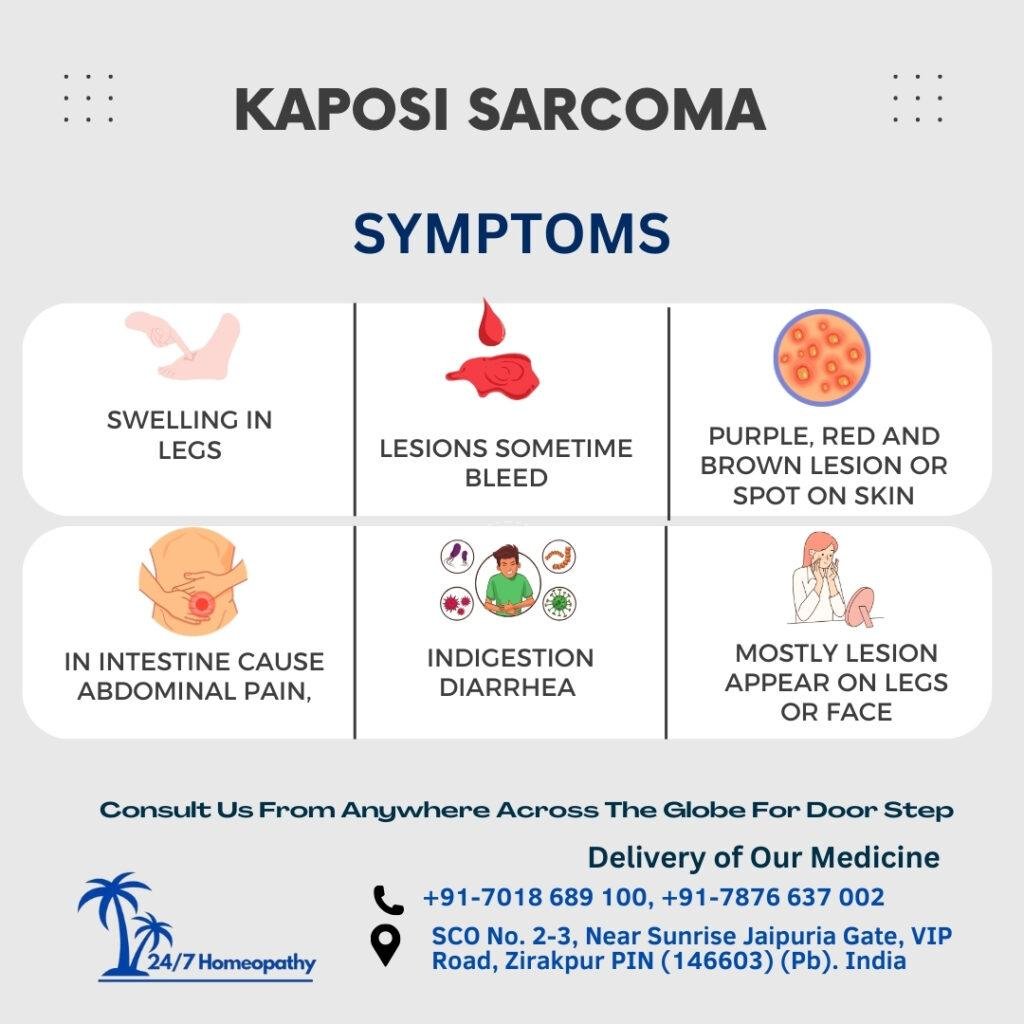
Symptoms can vary depending on which part of the body is affected.
Common symptoms mentioned in the doctor’s content include:
- Purple, red or brown lesions or spots on the skin
- Lesions commonly appearing on the legs or face
- Swelling of the legs
- Lesions affecting mucous membranes
- Shortness of breath when the lungs are involved
- Abdominal pain, indigestion or diarrhea when the gastrointestinal tract is affected
- Lesions that may bleed
- Severe swelling of the arms, legs, face or scrotum when lesions interfere with the normal flow of lymphatic fluid
A new or changing purple, red or brown skin lesion—especially in someone with a weakened immune system—should be evaluated by a healthcare professional.

Diagnosis of Kaposi Sarcoma
Diagnosis may involve different examinations depending on the location of the suspected lesion.
The doctor’s information includes:
Physical Examination
A doctor examines the skin, mouth and other areas for characteristic lesions or swelling.
Skin Biopsy
A punch biopsy may be performed when a skin lesion needs to be examined.
Chest X-ray
A chest X-ray may be used when there is concern about involvement of the lungs.
Bronchoscopy
Bronchoscopy may be used to examine the airways when lung involvement is suspected.
Gastrointestinal Endoscopy
Endoscopy may be performed when gastrointestinal involvement is suspected.
Fecal Occult Blood Test
This test may help identify hidden blood in the stool when gastrointestinal involvement is suspected.
Additional investigations may be recommended depending on the person’s symptoms and clinical findings.
Precautions and Lifestyle Tips
The following precautions are included in the doctor’s recommendations:
- Avoid smoking.
- Avoid excessive alcohol consumption.
- Maintain a healthy body weight.
- Exercise regularly according to your health condition.
- Practice safer sex.
- Maintain good hygiene.
- Support overall immune health through appropriate medical care and a healthy lifestyle.
- Eat fresh and nutritious food.
- Take appropriate precautions regarding exposure to HHV-8.
Homeopathic Treatment Approach for Kaposi Sarcoma
At 247 Homeopathy, Dr. Ruchi’s homeopathic approach considers the individual’s symptoms and overall condition when selecting a remedy.
The following remedies are included in the doctor’s existing homeopathic treatment section for the symptom patterns described below.
Arsenicum Album
The symptom pattern described for Arsenicum Album includes:
- Epithelioma of the skin
- Malignant pustules
- Burning, itching and edematous skin eruptions
- Difficulty lying down because of a suffocating sensation
- Painful abdomen with a sensation as if there are wounds in the abdominal wall
- Generalized swelling involving the legs, arms or body
- Easy bleeding from the gums
- Burning and bleeding from the nose
Kreosotum
The symptom pattern described for Kreosotum includes:
- Skin eruptions that bleed easily
- Itching of eruptions, worse in the morning
- Distended abdomen
- Bloody and offensive stools
- Painful, hard spot in the stomach
- Burning or choking sensation in the throat
- Nausea and vomiting of food several hours after eating
- Hoarseness with pain in the larynx
- Raw, burning sensation in the chest with pain and oppression
Sulphur
The symptom pattern described for Sulphur includes:
- Dry, scaly and unhealthy skin
- Eruptions or pustules that are worse from scratching and washing
- Oppression and burning sensation in the chest
- Difficult respiration with a desire for fresh air
- Acidity and sour eructations
- Burning and painful abdominal pressure
- Painless diarrhea with redness and itching around the anus
Frequently Asked Questions
1. Can Kaposi sarcoma cause swollen legs or feet?
Yes. Kaposi sarcoma can cause swelling of the legs or feet, particularly when lesions affect lymphatic vessels or interfere with normal fluid drainage.
2. Can Kaposi sarcoma cause mouth sores or lesions?
Yes. Kaposi sarcoma can affect the mouth and may appear as purple, red or brown lesions. Any unusual or persistent oral lesion should be evaluated.
3. Can Kaposi sarcoma cause coughing or breathing problems?
Yes. If Kaposi sarcoma affects the lungs or airways, it may cause coughing, shortness of breath or other breathing difficulties.
4. Can Kaposi sarcoma cause stomach or digestive problems?
Yes. When Kaposi sarcoma affects the gastrointestinal tract, symptoms may include abdominal discomfort, indigestion, diarrhea or bleeding.
5. Can Kaposi sarcoma spread to other parts of the body?
Yes. Kaposi sarcoma can involve areas beyond the skin, including lymph nodes and internal organs such as the lungs or gastrointestinal tract. The extent of involvement varies between individuals.
6. Can Kaposi sarcoma come back after treatment?
Yes. Kaposi sarcoma can recur in some people after treatment. The risk depends on factors such as the extent of disease and the person’s immune status, so ongoing medical follow-up may be recommended.
Consultation at 247 Homeopathy
If you are looking for homeopathic consultation for Kaposi sarcoma, Dr. Ruchi at 247 Homeopathy, Zirakpur can review your symptoms and overall condition and guide you regarding an individualized homeopathic approach.
Homeopathic consultation may be considered as complementary care, while appropriate cancer investigations, specialist consultations and medically recommended treatment continue.
247 Homeopathy – Dr. Ruchi
Zirakpur, Punjab