CHORDOMAS
Chordomas are very rare tumors that can occur in children. They are generally slow-growing and develop from tissues associated with the spine.
Chordomas can develop anywhere along the spine, but they are commonly found around the skull base. As a chordoma grows, it may put pressure on nearby structures, including parts of the spinal cord or brain.
The symptoms depend largely on the location and size of the tumor.
What Are Chordomas?
A chordoma is a rare tumor that develops along the central axis of the body, particularly in areas associated with the spine and skull base.
In children, chordomas are uncommon. Because the tumor can grow near important nerves, the spinal cord or structures of the brain, symptoms may develop when nearby tissues are affected or compressed.
Chordomas generally grow slowly, so symptoms may develop gradually.

Causes and Risk Factors of Chordomas
The exact cause of chordomas is not known.
The information provided by Dr. Ruchi mentions possible genetic associations, including:
- A possible association with tuberous sclerosis, a genetic disorder.
- Changes in the TBXT gene have been identified in some people affected by chordomas.
- Chordomas can occur in people with or without a family history of the condition.
A genetic change does not necessarily mean that a child will develop a chordoma. The exact reasons why these tumors develop are not fully understood.
Symptoms of Chordomas
The symptoms of a chordoma depend on where the tumor develops and which nearby structures are affected.
As the tumor grows, it may put pressure on nearby areas of the spinal cord or brain.
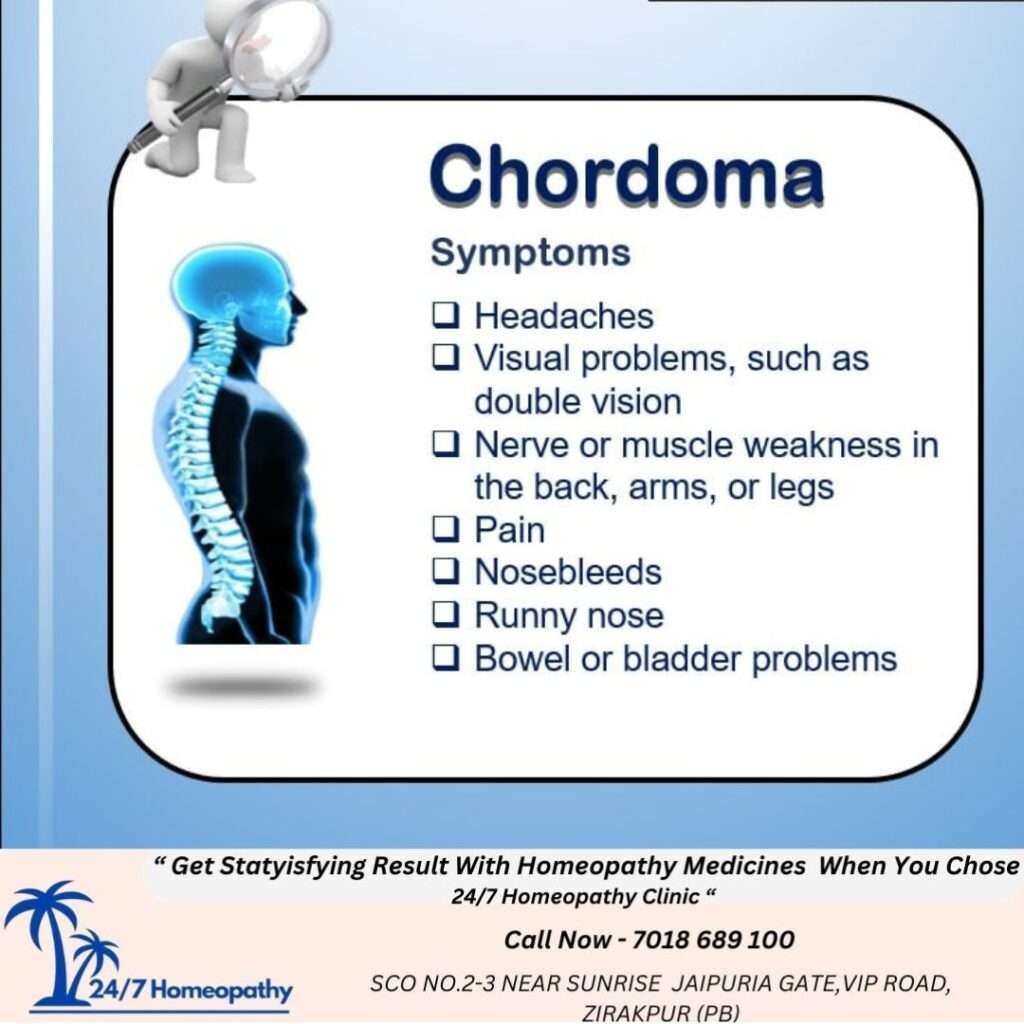
Symptoms mentioned in the provided information include:
- Pain
- Weakness
- Numbness in the back, arms or legs
- Double vision
- Blurred vision
- Severe headache, particularly at the back of the skull
- Facial paralysis
- Facial pain
The symptoms can vary significantly from one child to another. Persistent or unexplained neurological symptoms should be medically evaluated.
WHAT ARE THE CHORDOMAS SYMPTOMS:
Diagnosis of Chordomas
Diagnosis may involve several investigations to identify the location and characteristics of the tumor.
Imaging Tests
The imaging investigations mentioned in the provided information include:
- X-ray
- CT scan
- MRI
These tests can help doctors evaluate the location and size of an abnormal growth and its relationship with nearby structures.
Biopsy
A biopsy involves taking a sample of tissue for examination. It may help determine the nature of an abnormal growth and assist in confirming the diagnosis.
Blood Tests
Blood tests may also be performed as part of the overall medical evaluation.
The exact diagnostic tests required depend on the child’s symptoms and the suspected location of the tumor.
Precautionary Measures
There is no specific measure that can guarantee prevention of chordomas because their exact cause is not known.
The precautions mentioned in the provided information include:
- Follow regular medical checkups when there is a relevant family history.
- Avoid smoking and tobacco use.
- Consult a qualified physician if a child develops unusual or persistent symptoms.
- Do not ignore unexplained neurological symptoms such as persistent pain, weakness, numbness or changes in vision.
Early medical assessment is particularly important when symptoms involve the brain, spinal cord or nerves.
Homeopathic Treatment Approach for Chordomas
At 247 Homeopathy, the homeopathic approach is considered according to the individual’s symptoms, health history and overall presentation.
The remedies mentioned in Dr. Ruchi’s original notes include Arsenicum Album, Lachesis and Phosphorus.
Arsenicum Album
The provided notes mention:
- Great exhaustion after slight exertion
- Irritable weakness
- Confusion and restlessness
- Swollen, pale or sunken face with sweating
- Weakness in the lower back
- Pain and burning in the back
- Trembling, twitching, spasms and cramps in the calves
- Paralysis or marked weakness of the lower limbs
Lachesis
The provided notes mention:
- Head pain with pressure and burning at the vertex
- Defective vision
- Pale face
- Pain in the facial bones
- Neuralgia of the coccyx, worse when rising from a sitting position
- Body ache and weakness
- Hot perspiration
Phosphorus
The provided notes mention:
- Sensation of heat coming from the spine
- Vertigo and faintness
- Congestion of the head
- Mental fatigue
- Diplopia or double vision
- Pale, sickly complexion
- Blue rings around the eyes
- Tearing pain in the facial bones
- Back pain as if the back were broken
- Weakness and trembling after exertion
- Weakness of the spine
Frequently Asked Questions
Can cholangiocarcinoma cause back pain?
Yes. Bile duct cancer may cause pain in the abdomen or back, although back pain has many possible causes and does not by itself indicate cholangiocarcinoma.
Can cholangiocarcinoma cause loss of appetite?
Yes. Some people with cholangiocarcinoma may experience reduced appetite, sometimes along with weight loss, nausea or general weakness.
Can bile duct cancer cause itching without a rash?
Yes. Cholestasis caused by impaired bile flow can lead to itching, sometimes without a visible skin rash. Persistent unexplained itching, particularly with jaundice or dark urine, should be medically evaluated.
Can cholangiocarcinoma cause pale or clay-coloured stools?
Yes. A blockage of bile flow can reduce the amount of bile reaching the intestine, which may make stools unusually pale or clay-coloured.
Can cholangiocarcinoma cause fever or chills?
Fever can occur in people with bile duct cancer, particularly when there is associated infection or inflammation of the bile ducts. Fever with jaundice or significant abdominal pain requires prompt medical evaluation.
Can cholangiocarcinoma be detected through a blood test?
Blood tests can identify changes such as abnormal liver function and may include tumour markers, but blood tests alone generally cannot establish a diagnosis of cholangiocarcinoma. Imaging and, when appropriate, tissue or other diagnostic procedures may be needed.
Consultation at 247 Homeopathy, Zirakpur
If you are looking for a homeopathic consultation regarding your child’s symptoms or health concerns, 247 Homeopathy with Dr. Ruchi in Zirakpur, Punjab, provides individualized consultations based on the child’s symptoms and health history.
Parents can discuss symptoms, previous investigations, medical reports and ongoing treatment during a consultation.
For a child diagnosed with or being investigated for a chordoma, appropriate specialist evaluation and continued medical follow-up are essential. Any complementary homeopathic approach should be discussed with the child’s treating medical team.


