BRAIN TUMOUR
A brain tumour is a mass or growth of abnormal cells that develops in the brain. Brain tumours may be benign (non-cancerous) or malignant (cancerous). They can develop in different parts of the brain and may also occur in the spinal cord.
The symptoms of a brain tumour can vary depending on its type, location and effect on surrounding areas of the brain. Early evaluation of unusual or persistent symptoms is important.
What Is a Brain Tumour?
A brain tumour develops when abnormal cells grow and form a mass in the brain. Brain tumours can be of different types depending on the cells from which they develop and the part of the brain involved.
Some brain tumours develop directly in the brain, while metastatic brain tumours originate in another part of the body and spread to the brain.
Types of Brain Tumours
Some types of brain tumours include:
1. Gliomas
Gliomas arise from glial cells, which are cells that support and protect nerve cells in the brain.
2. Meningiomas
Meningiomas arise from the meninges, the protective membranes surrounding the brain and spinal cord.
3. Pituitary Tumours
Pituitary tumours arise from the pituitary gland, which plays an important role in regulating hormones in the body.
4. Medulloblastomas
Medulloblastomas arise from cells in the brain and are a type of brain tumour that can occur particularly in children.
5. Schwannomas
Schwannomas arise from Schwann cells, which are associated with the nerves.
6. Metastatic Brain Tumours
Metastatic brain tumours originate in another part of the body and spread to the brain.
Brain Tumour Causes and Risk Factors
The exact cause of a brain tumour is not always known. Certain factors may increase the risk of developing some types of brain tumours.
Genetics
Some genetic mutations may increase the risk of developing a brain tumour.
Age
Brain tumours can occur at different ages. Some types are more commonly seen in adults, while certain types may occur more frequently in children.
Immune System
People with a weakened immune system may have an increased risk of certain types of brain tumours.
Family History
A family history of certain brain tumours or genetic conditions may increase the risk in some individuals.
Radiation Exposure
Frequent or significant exposure to ionizing radiation may increase the risk of developing certain brain tumours.
Other Factors
The exact relationship between brain tumours and factors such as hormonal changes, industrial chemical exposure or previous head injury may vary. These factors should not be assumed to be direct causes of every brain tumour.
Having a risk factor does not necessarily mean that a person will develop a brain tumour.
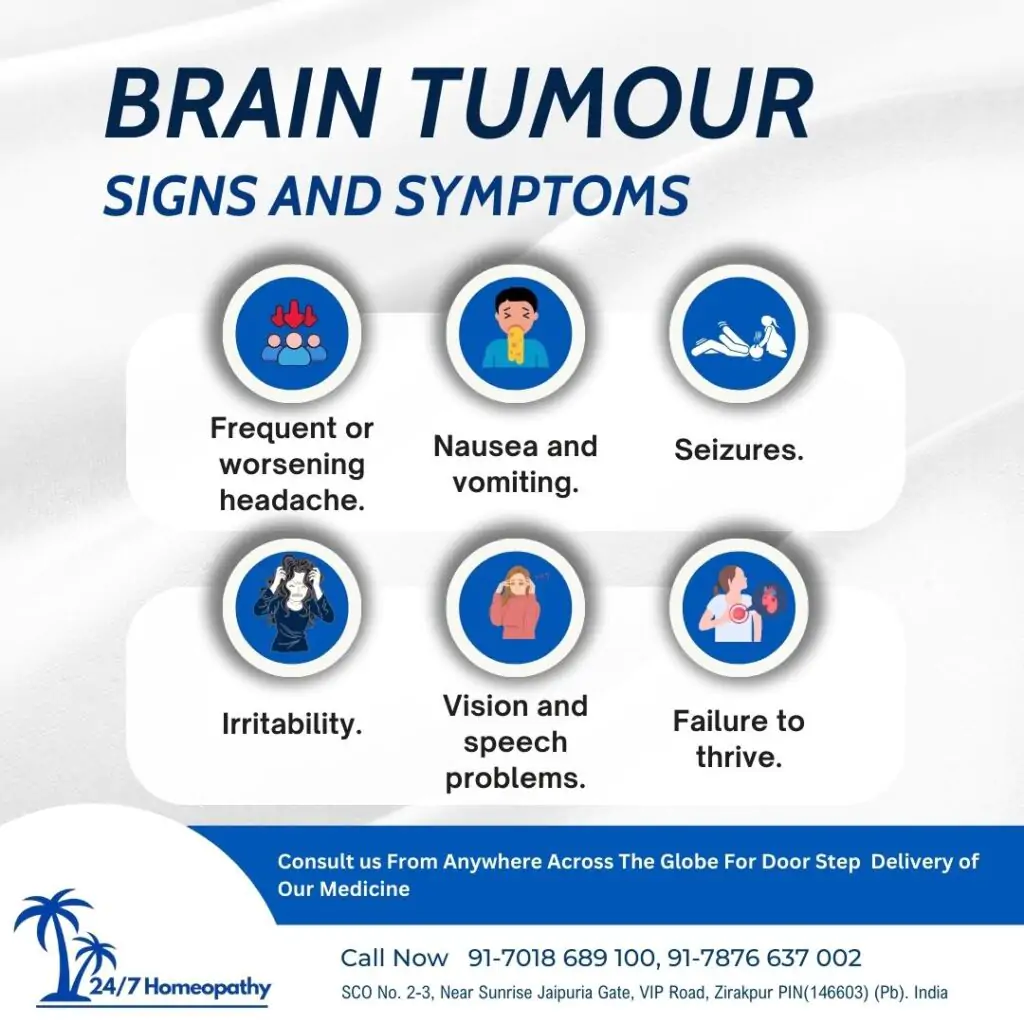
Signs and Symptoms of Brain Tumours
Brain Tumour Signs and Symptoms
Brain tumour symptoms can vary depending on the location and size of the tumour.
Common signs and symptoms may include:
- Frequent or worsening headaches
- Nausea and vomiting
- Seizures
- Irritability
- Vision problems
- Speech problems
- Weakness or numbness in the limbs or other parts of the body
- Difficulty with coordination or balance
- Changes in appetite
- Changes in personality or behaviour
- Difficulty speaking or understanding language
- Fatigue
- Problems with thinking, concentration or learning
- Memory difficulties
- Dizziness or vertigo
Not everyone with these symptoms has a brain tumour. However, persistent, worsening or unusual neurological symptoms should be evaluated by a qualified healthcare professional.
Brain Tumour Prevention and Precautions
Some general precautions include:
- Protect the head from injury.
- Avoid smoking and tobacco.
- Maintain a healthy lifestyle.
- Avoid unnecessary exposure to ionizing radiation.
- Follow medical advice if you have a known risk factor.
- Seek medical evaluation when neurological symptoms persist or worsen.
Healthy lifestyle habits can support general health but should not be considered a guaranteed method of preventing brain tumours.
Investigations for Brain Tumour
If a brain tumour is suspected, the doctor may recommend investigations to understand the location and nature of the abnormal growth.
Imaging Tests
MRI and CT scans may be used to identify the size and location of a lesion in the brain.
Biopsy
A biopsy may be performed when required to examine the tumour tissue and help determine whether it is benign or malignant.
Blood Tests
Blood tests may be recommended to investigate other possible causes of symptoms or to assess the patient’s general health.
The exact investigations required depend on the individual patient’s symptoms and medical condition.
Brain Tumour Homeopathic Treatment Approach

At 247 Homeopathy, Dr. Ruchi assesses the patient’s symptoms and individual condition before selecting a homeopathic remedy.
Brayta carb
- Forgetfulness, confusion and loss of memory.
- Feeling as if brain is loose.
- Vertigo when standing in sun.
- Pain in forehead and eyes.
- Persistent drowsiness.
- Numbness in the forehead and at the root of the nose.
Conium mac
- Vertigo when lying down.
- Sudden and severe headache accompanied with nausea and vomiting.
- Heaviness in the head.
- Dyspnea.
- Suffocation feeling.
- Drowsiness mainly in daytime.
- Photophobia.
Plumbum met
- Pain in forehead which is tearing and pressing type.
- Loss of memory.
- Dizziness and fainting.
- Sadness and depression.
- Slow perception of things and concepts.
- Patient gets irritable on hearing loud noises.
- Heaviness in the eyes especially on movement.
Frequently Asked Questions About Brain Tumour
Can a brain tumour cause dizziness or balance problems?
Yes. A brain tumour can affect areas of the brain involved in balance and coordination, potentially causing dizziness, unsteadiness or difficulty walking. These symptoms can also have many other causes.
Can a brain tumour cause personality changes?
Yes. Depending on its location, a brain tumour may affect behavior, mood, personality or judgment. New or significant changes in these areas should be medically assessed.
Can a brain tumour cause vision changes?
Yes. Some brain tumours can affect vision, causing blurred or double vision, visual field changes or other disturbances. New or persistent vision changes require medical evaluation.
Can a brain tumour cause seizures in someone who has never had one before?
Yes. A brain tumour can sometimes cause a first-time seizure. A new seizure requires prompt medical assessment to determine its cause.
Can a brain tumour cause weakness on one side of the body?
Yes. Depending on its location, a brain tumour can affect areas responsible for movement and cause weakness or reduced coordination, sometimes more noticeable on one side.
Can a brain tumour cause nausea and vomiting without a stomach problem?
Yes. Increased pres
Consultation at 247 Homeopathy, Zirakpur
If you are experiencing symptoms associated with a brain tumour or have already undergone investigations,247 Homeopathy in Zirakpur, Punjab, provides homeopathic consultation with Dr. Ruchi.
During the consultation, Dr. Ruchi can review your symptoms, health history and available medical reports and discuss an individualized homeopathic approach.
Patients are encouraged to bring relevant MRI/CT reports, biopsy reports, prescriptions and previous medical records when available.