MEATSTATSIC SQUAMOUS NECK CANCER WITH OCCULT PRIMARY
Metastatic squamous cell carcinoma of the neck with an occult primary is a condition in which squamous cancer cells are found in one or more lymph nodes of the neck, but the original site where the cancer started cannot initially be identified.
This is sometimes described as squamous cell carcinoma of unknown or occult primary presenting in the neck. Finding the primary site is important because it helps doctors determine the most appropriate treatment.
At 247 Homeopathy, Zirakpur, Dr. Ruchi provides individualized homeopathic consultations based on the patient’s symptoms and overall health. Online consultation is also available for patients from other parts of India and worldwide.
What Is Metastatic Squamous Cell Carcinoma of the Neck With Occult Primary?
Squamous cell carcinoma (SCC) develops from squamous cells, which are found in the lining of many parts of the body, including areas of the head and neck.
In this condition, cancerous squamous cells are identified in the lymph nodes of the neck, but the original tumor—the primary cancer—cannot be identified at the initial evaluation.
The primary tumor may sometimes be very small or located in an area that is difficult to detect. Therefore, further examination and investigations may be required.
Identifying the primary location is important because the treatment approach can depend on the location, extent and characteristics of the cancer.
Causes and Risk Factors
The exact reason why the primary tumor remains unidentified is not always known.
Factors mentioned in Dr. Ruchi’s original content include:
- Unknown or occult primary tumor location
- Delayed identification of the primary tumor
- Tobacco use and smoking
- Alcohol consumption
- Reduced or altered immune function
Tobacco and Smoking
Tobacco exposure is an important risk factor for several cancers of the head and neck. Smoking and other forms of tobacco use should be avoided.
Alcohol
Regular or heavy alcohol consumption can increase the risk of certain head and neck cancers, particularly when combined with tobacco exposure.
HPV
Human papillomavirus (HPV) can be associated with some head and neck cancers. HPV testing may therefore form part of the evaluation in appropriate patients.
Having a risk factor does not necessarily mean that a person will develop cancer.
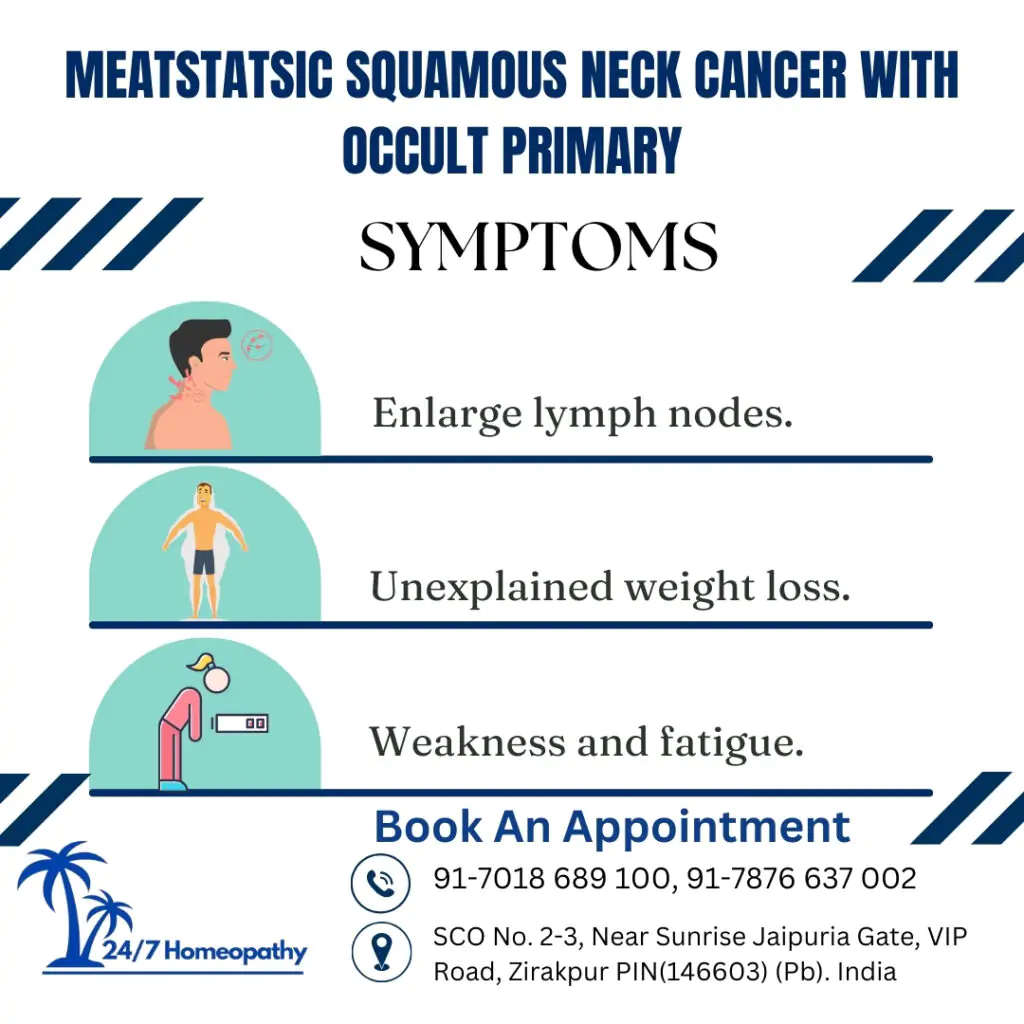
Symptoms of Metastatic Squamous Cell Carcinoma of the Neck
Symptoms can vary depending on the lymph nodes involved and whether the primary tumor is eventually identified.
Possible symptoms include:
- Enlarged lymph nodes in the neck
- Neck pain or discomfort
- Difficulty swallowing (dysphagia)
- Changes in the voice or persistent hoarseness
- Ear pain
- Persistent cough
- Throat pain
- Unexplained weight loss
- Loss of appetite
- Weakness and fatigue
Enlarged Neck Lymph Node
A persistent or progressively enlarging lump in the neck should be medically evaluated, particularly when it is associated with weight loss, swallowing difficulty, voice changes or other persistent symptoms.
A neck lump does not always mean cancer, but it should not be ignored.

Diagnosis and Investigations
The main diagnostic challenge is identifying both the cancer in the neck lymph node and, if possible, the location of the primary tumor.
The investigations listed in Dr. Ruchi’s original content include:
Blood Tests
- CBC (Complete Blood Count)
- LFT (Liver Function Tests)
- KFT (Kidney Function Tests)
These tests can help assess general health and organ function and may be useful when planning further investigation or treatment.
HPV Testing
HPV testing may be performed when clinically appropriate because certain head and neck squamous cell carcinomas can be associated with HPV.
Imaging
Investigations may include:
- CT scan
- MRI
- PET scan
- X-ray
These tests can help doctors assess the lymph nodes and search for a possible primary tumor or other areas of disease.
FNAC
Fine-needle aspiration cytology (FNAC) may be performed on an enlarged lymph node to obtain cells for examination.
Endoscopy
Endoscopic examination may be used to examine areas of the throat and other parts of the upper aerodigestive tract where a primary tumor may be located.
Biopsy
A biopsy provides tissue for microscopic examination and can help confirm the type of cancer.
Why Is Finding the Primary Tumor Important?
When squamous cell carcinoma is found in the neck lymph nodes but the primary tumor cannot initially be located, further evaluation is important.
The primary site can influence:
- The type of treatment recommended
- The area that needs to be treated
- The extent of surgery or radiation when indicated
- Further investigations and monitoring
For this reason, a person diagnosed with metastatic squamous cell carcinoma with occult primary should remain under appropriate specialist cancer care.
Precautions and Lifestyle Tips
Lifestyle changes cannot replace cancer treatment, but they can support general health.
Stop Tobacco Use
Avoid smoking and all forms of tobacco. If you use tobacco, seek professional support to help quit.
Avoid or Limit Alcohol
Avoiding alcohol is particularly important for people with a history of head and neck cancer or significant risk factors.
Maintain Good Nutrition
Cancer and its treatment can affect appetite, swallowing and nutritional status. A balanced diet and appropriate nutritional support can help maintain strength.
Attend Follow-Up Appointments
Regular follow-up is important because the primary tumor may sometimes become identifiable later or additional monitoring may be required.
Report New Symptoms
Tell your healthcare team about new or persistent:
- Neck swelling
- Difficulty swallowing
- Voice changes
- Ear or throat pain
- Persistent cough
- Unexplained weight loss
Homeopathic Treatment Approach
At 247 Homeopathy, Zirakpur, Dr. Ruchi follows an individualized homeopathic approach based on the patient’s symptoms, constitution and overall health.
The following remedies are retained from the doctor’s original content. The descriptions have been reorganized for easier reading.
Phosphorus
The symptom pattern described in the original content includes:
- Enlarged lymph nodes
- Debility or marked weakness
- Palpitations
- Shortness of breath or dyspnea with minimal exertion
- Loose, offensive stools followed by significant exhaustion
Scrophularia
The original content describes this remedy in relation to:
- Enlarged lymph nodes
- Scrofulous-type swelling
- Debility
- Swelling of lymph nodes
- Asthma in scrofulous patients
- Nodosities in the breasts
Arsenicum Album
The symptom pattern described includes:
- Marked dyspnea or shortness of breath
- Pallor
- Profound weakness or debility
- Glandular enlargement
- Restlessness and anxiety
- Symptoms described as worse around midnight and afternoon
Important Note About Homeopathic Care
The remedies above are retained from Dr. Ruchi’s original homeopathic content and describe symptom patterns traditionally considered in homeopathic practice.
Because metastatic squamous cell carcinoma is a serious cancer, homeopathy should not be used as a replacement for cancer diagnosis or specialist treatment. Treatment decisions should be made with an appropriate oncologist or head-and-neck cancer specialist.
If you are undergoing surgery, radiation, chemotherapy, immunotherapy or another cancer treatment, discuss any complementary or homeopathic medicine with your treating medical team before using it.
Frequently Asked Questions
What does metastatic squamous cell carcinoma of the neck mean?
It means squamous cell cancer has spread to one or more lymph nodes in the neck, while the original site where the cancer started has not been identified.
What is an occult primary tumor?
An occult primary tumor is a cancer whose original site cannot initially be found despite appropriate investigation.
What are the symptoms of squamous cell carcinoma in the neck?
An enlarged neck lymph node or neck lump is an important presentation. Other symptoms can include neck pain, difficulty swallowing, voice changes, ear pain, persistent cough, throat pain, weight loss and fatigue.
Can a neck lump be the first sign of cancer?
Yes. In some patients, an enlarged lymph node in the neck may be the first noticeable sign of an underlying head and neck cancer.
Why is HPV testing done?
HPV can be associated with some head and neck squamous cell carcinomas. Testing may provide additional information that can help doctors understand the cancer.
Which tests can help find the primary tumor?
Depending on the individual case, evaluation may include CT, MRI, PET scan, endoscopy, FNAC and biopsy, along with blood tests and other investigations.
Is metastatic squamous cell carcinoma of the neck treatable?
Treatment depends on factors such as the extent of cancer, lymph-node involvement, tumor characteristics and whether the primary site can be identified. A cancer specialist should determine the appropriate treatment plan.
Which homeopathic medicines are mentioned on this page?
Dr. Ruchi’s original content mentions Phosphorus, Scrophularia and Arsenicum Album, each associated with particular symptom patterns.
Can homeopathy cure metastatic squamous cell carcinoma?
There should be no guarantee of cure with homeopathy. Metastatic squamous cell carcinoma requires appropriate specialist cancer evaluation and evidence-based treatment. Homeopathy, if used, should only be considered complementary care and should not delay recommended cancer treatment.
Can I take homeopathy during cancer treatment?
Discuss this with both your oncologist and homeopathic doctor before starting any complementary medicine. Some products may potentially interfere with conventional treatment or may not be appropriate for an individual patient.
Consultation at 247 Homeopathy, Zirakpur
If you or a family member has been diagnosed with metastatic squamous cell carcinoma of the neck with an occult primary, appropriate specialist cancer care should remain the priority.
For patients who wish to explore complementary homeopathic care, Dr. Ruchi at 247 Homeopathy, Zirakpur, Punjab provides individualized consultations based on symptoms, medical history and available reports.
The clinic serves patients from Zirakpur and nearby areas, including Chandigarh, Panchkula, Mohali and surrounding regions. Online consultations are also available for patients from other parts of India and worldwide.
You can discuss your symptoms, diagnosis and existing treatment during consultation so that Dr. Ruchi can determine whether complementary homeopathic care is appropriate for your individual situation.
Contact 247 Homeopathy to enquire about a consultation with Dr. Ruchi.


