MULTIPLE ENDOCRINE NEOPLASIA SYNDROMES
Multiple Endocrine Neoplasia (MEN) syndromes are a group of inherited disorders that mainly affect the endocrine system. The endocrine system includes glands that produce hormones and regulate many important functions of the body.
Different types of MEN can affect different endocrine glands and may lead to tumors or abnormal hormone production.
The main types mentioned in the doctor’s content are MEN Type 1, MEN Type 2A and MEN Type 2B.
What Are Multiple Endocrine Neoplasia Syndromes?
Multiple endocrine neoplasia syndromes are inherited conditions associated with genetic changes that can increase the risk of tumors involving certain endocrine glands.
MEN Type 1
MEN Type 1 is associated with a mutation in the MEN1 gene. It mainly affects:
- Parathyroid glands
- Pancreas
- Pituitary gland
MEN Type 2A
MEN Type 2A is associated with changes in the RET proto-oncogene. It can affect:
- Thyroid gland
- Adrenal glands
- Parathyroid glands
MEN Type 2B
MEN Type 2B is also associated with changes in the RET gene. The doctor’s content mentions involvement of:
- Thyroid gland
- Adrenal gland
- Nerve tissue, including ganglioneuromas
Causes of Multiple Endocrine Neoplasia Syndromes
MEN syndromes are associated with inherited genetic mutations.
The genetic changes mentioned in the doctor’s content include:
- MEN1 gene mutation in MEN Type 1
- RET proto-oncogene changes in MEN Type 2A
- RET gene changes in MEN Type 2B
Because MEN syndromes can run in families, genetic evaluation may be recommended in appropriate cases.
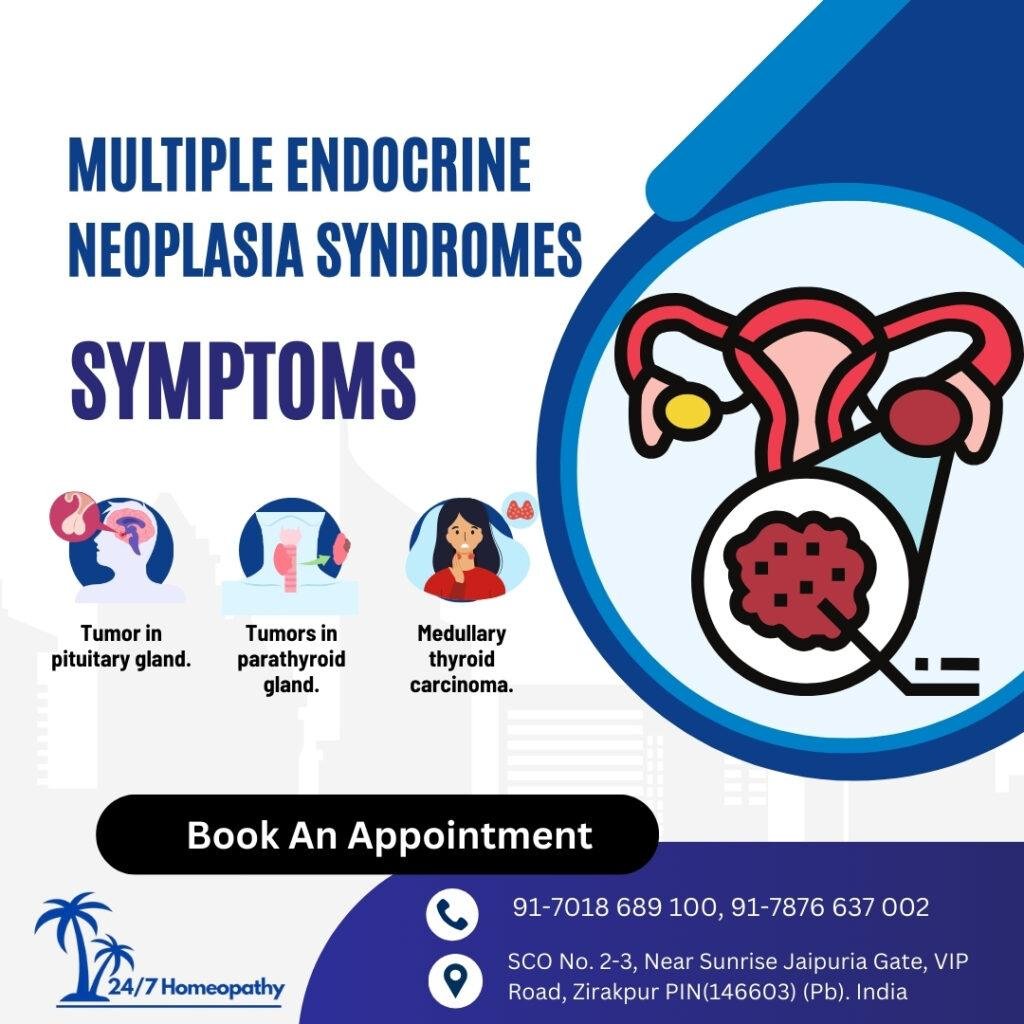
Symptoms of Multiple Endocrine Neoplasia Syndromes
Symptoms can vary considerably depending on the type of MEN syndrome, the endocrine glands affected and the hormones involved.
Symptoms Associated With MEN Type 1
The doctor’s content includes:
- Tumors of the parathyroid glands
- Hyperparathyroidism
- Insulinomas
- Gastrinomas
- Glucagonomas
- Tumors of the pituitary gland
Symptoms Associated With MEN Type 2A
The doctor’s content includes:
- Medullary thyroid carcinoma (MTC)
- Tumor of the adrenal gland
- Hyperparathyroidism
Symptoms Associated With MEN Type 2B
The doctor’s content includes:
- Medullary thyroid carcinoma (MTC)
- Pheochromocytoma
- Ganglioneuromas
- Long limbs
- Joint hypermobility
Other Common Symptoms
Depending on the glands affected and associated hormonal changes, symptoms may include:
- Weight loss
- Mood changes
- Reduced energy levels
- A lump or mass in the affected area
- Abdominal pain
- Diarrhea or vomiting
- Constipation
- Joint pain
- Long limbs
- High blood pressure (HTN)
- Loss of appetite
- Weakness
Not everyone with MEN syndrome will experience all of these symptoms.

Investigations for Multiple Endocrine Neoplasia Syndromes
The investigations mentioned in the doctor’s content include:
- Genetic testing
- CBC
- Hormone level assessment
- Ultrasound
- CT scan
- MRI
- Octreotide scan
- Biopsy
The investigations required depend on the type of MEN syndrome, symptoms, affected glands and clinical findings.
Precautions and Lifestyle Tips
Because MEN syndromes are inherited conditions, appropriate medical follow-up is important.
Patients should:
- Follow the monitoring and investigation schedule recommended by their doctor.
- Keep regular follow-up appointments.
- Inform healthcare professionals about a known family history of MEN syndrome.
- Discuss genetic testing when recommended.
- Report new lumps, unexplained weight changes, abdominal symptoms, weakness or other new symptoms.
- Continue appropriate specialist care for endocrine or tumor-related conditions.
Family members may also need medical or genetic evaluation when advised by their healthcare professional.
Homeopathic Treatment Approach
The following medicines are included in Dr. Ruchi’s existing homeopathic treatment section. In homeopathic practice, medicine selection is individualized according to the patient’s symptoms and overall condition.
Phosphorus
The doctor’s content mentions Phosphorus as an indicated medicine in MEN when the symptom picture includes:
- Debility or marked weakness
- Loose and offensive stools followed by complete exhaustion
- Palpitation of the heart
- Shortness of breath or dyspnea on slight exertion
- Loss of appetite
Arsenic Album
The symptom indications mentioned in the doctor’s content include:
- Dyspnea, shortness of breath and pallor
- Profound blood changes
- Weak heart action
- Glandular enlargement
- Restlessness and anxiety
- Aggravation around midnight and in the afternoon
Silicea
The doctor’s content mentions Silicea in relation to:
- Icy-cold and sweaty feet
- Fibrotic conditions and scar tissue
- Diseases of the bone, including caries and necrosis
- Tumor-related conditions
- Ill effects of vaccinations
- Supportive processes
Frequently Asked Questions
1. Can multiple endocrine neoplasia cause high blood pressure?
Yes. High blood pressure can occur in some people with MEN, particularly when certain hormone-producing tumors affect the adrenal glands. Persistent or unexplained high blood pressure should be evaluated.
2. Can multiple endocrine neoplasia cause kidney stones?
Yes. MEN type 1 can affect the parathyroid glands, which may lead to increased calcium levels and kidney stones. Recurrent or unexplained kidney stones may warrant evaluation for an underlying endocrine problem.
3. Can multiple endocrine neoplasia cause diarrhea?
Yes. Diarrhea can occur with some hormone-producing tumors associated with MEN. Persistent or unexplained diarrhea, especially when accompanied by other hormonal symptoms, should be medically assessed.
4. Can multiple endocrine neoplasia cause a lump in the neck?
Yes. MEN type 2 can involve the thyroid gland and may be associated with a thyroid nodule or neck lump. A new or enlarging neck lump should be evaluated by a healthcare professional.
5. Can multiple endocrine neoplasia be inherited from a parent?
Yes. MEN syndromes are inherited genetic conditions, so a person with an affected parent may have an increased risk of carrying the associated gene change. Genetic counseling and testing may be recommended in appropriate situations.
6. Can multiple endocrine neoplasia cause tumors in more than one gland?
Yes. A key feature of MEN syndromes is the development of tumors or abnormal growths involving more than one endocrine gland. The specific glands affected depend on the type of MEN.
Consultation at 247 Homeopathy
If you or a family member has multiple endocrine neoplasia syndrome and would like to discuss complementary homeopathic care, you can consult Dr. Ruchi at 247 Homeopathy, Zirakpur, Punjab.
247 Homeopathy serves patients from Zirakpur and nearby areas, as well as patients seeking consultation from other parts of India and worldwide.
Consult Dr. Ruchi at 247 Homeopathy, Zirakpur, to discuss your individual symptoms and homeopathic care approach.


