Diaper Rash
Diaper rash is a common skin problem in babies and young children. It usually appears as redness, irritation or inflammation on the skin covered by the diaper, particularly around the buttocks and genital area.
The medical term for irritation caused by prolonged contact with a diaper is irritant diaper dermatitis.
Diaper rash commonly develops when moisture, urine, stool, friction and prolonged contact with the diaper irritate a baby’s sensitive skin. Most cases are mild and improve with appropriate skin care, but some rashes may be associated with a yeast or bacterial infection and require medical assessment.
What Is Diaper Rash?
Diaper rash is inflammation of the skin in the diaper area.
A baby’s skin is delicate and can become irritated when it remains wet or comes into repeated contact with urine or stool. Friction from a diaper can further damage the skin barrier.
Diaper rash may also occur because of a reaction to soaps, wipes, detergents or other products used around the diaper area.
How Common Is Diaper Rash?
Diaper rash is very common during infancy, and many babies experience it at some point.
It does not necessarily mean that a baby’s hygiene is poor. Even with good diaper care, irritation can occur because of moisture, friction, bowel movements or skin sensitivity.
Causes of Diaper Rash
Several factors can contribute to diaper dermatitis.
Friction
Repeated rubbing between the diaper and the baby’s skin can cause irritation, particularly if the diaper is tight.
Prolonged Wetness
A wet or soiled diaper left on for a long time can expose the skin to moisture and irritants, increasing the risk of rash.
Urine and Stool
Urine and stool can irritate the skin. Diarrhea may increase the risk because frequent loose stools can cause repeated irritation around the anus and buttocks.
Yeast Infection
Candida albicans is a type of yeast that can cause infection in the diaper area. Candida diaper dermatitis may be more persistent than ordinary irritation and often causes a bright-red rash.
Bacterial Infection
Damaged skin can sometimes become infected with bacteria. Bacterial infections require appropriate medical evaluation and treatment.
Irritation or Allergy
Soaps, wipes, fragrances, detergents and certain diaper materials can irritate sensitive skin or cause a contact reaction.
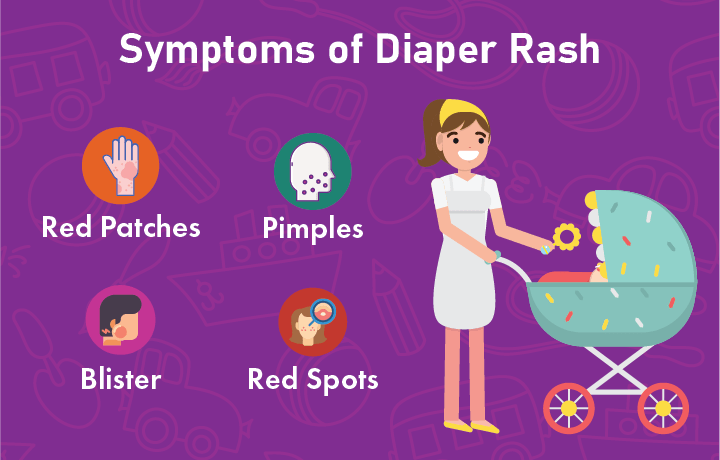
Symptoms of Diaper Rash
Common symptoms include:
- Red or inflamed skin around the buttocks
- Redness around the genital area
- Small red spots or bumps
- Skin irritation and soreness
- Burning or discomfort
- The baby becoming restless or irritable during diaper changes
- Increased sensitivity when the affected area is cleaned
Signs of Candida Diaper Rash
A yeast-related diaper rash may appear:
- Bright red
- More inflamed
- Involving the skin folds
- With small red spots or bumps around the main rash
Signs of Possible Infection
Seek medical advice if the baby develops:
- Fever
- Pus-filled lesions
- Yellowish discharge
- Yellow or honey-coloured crusting
- Rapidly worsening redness or swelling
- Significant pain
- A rash that does not improve with basic skin care
A fever should not automatically be attributed to diaper rash. In a young infant, fever can require prompt medical assessment.
Types and Conditions That Can Affect the Diaper Area
Different types of rashes and skin conditions can occur around the diaper area.
Irritant or Chafing Dermatitis
This is one of the most common forms of diaper rash. It usually causes redness and irritation where the diaper repeatedly contacts the skin.
Candidal Diaper Dermatitis
This is caused by an overgrowth of Candida yeast. It commonly causes a bright-red rash and may involve the skin folds.
Intertrigo
Intertrigo occurs when skin surfaces rub together in warm, moist areas. It can affect skin folds around the groin and diaper area.
Impetigo
Impetigo is a bacterial skin infection that can cause blisters, oozing and yellowish or honey-coloured crusts. It requires medical assessment.
Seborrheic Dermatitis
Seborrheic dermatitis commonly affects areas such as the scalp, eyebrows and around the ears. In some babies, it can also affect other areas of the body.
These conditions can look similar, so persistent, severe or unusual rashes should be evaluated by a healthcare professional.
Risk Factors for Diaper Rash
Diaper rash is more likely when:
- A diaper is worn for a prolonged period.
- The diaper is too tight.
- The baby’s skin remains wet for long periods.
- The baby has diarrhea.
- The baby has frequent bowel movements.
- The skin is sensitive or already irritated.
- The child has recently taken antibiotics, which can sometimes increase the risk of Candida overgrowth.
- Fragranced or irritating products are used on the diaper area.
Diagnosis
Most uncomplicated diaper rashes can be identified by examining the affected skin.
A doctor may assess:
- The appearance and location of the rash
- Whether skin folds are involved
- How long the rash has been present
- Whether the baby has diarrhea or other symptoms
- Whether there are signs of yeast or bacterial infection
- Whether a new diaper, wipe, soap or other product has been introduced
Additional testing is not usually necessary for a straightforward diaper rash. If the rash is persistent or its cause is uncertain, a healthcare professional may recommend further evaluation.
Prevention and Skin Care
Good diaper care can help prevent and reduce irritation.
Change Diapers Frequently
Avoid leaving a wet or soiled diaper on the baby for an extended period. Change it as soon as reasonably possible.
Clean Gently
Clean the buttocks and genital area gently using lukewarm water or suitable baby wipes.
Avoid vigorous rubbing.
Keep the Skin Dry
After cleaning, gently pat the area dry with a soft cloth rather than rubbing the skin.
Allow Some Air Exposure
Whenever practical, allow the baby’s skin some diaper-free time. This can help reduce prolonged moisture and friction.
Use a Protective Barrier
A suitable diaper barrier cream or ointment can help protect irritated skin from moisture and stool.
Avoid Irritating Products
Avoid unnecessary fragrances, harsh soaps and products that cause irritation.
Choose a Comfortable Diaper
A diaper should fit comfortably rather than being excessively tight.
During Diarrhea
If a baby has diarrhea, change diapers more frequently and protect the skin from repeated contact with stool.
Homeopathic Management of Diaper Rash
At 247 Homeopathy, Zirakpur, Dr. Ruchi considers the appearance of the rash, associated symptoms, skin condition and the child’s overall presentation when selecting a homeopathic approach.
The following remedies are included in Dr. Ruchi’s original treatment section:
Cantharis
Cantharis is traditionally considered in homeopathic practice when diaper-area eruptions appear intensely red and irritated, with a burning or scalded sensation.
The original description particularly notes a sensitive and irritable child who may cry during diaper changes.
Graphites
Graphites is traditionally considered when the affected skin is dry, cracked and associated with a sticky discharge and crusting.
It may be considered when intertrigo-like irritation occurs in skin folds.
Calendula
Calendula is traditionally used in homeopathic practice for irritated or damaged skin. Dr. Ruchi’s original content includes it for cracks, scaling and skin healing.
For babies, any product applied directly to the skin should be appropriate for the child’s age and used according to professional advice.
Frequently Asked Questions About Diaper Rash
1. Can diaper rash bleed?
Yes. Severe irritation or repeated rubbing can cause the skin to become cracked or raw and may lead to small amounts of bleeding. Significant bleeding or open sores should be evaluated by a healthcare professional.
2. Can diaper rash cause blisters?
It can. Blisters or fluid-filled spots may occur with some causes of diaper-area inflammation or infection. A blistering rash should be assessed, particularly if it is spreading or associated with fever.
3. How long does diaper rash usually take to clear?
Mild diaper rash often improves after reducing moisture, friction, and irritation, but the duration varies. A rash that persists despite appropriate diaper care should be evaluated to determine whether another cause, such as a yeast or bacterial infection, is present.
4. Can teething cause diaper rash?
Teething itself is not considered a direct cause of diaper rash. However, changes in bowel habits or looser stools that occur around the same time may increase skin irritation in some babies.
5. Can diaper rash spread to the stomach or thighs?
Yes. Irritation can extend beyond the immediate diaper area, particularly when the rash is severe. A rapidly spreading rash should be assessed to determine whether an infection or another skin condition is involved.
6. Can diaper rash be painful for babies?
Yes. Inflamed or irritated skin can be sore and may make a baby uncomfortable during diaper changes or cleaning. Persistent crying, marked tenderness, or a worsening rash warrants medical evaluation.
Consult 247 Homeopathy in Zirakpur
If your baby has recurrent diaper rash, persistent skin irritation, redness or discomfort, you can consult Dr. Ruchi at 247 Homeopathy, Zirakpur, Punjab.
During consultation, the child’s symptoms, skin appearance, recurrence pattern, associated digestive symptoms and overall health can be considered when discussing an individualized homeopathic approach.
247 Homeopathy serves patients in Zirakpur and nearby areas including Chandigarh, Panchkula, Mohali, Dera Bassi, Baltana and Dhakoli. Online consultation may also be available for families who cannot visit the clinic.


