CHRONIC MYELOPROFIRATIVE NEOPLASMS
Chronic Myeloproliferative Neoplasms (MPNs) are a group of rare, chronic blood disorders that affect the bone marrow and the production of blood cells.
In these conditions, the bone marrow produces an excessive or abnormal number of mature blood cells. Depending on the type of MPN, the increased production may involve red blood cells, white blood cells, or platelets.
The term myeloproliferative refers to the abnormal proliferation or overgrowth of blood-forming cells in the bone marrow, resulting in an increased number of mature blood cells.
What Are Chronic Myeloproliferative Neoplasms?
Myeloproliferative neoplasms are disorders in which blood-forming cells in the bone marrow grow and produce blood cells abnormally.
The condition may affect different types of blood cells. The three types mentioned in the provided information are:
1. Polycythemia Vera
Polycythemia vera is associated with an overproduction of red blood cells (RBCs).
2. Essential Thrombocythemia
Essential thrombocythemia is associated with an overproduction of platelets.
3. Primary Myelofibrosis
Primary myelofibrosis involves abnormal blood-cell production and changes in the bone marrow, with abnormal production particularly affecting red blood cell development.
Causes and Risk Factors
The exact cause of myeloproliferative neoplasms is not always known.
The information provided by Dr. Ruchi mentions the following factors associated with MPNs:
- Certain genetic mutations, including JAK2, CALR, and MPL, are commonly associated with MPNs.
- MPNs mainly occur in people aged 60 years and above.
- Some pre-existing conditions, including autoimmune disorders, myelodysplastic disorders and chronic inflammation, are mentioned as possible risk factors.
Because MPNs are associated with changes in blood-forming cells, proper medical evaluation is important when persistent blood-count abnormalities or related symptoms are present.
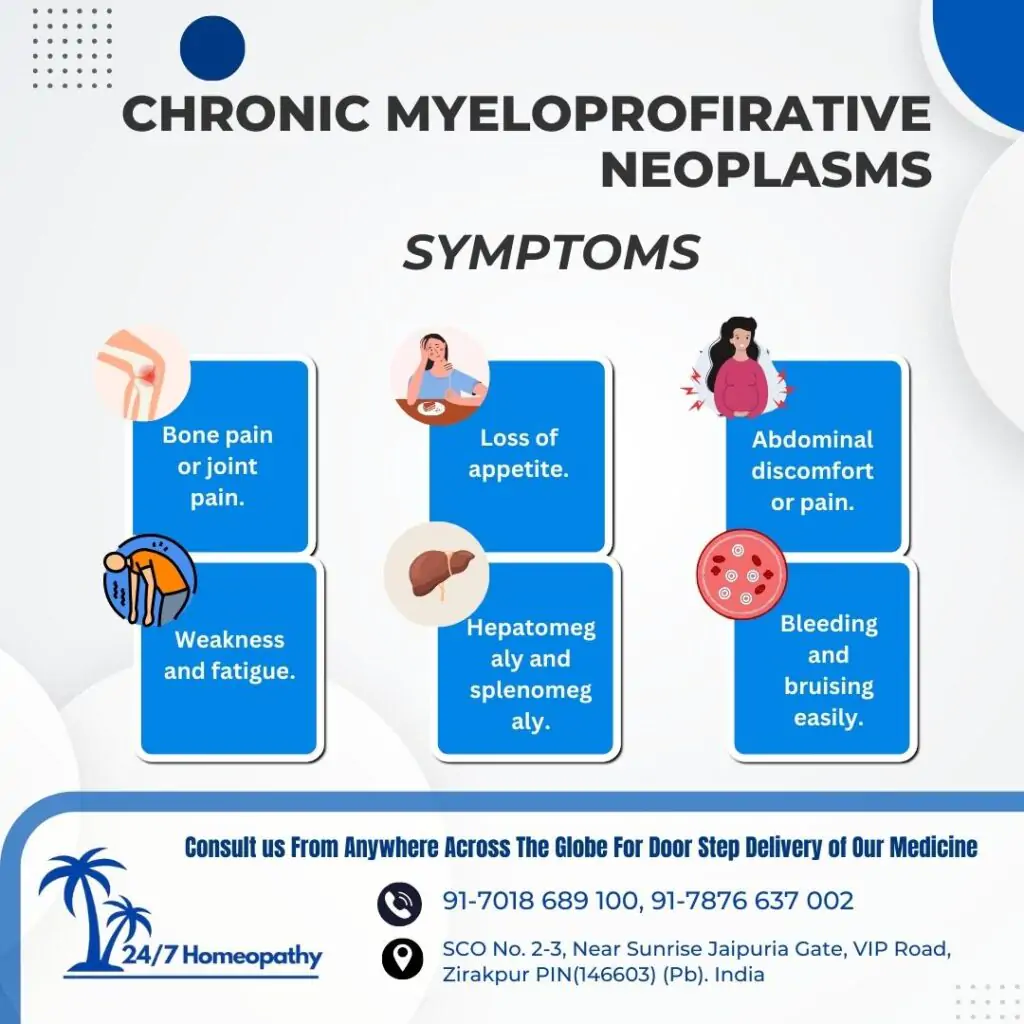
Symptoms of Myeloproliferative Neoplasms
Symptoms can vary depending on the type of MPN and the blood cells affected.
The symptoms mentioned in the provided information include:
- Bone pain or joint pain
- Loss of appetite
- Abdominal discomfort or abdominal pain
- Petechiae
- Night sweats
- Weakness and fatigue
- Enlarged liver (hepatomegaly)
- Enlarged spleen (splenomegaly)
- Unexplained weight loss
- Easy bleeding or bruising
- Swollen lymph nodes
- Pale skin
- Shortness of breath
Not everyone with an MPN will experience all of these symptoms. Symptoms can also overlap with other health conditions, so they should not be used alone to determine a diagnosis.
Investigations for Myeloproliferative Neoplasms
Different investigations may be recommended depending on the patient’s symptoms and clinical findings.
Complete Blood Count (CBC)
A CBC is used to check the levels of different blood cells, including:
- Red blood cells (RBCs)
- White blood cells (WBCs)
- Platelets
Abnormal blood-cell counts may lead to further investigations.
Bone Marrow Aspiration and Biopsy
Bone marrow aspiration and biopsy can be performed to examine the bone marrow and assess abnormalities in blood-cell production.
Flow Cytometry
Flow cytometry may be used as part of the investigation of abnormal blood cells in selected cases.
Imaging Investigations
The provided information includes:
- X-ray
- MRI
- CT scan
These investigations may be advised depending on the patient’s symptoms and clinical requirements.
Lumbar Puncture
The provided notes also mention lumbar puncture for detecting abnormal cells in the cerebrospinal fluid (CSF). This is not a routine investigation for every person with an MPN and would depend on the clinical situation and the treating doctor’s assessment.

Precautions and Lifestyle Considerations
People with persistent symptoms or abnormal blood counts should seek appropriate medical evaluation rather than attempting to diagnose themselves.
Some useful precautions include:
- Keep regular medical follow-ups as advised.
- Do not ignore unexplained bleeding or easy bruising.
- Report persistent weakness, fatigue or breathlessness to your doctor.
- Seek medical attention for persistent abdominal discomfort or symptoms associated with an enlarged spleen or liver.
- Keep your treating doctor informed about all medicines and treatments you are taking.
- Do not stop prescribed treatment without discussing it with your treating doctor.
Homeopathic Treatment Approach for Myeloproliferative Neoplasms
At 247 Homeopathy, the homeopathic approach is considered according to the patient’s individual symptoms and overall health presentation.
The homeopathic remedies mentioned in Dr. Ruchi’s original notes include T.N.T. and Benzolum.
T.N.T.
The provided notes mention the following indications:
- Main action on the RBCs
- Leukemia
- Anemia and jaundice
- Epistaxis (nosebleed)
- Tendency to hemorrhages under the skin
- Fatigue
- Breathlessness
- Dizziness
- Headache
Benzolum
The provided notes mention:
- Decrease in RBCs and increase in WBCs
- Leukemia
- Hallucinations
- Epileptiform attacks
- Dizziness
- Right-sided headache
Frequently Asked Questions
Can myeloproliferative neoplasms cause an enlarged spleen?
Yes. Some MPNs, particularly myelofibrosis, can cause the spleen to enlarge. This may result in fullness, discomfort or pain in the upper-left abdomen.
Can MPNs cause headaches or dizziness?
Yes. Some people with MPNs may experience headaches, dizziness or visual symptoms, particularly when abnormal blood-cell levels affect blood flow. These symptoms can have many other causes and should be evaluated.
Can myeloproliferative neoplasms cause blood clots?
Yes. Certain MPNs can increase the risk of blood clots because of abnormal blood-cell production. Sudden chest pain, difficulty breathing, weakness or swelling and pain in a limb require prompt medical attention.
Can MPNs cause itching after a bath or shower?
Yes. Itching, particularly after exposure to warm water, can occur in some people with myeloproliferative neoplasms, especially polycythemia vera. Persistent unexplained itching should be discussed with a healthcare professional.
Are myeloproliferative neoplasms always cancerous?
MPNs are blood cancers involving abnormal growth of blood-forming cells in the bone marrow. Their course and complications vary depending on the specific type and individual factors.
Can an MPN change into another blood disorder?
Some MPNs can progress or transform over time, depending on the specific disorder. For example, certain MPNs may progress to myelofibrosis or, less commonly, acute leukemia. Regular medical monitoring helps doctors detect changes.
Consultation at 247 Homeopathy, Zirakpur
If you are looking for a homeopathic consultation for chronic blood-related health concerns, 247 Homeopathy with Dr. Ruchi in Zirakpur, Punjab, provides individualized consultations based on the patient’s symptoms and health history.
Patients can discuss their symptoms, previous investigations, existing medical conditions and ongoing treatment during the consultation.
For people diagnosed with an MPN, regular follow-up with the appropriate medical specialist remains important. Any complementary homeopathic treatment should be discussed with the treating medical team.
Contact 247 Homeopathy in Zirakpur to discuss your individual health concerns with Dr. Ruchi.