Keratoconus
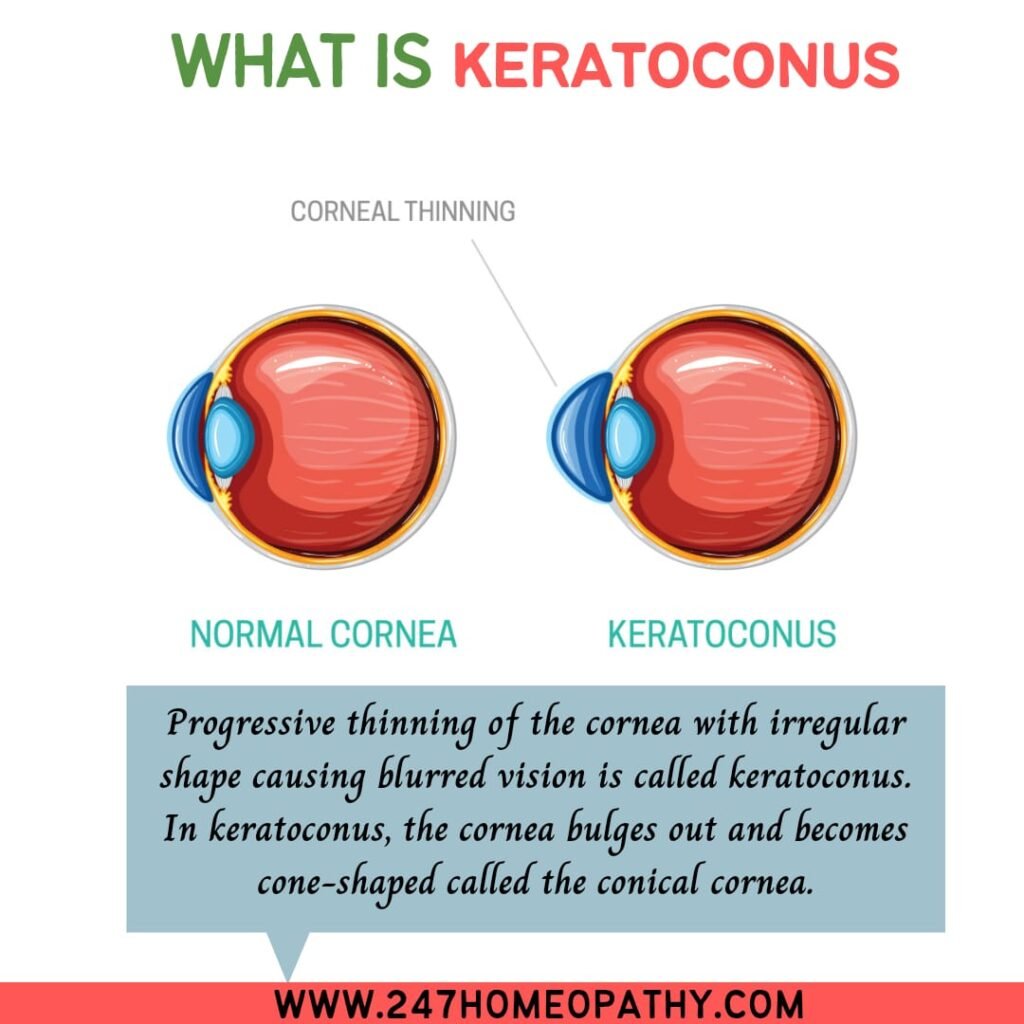
Keratoconus is an eye condition in which the cornea progressively becomes thinner and develops an irregular, cone-like shape. This change in the shape of the cornea can cause blurred and distorted vision.
It usually develops between the ages of 8 and 30 years and can affect both men and women.
What Is Keratoconus?
The cornea is the outer protective layer of the eye that protects the iris, pupil and anterior chamber.
In keratoconus, the cornea gradually becomes thin and irregular. It bulges outward and develops a cone-like shape, which is also called a conical cornea.
The change in corneal shape can affect vision and may be associated with myopia and astigmatism.
Causes of Keratoconus
The exact cause of keratoconus is unknown.
However, the doctor’s content mentions some factors and changes that may be associated with the condition:
- There may be alterations in enzymes, such as increased epithelial lysosomal enzymes or decreased glucose-6-phosphate dehydrogenase in the epithelium.
- People with connective tissue disorders may have a higher risk.
- Certain genetic abnormalities, such as trisomy 21, may play a role.
- Atopic diseases and chronic eye rubbing may be associated with keratoconus, particularly in people with Down syndrome and atopic dermatitis.
- Connective tissue syndromes such as Ehlers-Danlos syndrome and osteogenesis imperfecta are also mentioned in relation to keratoconus.
Symptoms of Keratoconus
Symptoms can vary depending on the stage of keratoconus.
Early Keratoconus
Early symptoms may include:
- Redness and swelling of the eyes
- Mild blurred vision
- Sensitivity to light
- Distorted vision
- Myopia
- Nearsightedness
- Vision that can be corrected with contact lenses
Moderate Keratoconus
Moderate keratoconus may involve:
- Increased corneal distortion
- Increased blurred vision
- Myopia
- Difficulty correcting vision adequately with contact lenses
Advanced Keratoconus
Advanced keratoconus may cause:
- Advanced corneal distortion
- Corneal scarring
- Bulging of the cornea
- Advanced myopia and astigmatism
- Rigid gas-permeable contact lenses may provide better vision
Severe Keratoconus
Severe keratoconus may involve:
- Advanced corneal distortion
- Scarring of the cornea
- Excessive bulging of the cornea
- Rigid gas-permeable contact lenses may no longer provide better vision
Diagnosis of Keratoconus
Keratoconus can be evaluated using different eye examinations.
Topography
Corneal topography is used to assess the curvature of the eye/cornea.
Eye Refraction
Eye refraction is performed to check vision problems. A phoropter and retinoscope may be used during the examination.
Slit-Lamp Examination
A slit-lamp examination allows the eye to be examined in detail.
Keratometry
Keratometry is used to assess the basic shape and curvature of the cornea.
Treatment of Keratoconus
Treatment depends on the stage and severity of keratoconus.
Early Keratoconus
In early keratoconus, spectacles and contact lenses may help correct vision and improve problems related to myopia and astigmatism.
Moderate Keratoconus
In moderate keratoconus, rigid gas-permeable contact lenses may be recommended. These lenses can provide better-quality vision by helping compensate for the irregularity of the cornea.
Advanced Keratoconus
For advanced keratoconus, specialized rigid gas-permeable contact lenses may be used to improve vision.
Severe Keratoconus
In severe keratoconus, when there is significant corneal distortion and scarring, corneal transplant surgery may be required in some patients.
Treatment should be selected according to the condition and severity of the cornea by an appropriate eye-care specialist.
Homeopathic Management of Keratoconus
At 247 Homeopathy, homeopathic management is based on the individual’s symptoms and overall presentation.
The following remedies are mentioned in Dr. Ruchi’s original content:
Euphrasia
Euphrasia may be considered when there is:
- Dim vision
- A sensation that everything appears enveloped in mist
- Dim vision as though through a veil
- Difficulty seeing distant objects while walking in the open air
Physostigma
Physostigma is mentioned for:
- Increased myopia with astigmatism
- Trembling vision
- Exophthalmos
Carboneum Sulphuratum
Carboneum sulphuratum is mentioned in the doctor’s content as acting well on myopia.
Frequently Asked Questions About Keratoconus
1. Can keratoconus cause frequent changes in glasses prescription?
Yes. Keratoconus can cause vision to change as the shape of the cornea becomes more irregular. Frequent changes in prescription or worsening vision should be evaluated by an eye specialist.
2. Can keratoconus cause double vision?
Yes. The irregular shape of the cornea can sometimes cause distorted or double vision, particularly when looking with one eye.
3. Can keratoconus cause eye rubbing?
Eye irritation or visual discomfort may lead some people to rub their eyes. However, frequent or forceful eye rubbing should be avoided because it may be associated with worsening keratoconus.
4. Can keratoconus get worse over time?
Yes. Keratoconus can progress in some people, causing increasing corneal thinning and irregularity. Regular eye examinations can help monitor changes in the condition.
5. Can keratoconus cause poor night vision?
Yes. Irregular corneal shape can cause problems such as glare, halos or difficulty seeing clearly in low-light conditions. These symptoms may become more noticeable at night.
6. Can keratoconus cause sudden loss of vision?
A sudden significant change or loss of vision should not be assumed to be caused by keratoconus. It requires prompt eye examination because other eye problems may also cause sudden vision changes.
Homeopathic Consultation at 247 Homeopathy
If you are looking for homeopathic management for keratoconus, you can consult Dr. Ruchi at 247 Homeopathy in Zirakpur, Punjab.
The homeopathic approach is individualized according to the patient’s symptoms and overall condition. During consultation, the appropriate remedy can be selected based on the patient’s presentation.
For patients with keratoconus, regular eye assessment remains important, especially when there are changes in vision or progression of the condition.
247 Homeopathy – Dr. Ruchi
Zirakpur, Punjab


