Gastroenteritis
Gastroenteritis is inflammation or infection of the stomach and intestines that commonly causes sudden diarrhea, vomiting, nausea and abdominal cramps. It is often called the “stomach flu,” although it is not the same as influenza.
Gastroenteritis can be caused by viruses, bacteria, parasites or, less commonly, other infectious organisms. Contaminated food or water and close contact with an infected person are common ways the infection spreads.
Most mild cases improve with supportive care, but dehydration can become serious, particularly in infants, young children, older adults and people with weakened immune systems.
What Is Gastroenteritis?
Gastroenteritis occurs when the lining of the stomach and intestines becomes inflamed, usually because of an infection.
The condition can develop after eating or drinking contaminated food or water, or after close contact with someone who has an infectious form of gastroenteritis.
The severity and duration depend on the cause, the person’s age and their general health.
Causes of Gastroenteritis
Gastroenteritis may be caused by:
- Viruses
- Bacteria
- Parasites
- Certain other infectious organisms
Viral Gastroenteritis
Viruses are a common cause of gastroenteritis.
Norovirus is a common cause in adults and older children, while rotavirus is an important cause of gastroenteritis in infants and young children, particularly where vaccination coverage is low.
Other viruses can also cause gastrointestinal infection.
Bacterial Gastroenteritis
Bacterial gastroenteritis can occur after consuming contaminated food or water.
Common food-related sources include:
- Undercooked meat
- Seafood
- Eggs
- Unpasteurized milk or dairy products
- Contaminated fruits and vegetables
- Food that has been improperly stored
Bacteria can multiply rapidly when food is left at unsafe temperatures.
Parasitic Gastroenteritis
Parasites such as Giardia, Cryptosporidium and Entamoeba histolytica can cause gastrointestinal infection.
These infections may be associated with contaminated water, food or exposure to contaminated environments.
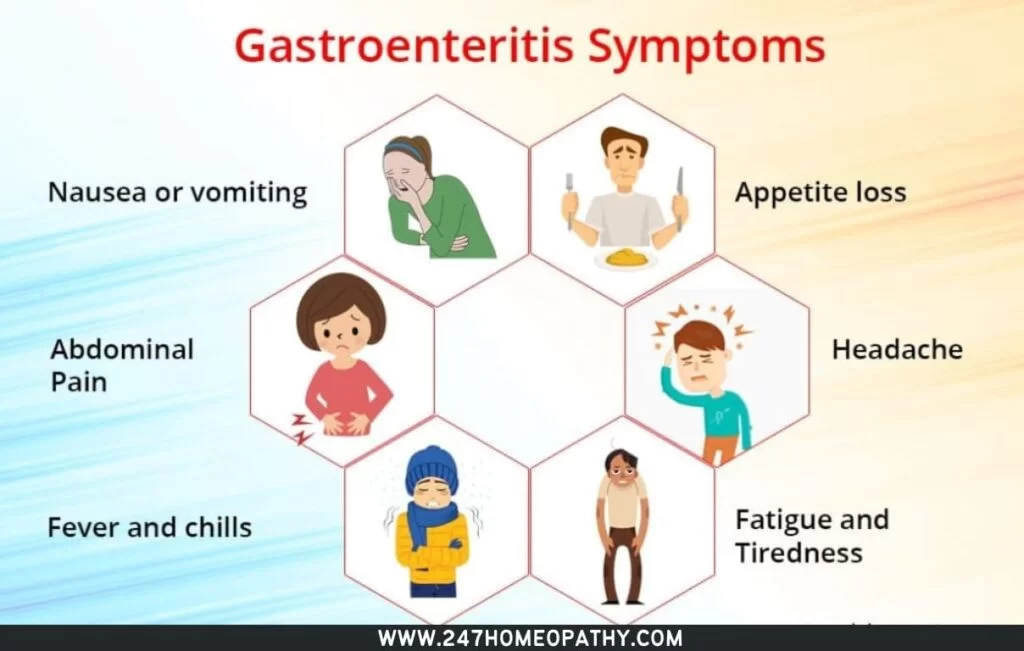
Symptoms of Gastroenteritis
Symptoms can vary depending on the cause.
Common symptoms include:
- Diarrhea
- Nausea
- Vomiting
- Abdominal pain or cramps
- Loss of appetite
- Mild fever
- Weakness and fatigue
- Headache
- Body aches
- Chills
- Weight loss, particularly when symptoms are prolonged
Some bacterial infections can cause blood or mucus in the stool.
Dehydration
Repeated vomiting and diarrhea can cause loss of fluids and electrolytes.
Signs of dehydration may include:
- Excessive thirst
- Dry mouth
- Dry skin
- Reduced urination
- Dark-coloured urine
- Dizziness
- Severe weakness
- Unusual sleepiness or confusion
Dehydration can become particularly dangerous in babies, young children and older adults.
How Long Does Gastroenteritis Last?
The duration depends on the infectious cause.
Many viral cases improve within several days. Some infections may last longer.
Persistent diarrhea, repeated vomiting, blood in the stool, high fever or signs of dehydration should not simply be assumed to be a routine stomach infection and require medical assessment.
Risk Factors for Gastroenteritis
The risk may be higher in people who:
- Live in crowded environments
- Travel to places where sanitation or safe drinking water is limited
- Consume untreated or contaminated water
- Eat improperly cooked or stored food
- Have poor hand hygiene
- Have a weakened immune system
- Are infants or young children
- Take certain antibiotics, which can sometimes alter normal intestinal bacteria
Complications of Gastroenteritis
The most important complication is dehydration and electrolyte imbalance.
Severe dehydration can lead to:
- Low blood pressure
- Severe weakness
- Dizziness
- Kidney problems
- Electrolyte disturbances
Children, infants and people with weakened immunity may become seriously ill more quickly.
Diagnosis of Gastroenteritis
Many cases can be diagnosed based on the person’s symptoms, medical history and physical examination.
Depending on the symptoms and severity, a healthcare professional may recommend:
Stool Testing
A stool test or culture may be performed when a bacterial or parasitic infection is suspected, particularly when diarrhea is severe, persistent or associated with blood.
Blood Tests
Blood tests may be considered when there are signs of significant infection, dehydration or another medical problem.
Electrolytes and Kidney Function
In people with significant dehydration, blood tests may be used to assess electrolyte levels and kidney function.
Management and Precautions
The most important part of managing gastroenteritis is maintaining adequate hydration.
Helpful measures include:
- Drink fluids regularly in small amounts.
- Use oral rehydration solutions when there is significant diarrhea or vomiting.
- Continue eating light, easily tolerated foods as symptoms improve.
- Avoid food and drinks that clearly worsen symptoms.
- Wash hands thoroughly with soap and water after using the toilet and before preparing or eating food.
- Wash fruits and vegetables properly.
- Cook food thoroughly.
- Keep kitchen surfaces and utensils clean.
- Avoid preparing food for others while experiencing infectious diarrhea or vomiting.
- Clean toilets and frequently touched surfaces regularly.
For children, breastfeeding should generally be continued unless a healthcare professional advises otherwise.
When to Seek Medical Care
Seek prompt medical attention if there is:
- Blood in the stool
- Severe or persistent abdominal pain
- Persistent vomiting
- High fever
- Signs of significant dehydration
- Very little or no urine
- Confusion or unusual drowsiness
- Symptoms that are not improving
- Severe diarrhea in an infant, older adult or immunocompromised person
Homeopathic Management Approach
At 247 Homeopathy, Dr. Ruchi considers the person’s symptoms, digestive complaints, medical history and overall health before discussing an individualised homeopathic approach.
The remedies included in the doctor’s original content are:
Veratrum Album
The doctor’s notes describe Veratrum Album in cases with diarrhea accompanied by nausea and vomiting, abdominal cramps, weakness, coldness, shivering and sweating.
Podophyllum
The doctor’s notes describe Podophyllum particularly in cases of diarrhea associated with travel, offensive stools, morning aggravation, abdominal gurgling and diarrhea after eating.
Antimonium Crudum
The doctor’s notes describe Antimonium Crudum when vomiting occurs soon after eating or drinking, particularly following overeating or difficult-to-digest foods, along with a thick white coating on the tongue and belching or regurgitation.
Pulsatilla
The doctor’s notes describe Pulsatilla when digestive symptoms occur after rich, fatty or greasy foods or cold drinks. The notes mention diarrhea, heartburn, unpleasant taste, abdominal heaviness and cramps.
Frequently Asked Questions About Gastroenteritis
Can gastroenteritis cause vomiting that does not stop?
Repeated vomiting can occur with gastroenteritis. If you cannot keep fluids down, develop signs of dehydration, become very weak or have worsening symptoms, seek medical attention promptly.
Consult 247 Homeopathy in Zirakpur
If you are looking for homeopathic consultation for gastroenteritis in Zirakpur, Dr. Ruchi at 247 Homeopathy can review your digestive symptoms, health history and individual needs.
The clinic is located in Zirakpur, Punjab, and consultation options can also support patients from nearby areas, other parts of India and worldwide through online consultation.
For severe vomiting, significant dehydration, bloody diarrhea, high fever or symptoms in a very young child, elderly person or immunocompromised patient, seek appropriate medical care promptly.
Consult Dr. Ruchi at 247 Homeopathy for personalised guidance and supportive care.


