BASAL CELL CARCINOMA
Basal cell carcinoma (BCC) is the most common type of skin cancer. It develops from basal cells, which are found in the lower part of the epidermis and help produce new skin cells.
Long-term exposure to ultraviolet (UV) radiation from sunlight is the most important risk factor. Basal cell carcinoma usually grows slowly and rarely spreads to distant parts of the body. However, if left untreated, it can grow into nearby tissues and cause significant local damage, particularly when it develops on the face, nose, ears or around the eyes.
Any skin lesion that repeatedly bleeds, crusts, or does not heal should be examined by a qualified healthcare professional.
What Is Basal Cell Carcinoma?
Basal cell carcinoma is a type of non-melanoma skin cancer that begins in basal cells.
It commonly appears on areas of skin that receive considerable sun exposure, including:
- Face
- Nose
- Ears
- Neck
- Scalp
- Arms
- Shoulders
BCC can look different from one person to another. It may initially resemble a harmless skin growth, sore, or irritation, which is why persistent or changing skin lesions should not be ignored.
Although BCC rarely spreads to distant organs, untreated tumors can continue growing into surrounding skin and other nearby structures.
Causes and Risk Factors
The major risk factor for basal cell carcinoma is repeated or prolonged exposure to ultraviolet radiation from sunlight. Other factors can increase the risk.
Common risk factors include:
- Long-term sun exposure
- Repeated sunburn
- Fair or light-sensitive skin
- Increasing age
- Previous history of skin cancer
- Family history of basal cell carcinoma
- Previous radiation treatment
- Exposure to certain chemicals, including arsenic
- A history of significant UV exposure through outdoor activities
Basal cell carcinoma can also occur in people without these risk factors, so any persistent suspicious skin lesion deserves medical evaluation.
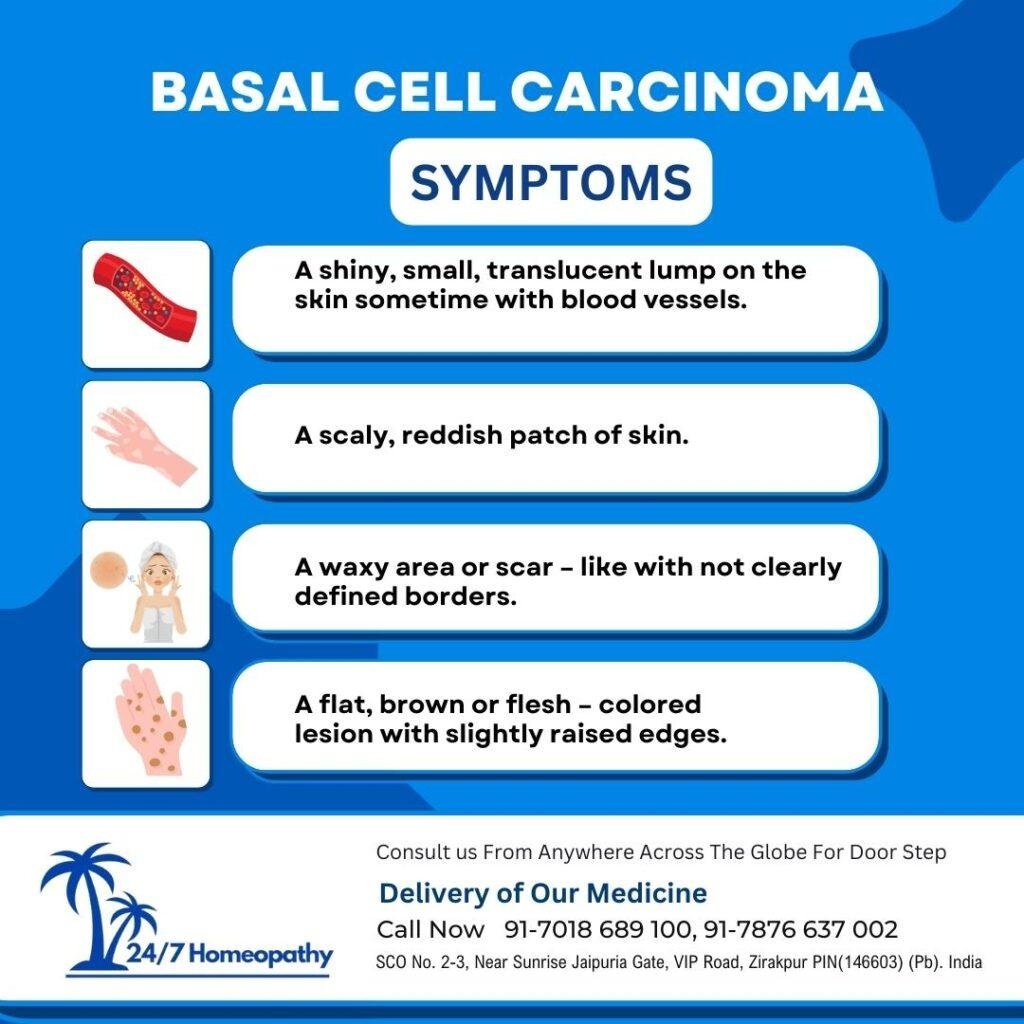
Symptoms of Basal Cell Carcinoma
BCC can appear in several forms. Possible signs include:
- A shiny, pearly, or translucent bump
- A sore that does not heal
- A lesion that repeatedly bleeds or develops a crust
- A reddish or scaly patch
- A pink or reddish growth with a raised border
- A waxy or scar-like area
- A brown or flesh-colored lesion with a slightly raised edge
- A sore that heals temporarily and then returns
- Slow enlargement of an unusual skin growth
Changes in a lesion’s size, shape, color, bleeding, crusting, or healing pattern should be evaluated by a dermatologist.
When Should You See a Doctor?
Do not wait for a skin lesion to become painful before seeking medical advice.
Consult a dermatologist if you notice:
- A sore that does not heal
- Repeated bleeding from the same skin lesion
- A growth that keeps increasing in size
- A shiny or pearly bump that develops on sun-exposed skin
- A persistent crust or ulcer
- A new skin lesion that looks different from surrounding skin
- A previously treated lesion that returns
Early assessment can make treatment easier and can help prevent deeper local tissue damage.
Diagnosis of Basal Cell Carcinoma
Diagnosis usually begins with a detailed examination of the skin and medical history.
A dermatologist may assess:
- The location and appearance of the lesion
- How long it has been present
- Whether it has changed in size or appearance
- Whether it bleeds, crusts, itches, or causes pain
- Previous history of skin cancer
Skin biopsy
A skin biopsy may be performed when basal cell carcinoma is suspected. The tissue is examined under a microscope to determine whether cancer cells are present and to help confirm the diagnosis.
Additional imaging or other investigations are not routinely required for every BCC. They may be considered when a tumor is unusually large, deeply invasive, recurrent, or there is concern about involvement of surrounding structures.
Basal Cell Carcinoma Treatment
The appropriate treatment depends on the size, location, type and risk characteristics of the tumor, along with the person’s overall health and preferences.
Conventional medical treatment may include:
- Surgical excision
- Mohs micrographic surgery
- Curettage and electrodesiccation
- Certain topical treatments for selected superficial lesions
- Cryotherapy or other local treatments in appropriate cases
- Radiation therapy in selected situations
- Targeted therapy or immunotherapy for certain advanced cases
Surgery is commonly used, while Mohs surgery can be particularly useful for tumors in areas where preserving healthy tissue is important or for lesions with a higher risk of recurrence.
Prevention and Skin Protection
Although not every case of basal cell carcinoma can be prevented, reducing UV exposure can lower the risk of developing skin cancer.
Helpful measures include:
- Limit prolonged exposure to strong sunlight.
- Seek shade when UV exposure is high.
- Wear protective clothing and a wide-brimmed hat.
- Use broad-spectrum sunscreen as directed.
- Reapply sunscreen when appropriate, particularly after swimming or sweating.
- Avoid artificial tanning and sunbeds.
- Examine your skin regularly for new or changing lesions.
- Have persistent or suspicious lesions examined by a dermatologist.
Regular skin checks are particularly important for people who have previously had skin cancer.
Homeopathic Treatment Approach
Aurum metallicum
In traditional homeopathic practice, Aurum metallicum is described in relation to ulcerated or crusted skin lesions, particularly when there is bleeding, burning, itching, or tenderness.
Conium maculatum
Conium maculatum is traditionally associated with hard or indurated nodules and enlarged glands in homeopathic materia medica.
Arsenicum iodatum
Arsenicum iodatum is traditionally described for dry, scaly and itchy skin, marked scaling and certain chronic skin complaints.
Frequently Asked Questions
Can basal cell carcinoma bleed easily?
Yes. A basal cell carcinoma may bleed after minor contact or without an obvious injury, particularly if the surface becomes ulcerated or crusted. A recurring bleeding skin lesion should be evaluated.
Can basal cell carcinoma be itchy or painful?
It can sometimes cause itching, tenderness or pain, although many basal cell carcinomas are painless. New or persistent symptoms in a changing skin lesion should be assessed.
Where does basal cell carcinoma commonly occur?
BCC most often develops on areas of skin that receive substantial sun exposure, such as the face, ears, scalp, neck and arms. It can also o
Consultation at 247 Homeopathy
If you are concerned about a persistent skin lesion, previous skin cancer diagnosis, or want to discuss complementary care, you can consult 247 Homeopathy and discuss your medical history, current diagnosis, investigations, and ongoing treatment.
For a suspected or confirmed basal cell carcinoma, consultation with a dermatologist or appropriate cancer specialist remains essential. Homeopathic care, if chosen, should be discussed as complementary care and should never delay medically recommended cancer treatment.


