Throat Cancer
Throat cancer refers to cancer that develops in tissues of the throat or nearby structures such as the pharynx or larynx. It occurs when abnormal cells begin to grow and divide uncontrollably.
The throat is a tube-like structure that extends from behind the nose into the neck and is involved in breathing, swallowing, and speaking. Depending on where the cancer starts, different parts of the throat can be affected.
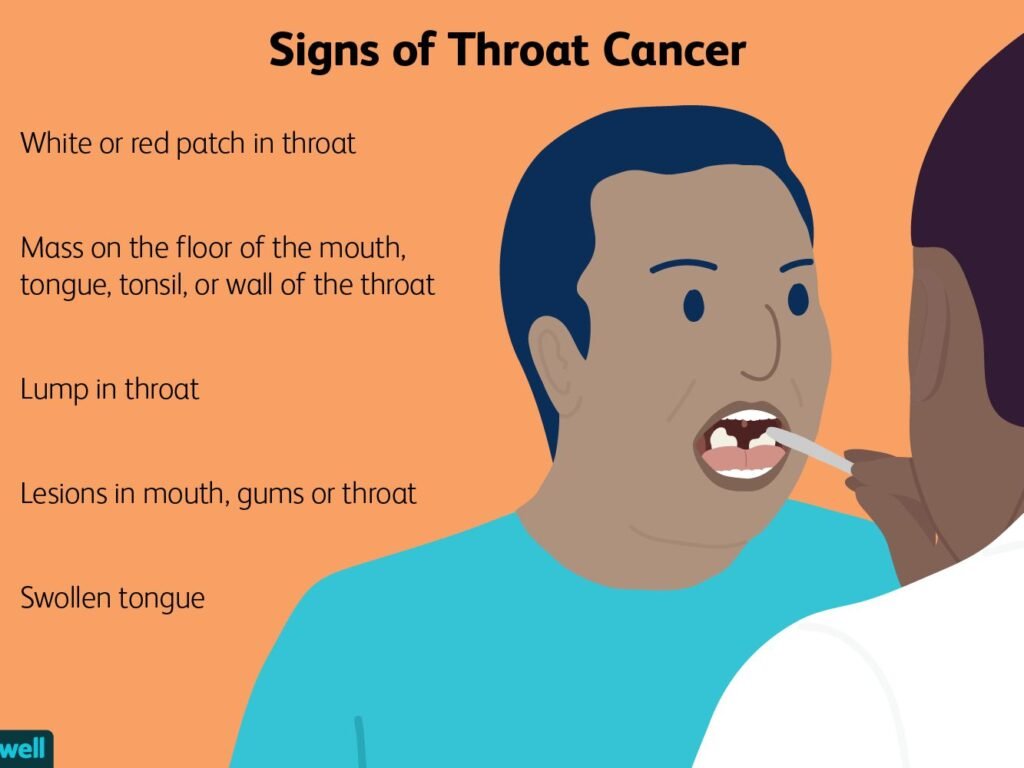
A persistent sore throat, long-lasting hoarseness, difficulty swallowing, unexplained weight loss, or a lump in the neck should not be ignored, particularly when symptoms persist.
What Are the Types of Throat Cancer?
Throat cancers can develop in different parts of the throat.
Nasopharyngeal Cancer
Nasopharyngeal cancer begins in the nasopharynx, the area located behind the nose.
Oropharyngeal Cancer
Oropharyngeal cancer develops in the oropharynx, the part of the throat behind the mouth. It can involve structures such as the tonsils and base of the tongue.
Some oropharyngeal cancers are associated with human papillomavirus (HPV) infection.
Hypopharyngeal Cancer
Hypopharyngeal cancer begins in the lower part of the throat, close to the entrance of the esophagus.
Laryngeal Cancer
Cancer that develops in the larynx (voice box) is generally classified as laryngeal cancer. It may affect the vocal cords and can cause changes in the voice.
Common Types of Cells Involved
Squamous Cell Carcinoma
Squamous cell carcinoma is the most common type of cancer affecting many areas of the throat and head and neck. It begins in the thin, flat cells lining these structures.
Adenocarcinoma
Adenocarcinoma develops from glandular cells. It is less common than squamous cell carcinoma in the throat.
The exact type of cancer is determined through appropriate diagnostic evaluation, including tissue examination when required.
Stages of Throat Cancer
The stage of throat cancer describes how extensive the cancer is, including its size and whether it has spread to nearby lymph nodes or distant parts of the body.
The exact staging system depends on the site and type of cancer, so throat cancer does not have one simple four-stage description that applies identically to every patient.
Broadly:
- Early-stage cancer: The cancer is limited to the area where it started and may be relatively small.
- Locally advanced cancer: The tumor is larger and/or has spread to nearby tissues or lymph nodes.
- Advanced cancer: The cancer may have spread extensively to nearby structures or distant organs.
Doctors determine the stage using examination, imaging, biopsy findings, and other relevant tests.
Causes and Risk Factors of Throat Cancer
The exact cause of throat cancer is not always known.
However, several factors can increase the risk.
Tobacco Use
Smoking is one of the major risk factors for many throat and head and neck cancers.
Other forms of tobacco, including chewing tobacco, gutka, and paan containing tobacco, can also increase cancer risk.
Alcohol
Regular or heavy alcohol consumption can increase the risk of throat and other head and neck cancers. The combination of alcohol and tobacco can increase the risk further.
Human Papillomavirus (HPV)
Certain types of HPV, particularly HPV-16, are associated with an increased risk of some oropharyngeal cancers.
Poor Nutrition
A diet lacking adequate nutrients may contribute to overall health risks, although diet alone does not mean that a person will develop throat cancer.
Gastroesophageal Reflux
Repeated exposure of the upper throat to stomach contents may cause chronic irritation. Its relationship with specific throat cancers is still an area of medical research.
Occupational Exposures
Long-term exposure to certain workplace substances, including some chemicals, wood dust, and paint-related fumes, may increase cancer risk depending on the type and level of exposure.
Other factors may include:
- A weakened immune system
- Certain genetic conditions
- Family history
- Previous radiation exposure in certain circumstances
Symptoms of Throat Cancer
Symptoms depend on the location and stage of the cancer.
Possible symptoms include:
- Persistent sore throat
- Hoarseness or a change in voice
- Difficulty swallowing
- Pain while swallowing
- Persistent throat irritation
- Ear pain without an obvious ear problem
- A lump or swelling in the neck
- Swollen lymph nodes
- Unexplained weight loss
- Persistent cough
- Difficulty breathing
- Persistent nasal blockage, depending on the location of the tumor
- Changes in hearing or recurrent ear problems in some nasopharyngeal cancers
Persistent Hoarseness
A voice change or hoarseness that does not improve should be evaluated, particularly in people who smoke or have other risk factors.
Difficulty Swallowing
Difficulty swallowing food or liquids can occur when a tumor affects structures involved in swallowing.
Lump in the Neck
An enlarged lymph node or persistent lump in the neck can sometimes be the first noticeable sign of head and neck cancer.
Symptoms According to the Location
Mouth and Oropharyngeal Region
Possible symptoms can include:
- Persistent sore throat
- Difficulty swallowing
- Pain while swallowing
- Voice changes
- Persistent mouth or throat lesions
- Changes in taste
- A lump in the neck
A persistent mouth ulcer, unexplained bleeding, or abnormal patch should also be examined by a healthcare professional.
Nasopharynx
Symptoms can include:
- Persistent nasal blockage
- Difficulty breathing through the nose
- Nosebleeds
- Reduced sense of smell
- Ear-related symptoms
- A lump in the neck
These symptoms can also occur with many non-cancerous conditions, so they do not by themselves mean that a person has cancer.
Prevention and Risk Reduction
Not every case of throat cancer can be prevented, but several measures can reduce risk.
- Avoid smoking and other forms of tobacco.
- Avoid chewing tobacco, gutka, and tobacco-containing paan.
- Limit or avoid alcohol.
- Maintain a balanced diet containing adequate fruits and vegetables.
- Follow recommended HPV vaccination guidance.
- Maintain good oral hygiene.
- Have persistent mouth or throat abnormalities examined.
- People working around dust, fumes, or chemicals should follow appropriate workplace safety measures and use recommended protective equipment.
- Maintain regular dental examinations.
A dental examination can sometimes identify suspicious abnormalities in the mouth that require further evaluation.
Diagnosis of Throat Cancer
Diagnosis usually begins with a detailed medical history and physical examination.
Depending on the symptoms and suspected location, doctors may recommend:
Imaging Tests
- Ultrasound: May be used to evaluate lumps or lymph nodes in the neck.
- CT scan: Provides detailed images of the head and neck and can help assess the extent of a tumor.
- MRI: Provides detailed images of soft tissues.
- PET-CT: May be used in selected patients to assess cancer activity and possible spread.
- X-ray: May sometimes be used, although more detailed imaging is often needed.
Biopsy
A biopsy involves removing a sample of abnormal tissue for laboratory examination.
A biopsy is often essential to confirm whether cancer is present and determine the type of cancer.
Fine-Needle Aspiration
Fine-needle aspiration (FNA) may be used to examine a suspicious lump or enlarged lymph node, particularly in the neck.
Other Tests
Additional tests may be recommended depending on the suspected location and symptoms. A barium swallow or other swallowing studies may be used in selected cases.
Homeopathy and Supportive Care in Throat Cancer
At 247 Homeopathy in Zirakpur, Dr. Ruchi provides individualized homeopathic consultation based on the patient’s symptoms, overall health, and ongoing medical treatment.
The original doctor’s content discusses using homeopathic medicines for symptoms such as:
- Weakness and fatigue
- Nausea
- Difficulty eating
- Mouth or throat discomfort
- Treatment-related symptoms
- General supportive care during cancer treatment
However, homeopathy should not be presented as a treatment that destroys throat cancer cells, shrinks tumors, prevents cancer from spreading, or replaces cancer treatment.
Throat cancer requires evaluation and treatment by an appropriate cancer-care team. Depending on the cancer type and stage, conventional treatment may include surgery, radiation therapy, chemotherapy, targeted therapy, immunotherapy, or combinations of these treatments.
Frequently Asked Questions About Throat Cancer
Can throat cancer cause a lump in the neck?
Yes. A persistent or unexplained lump in the neck can occur when throat cancer spreads to nearby lymph nodes. However, neck lumps have many other possible causes and should be evaluated if they do not go away.
Can throat cancer cause bad breath?
Throat cancer may sometimes be associated with persistent bad breath, particularly when there are changes or problems in the mouth or throat. Ongoing unexplained bad breath should be assessed by a healthcare professional.
Can throat cancer cause a cough?
Yes. A persistent cough can occur with some throat cancers, although coughing is much more commonly caused by infections, allergies, reflux, or other conditions. A cough that does not improve should be evaluated.
Can throat cancer cause difficulty speaking?
Yes. Cancers affecting the larynx or nearby structures can cause persistent hoarseness or changes in the voice. Voice changes that continue for several weeks should be medically evaluated.
Can throat cancer cause weight loss?
Unexplained weight loss can occur with throat cancer, particularly when swallowing becomes difficult or appetite decreases. Unintentional weight loss should be evaluated rather than assumed to be caused by cancer.
When should I see a doctor about throat symptoms?
Seek medical evaluation for persistent hoarseness, difficulty swallowing, a neck lump, unexplained throat pain, persistent cough, or other throat symptoms that do not improve. Difficulty breathing, severe swallowing problems, or rapidly worsening symptoms require prompt medical attention.
Consult 247 Homeopathy in Zirakpur
If you or a family member has been diagnosed with throat cancer and is looking for complementary homeopathic care, you can consult Dr. Ruchi at 247 Homeopathy in Zirakpur, Punjab.
The clinic serves patients from Zirakpur and nearby areas and also provides online consultations for patients from other parts of India and worldwide.
Dr. Ruchi can review the patient’s symptoms, medical history, diagnosis, current treatment, and available reports before discussing an individualized supportive approach.
If you have persistent hoarseness, difficulty swallowing, a neck lump, unexplained weight loss, or a sore throat that does not improve, seek appropriate medical evaluation rather than waiting for symptoms to resolve on their own.


