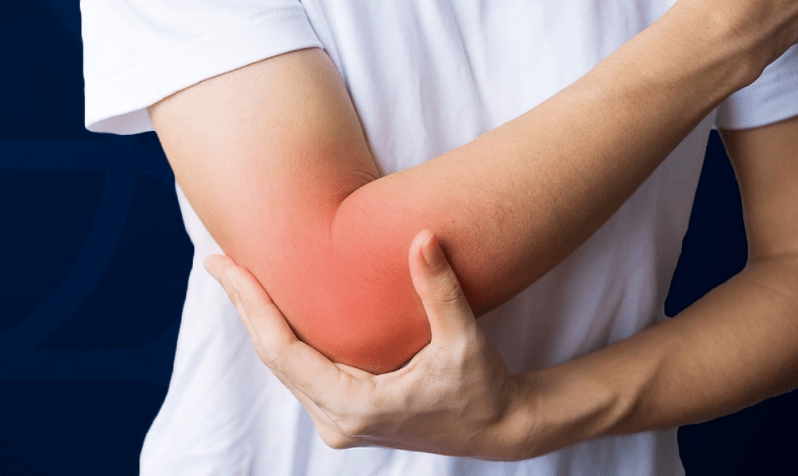
Tennis elbow
You don’t need to play tennis to develop tennis elbow. Repetitive movements involving the wrist and forearm can put repeated stress on the tendons around the elbow.
Tennis elbow usually causes pain and tenderness on the outside of the elbow. The pain may become noticeable while gripping, lifting, twisting the wrist, or performing repetitive hand movements.
The medical term for tennis elbow is lateral epicondylitis.
What Is a Tennis Elbow?
Tennis elbow is a condition involving the tendons that attach the forearm muscles to the outer part of the elbow.
Repeated use of the forearm muscles, especially movements involving wrist extension and gripping, can place stress on these tendons. This may lead to tendon irritation and changes associated with tendinopathy.
Despite its name, tennis elbow can affect people who do not play tennis.
It may occur in people whose work or hobbies involve repetitive movements of the wrist and forearm.
Tennis Elbow vs Golfer’s Elbow
Tennis elbow and golfer’s elbow are similar conditions, but they generally affect different sides of the elbow.
Tennis Elbow
- Pain occurs mainly on the outside of the elbow.
- It is commonly associated with repetitive gripping and wrist extension.
- Pain may extend into the forearm.
Golfer’s Elbow
- Pain occurs mainly on the inside of the elbow.
- It is commonly associated with repetitive wrist flexion and forearm use.
- Pain may extend toward the wrist or forearm.
You can learn more about Golfer’s Elbow on our related page.
Causes and Risk Factors of Tennis Elbow
Tennis elbow can develop when the tendons around the elbow are repeatedly overloaded.
Common activities and risk factors include:
- Repetitive wrist movements
- Repeated gripping
- Playing tennis or other racquet sports
- Repetitive lifting
- Manual work
- Using tools for long periods
- Repetitive computer or hand movements
- Poor technique during sports or physical activity
- Sudden increases in exercise or workload
- Repeated forearm strain
The condition is more common in adults, particularly those whose work or activities require frequent use of the wrist and forearm.
Symptoms of Tennis Elbow
The most common symptom is pain on the outside of the elbow.
Other symptoms may include:
- Tenderness around the outer elbow
- Pain when gripping objects
- Pain while lifting
- Pain while shaking hands
- Pain while turning a doorknob
- Pain while using a screwdriver or similar tool
- Weakness in the hand or wrist
- Soreness in the forearm
- Difficulty performing repetitive movements
- Pain when extending the wrist
Symptoms can develop gradually rather than appearing suddenly.
Diagnosis of Tennis Elbow
Tennis elbow is usually diagnosed through a medical history and physical examination.
During examination, the doctor may:
- Ask about your symptoms and activities.
- Check where the pain is located.
- Examine elbow and wrist movement.
- Assess tenderness around the elbow.
- Check grip strength.
- Perform specific movements to reproduce the pain.
Imaging is not always necessary.
An X-ray, ultrasound, MRI, or other investigation may sometimes be recommended when the diagnosis is uncertain, symptoms are persistent, or another condition needs to be ruled out.
Management and Treatment of Tennis Elbow
Many people with tennis elbow improve with conservative treatment.
Depending on the severity and cause, management may include:
Rest and Activity Modification
Reducing activities that repeatedly aggravate the elbow can give the affected tissues time to recover.
Complete immobilization is not always necessary. Gradually returning to normal activity is generally preferable as symptoms improve.
Physiotherapy and Exercises
A physiotherapist can recommend exercises to improve:
- Forearm strength
- Wrist strength
- Flexibility
- Grip strength
- Movement patterns
Cold or Warm Packs
Cold packs may provide temporary relief, particularly after activity. Some people find warmth helpful for stiffness.
Ergonomic Changes
If repetitive work is contributing to symptoms, changing the way you grip, lift, or use equipment may reduce strain on the elbow.
Pain Relief
Some patients may benefit from appropriate pain-relieving medicines. These should be used according to medical advice, particularly if you have other medical conditions or take other medicines.
Lifestyle Tips for Tennis Elbow
To reduce the risk of worsening symptoms:
- Avoid repetitive gripping when possible.
- Take regular breaks during repetitive work.
- Use proper technique during sports.
- Increase exercise intensity gradually.
- Stretch and strengthen the forearm as advised.
- Avoid repeatedly working through severe pain.
- Maintain a healthy and balanced diet.
- Give your body adequate recovery time.
Homeopathic Medicines and Treatment for Tennis Elbow
At 247 Homeopathy in Zirakpur, Dr. Ruchi takes an individualized approach to homeopathic care.
The selection of a homeopathic medicine is based on the patient’s pain pattern, location, tenderness, stiffness, aggravating and relieving factors, activity history, and overall health.For persistent or severe elbow pain, proper diagnosis is important because several conditions can produce similar symptoms.
When Should You Consult a Doctor?
Seek medical evaluation if:
- Elbow pain continues despite rest and activity modification.
- Pain is becoming progressively worse.
- You have significant weakness in your hand or arm.
- You cannot move the elbow normally.
- There is significant swelling or redness.
- Symptoms started after a major injury.
- You experience numbness or tingling.
- Pain is interfering with daily activities or sleep.
Frequently Asked Questions About Tennis Elbow
Can tennis elbow cause pain in the forearm?
Yes. Pain from tennis elbow can extend from the outer elbow into the forearm, particularly during gripping or repetitive wrist movements.
Can tennis elbow cause pain at rest?
Yes. Although pain is often worse with activity, some people may experience discomfort even when the arm is resting, especially when symptoms are more persistent.
Can tennis elbow cause numbness or tingling?
Numbness or tingling is not a typical feature of tennis elbow and may suggest nerve involvement or another condition. Persistent or significant sensory symptoms should be assessed by a healthcare professional.
Can tennis elbow affect the strength of my hand?
Yes. Pain from tennis elbow can make gripping or lifting difficult and may reduce how strongly you can use the affected hand or arm.
Can tennis elbow affect both arms?
Yes. Tennis elbow can affect both arms, although symptoms may be more noticeable in one arm. Repetitive activities involving both arms may contribute to symptoms on both sides.
What happens if tennis elbow is left untreated?
Tennis elbow may persist or interfere with gripping, lifting, and other daily activities if the aggravating factors continue. Persistent symptoms should be assessed so that appropriate management can be considered.
Consult 247 Homeopathy in Zirakpur
If you are experiencing tennis elbow pain and are looking for an individualized homeopathic consultation, you can consult Dr. Ruchi at 247 Homeopathy in Zirakpur, Punjab.
The clinic serves patients from Zirakpur and nearby areas and also offers online consultations for patients across India and worldwide.
During consultation, Dr. Ruchi can review your symptoms, daily activities, pain pattern, previous treatment, and relevant medical history before discussing an individualized approach.
For persistent elbow pain, proper diagnosis is important before starting treatment.


