METASTATIC CANCER
Metastatic cancer is cancer that has spread from the place where it first started (the primary site) to another part of the body. The cancer that has spread is called metastatic cancer, and the new areas are called metastatic sites.
Metastatic cancer is often considered an advanced stage of cancer, although the exact stage depends on the type and origin of the cancer. It can occur with many different cancers, including breast, lung, prostate, colorectal and other cancers.
At 247 Homeopathy, Dr. Ruchi provides individualized consultations for patients seeking homeopathic care alongside appropriate medical management.
What Is Metastatic Cancer?
Cancer begins when abnormal cells grow and divide uncontrollably. Some cancer cells can break away from the original tumor and travel through the bloodstream or lymphatic system.
These cells may reach another organ or tissue and form a new tumor. For example, cancer that begins in the breast and later spreads to the bones is still metastatic breast cancer, rather than bone cancer.
Metastatic cancer is different from a new primary cancer because the cells in the metastatic tumor retain characteristics of the original cancer.
Is metastatic cancer the same as Stage 4 cancer?
Metastatic cancer is commonly associated with Stage 4 cancer, but staging systems vary between cancer types. Not every cancer uses exactly the same staging criteria. A person’s cancer stage should therefore be determined by their treating oncology team.
Causes and Risk Factors
Metastatic cancer develops when cancer cells acquire the ability to invade surrounding tissues and spread to distant parts of the body.
The risk and pattern of spread depend mainly on:
- The original type of cancer
- Characteristics of the cancer cells
- Size and location of the primary tumor
- Whether nearby lymph nodes are involved
- How long the cancer has been present
- Previous cancer treatment and response
- Individual biological and genetic factors
Metastatic cancer is not caused by one single factor. The underlying cause depends on the original cancer.
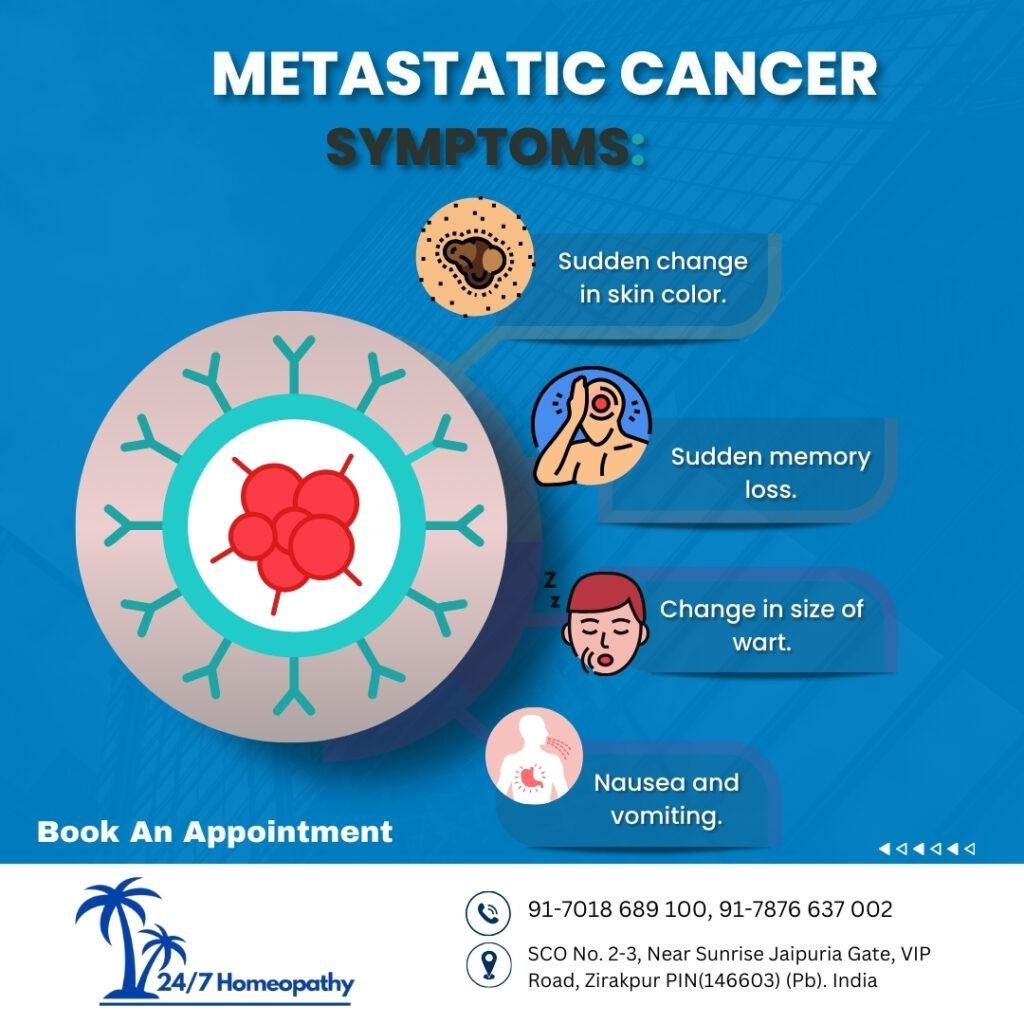
Metastatic Cancer Symptoms
Symptoms vary considerably depending on where the cancer has spread. Some people may have few symptoms initially, while others may experience several problems.
Possible general symptoms include:
- Unexplained or unexpected weight loss
- Persistent fatigue or weakness
- Unusual or persistent pain
- Recurrent or persistent fever
- Changes in urine or bowel habits
- Unusual bleeding
- Nausea or vomiting
- Changes in the skin or skin colour
- A wound that does not heal
- Changes in an existing mole or wart
- Loss of appetite
Symptoms according to the site of spread
Metastatic cancer can cause different symptoms depending on the affected organ.
Bone: persistent bone pain or fractures.
Lungs: cough, breathlessness or chest discomfort.
Liver: abdominal swelling or discomfort, jaundice and loss of appetite.
Brain: headaches, seizures, confusion, weakness or changes in memory and behaviour.
These symptoms do not necessarily mean that cancer has spread. They require appropriate medical evaluation to determine the underlying cause.
Diagnosis and Investigations
Diagnosis of metastatic cancer usually requires evaluation of the original cancer, symptoms, physical findings and imaging or laboratory results.
Investigations may include:
- Blood tests and CBC – to assess general health and certain abnormalities.
- Ultrasound – may help evaluate particular organs or abnormal areas.
- CT scan – provides detailed images of organs and tissues.
- MRI – particularly useful for certain soft tissues, the brain and spine.
- X-ray – may help identify abnormalities in areas such as the chest or bones.
- PET scan – can help identify areas of increased metabolic activity.
- Biopsy – may be required to confirm the nature and origin of cancer cells.
The exact investigations depend on the type of primary cancer and suspected metastatic site.
Treatment of Metastatic Cancer
Treatment depends on the original cancer, where it has spread, the patient’s overall health and previous treatment.
Conventional cancer treatment may include:
- Surgery in selected situations
- Chemotherapy
- Radiation therapy
- Targeted therapy
- Immunotherapy
- Hormone therapy for certain cancers
- Other specialist treatments depending on the cancer type
A medical oncologist determines the most appropriate treatment plan.
Homeopathy should not be used as a replacement for cancer-directed treatment or to delay evaluation by an oncologist.

Homeopathic Treatment Approach
Conium Maculatum
The doctor’s notes associate Conium maculatum with features such as:
- General weakness and trembling
- Palpitations
- Enlarged or hardened glands
- Painful axillary glands with numbness extending down the arm
- Chronic ulcers with offensive discharge
- Glandular enlargement and induration
Thuja
The doctor’s notes describe Thuja in relation to:
- Glandular enlargement
- Warts and other skin eruptions
- Tubercles and ulcers
- Herpetic eruptions
- Abdominal distension and flatulence
- Certain chronic skin manifestations
Phytolacca
The doctor’s notes associate Phytolacca with:
- Swelling and hardening of glands
- Breast swelling and sensitivity
- Breast tumors with enlarged axillary glands
- Glandular swelling associated with heat and inflammation
- Sore or rough throat with swollen tonsils
Lifestyle and Supportive Care
Patients living with advanced cancer may benefit from supportive measures alongside their prescribed cancer treatment.
Depending on individual medical advice:
- Follow the treatment plan provided by the oncology team.
- Attend recommended follow-up appointments and scans.
- Maintain adequate nutrition and hydration where medically appropriate.
- Stay physically active within your doctor’s recommendations.
- Get sufficient rest and sleep.
- Avoid smoking and tobacco.
- Limit or avoid alcohol if advised by your healthcare team.
- Report new or worsening symptoms promptly.
- Seek emotional and psychological support when needed.
Frequently Asked Questions
Is metastatic cancer the same as Stage 4 cancer?
Metastatic cancer is commonly associated with Stage 4 disease, but staging varies according to the type of cancer. Your oncologist can explain what the specific stage means for your cancer.
Can metastatic cancer be treated?
Treatment is possible for many patients, but the goal and approach vary significantly according to the primary cancer, metastatic sites and individual circumstances. Treatment may aim to control the cancer, slow its progression, relieve symptoms or, in selected situations, achieve long-term disease control.
What are the most common symptoms of metastatic cancer?
Symptoms depend on where the cancer has spread. Common symptoms may include persistent pain, fatigue, unexplained weight loss, appetite changes and organ-specific symptoms such as breathlessness, jaundice or neurological changes.
What tests are used to detect metastatic cancer?
Doctors may use blood tests, CT scans, MRI, PET scans, ultrasound, X-rays and biopsy depending on the type of cancer and suspected site of spread.
Can homeopathy replace chemotherapy or radiation?
No. Homeopathy should not be presented as a replacement for chemotherapy, radiation, surgery, immunotherapy or other evidence-based cancer treatment. Patients should continue appropriate oncology care.
Can I consult Dr. Ruchi for homeopathic support during cancer treatment?
Patients can discuss their individual situation with Dr. Ruchi to understand whether complementary homeopathic care is appropriate alongside their existing medical treatment. The cancer diagnosis and treatment plan should remain under the supervision of the relevant cancer specialist.
Consult 247 Homeopathy in Zirakpur
If you or a family member has been diagnosed with metastatic cancer, professional medical evaluation and appropriate oncology care are essential.
247 Homeopathy, Zirakpur, Punjab, with Dr. Ruchi provides individualized homeopathic consultations for patients in Zirakpur and nearby areas, as well as online consultations for patients worldwide.
Homeopathic care can be discussed as a complementary approach, while patients continue the cancer treatment recommended by their oncology team.
Book a consultation with Dr. Ruchi at 247 Homeopathy to discuss your individual health concerns and supportive care options.


