GASTROINTESTINAL STROMAL TUMORS
Gastrointestinal stromal tumors (GISTs) are tumors that develop in the gastrointestinal (GI) tract, most commonly in the stomach or small intestine.
These tumors develop from specialized cells associated with the gastrointestinal tract called interstitial cells of Cajal (ICC).
GISTs mainly affect adults and are more commonly diagnosed after the age of 40.
What Are Gastrointestinal Stromal Tumors?
A gastrointestinal stromal tumor develops when certain cells in the gastrointestinal tract undergo abnormal changes and begin growing uncontrollably, forming a tumor.
GISTs can occur in different parts of the digestive tract, although the stomach and small intestine are common locations.
The behavior of a GIST can vary. Some tumors grow slowly, while others may behave more aggressively. The location, size and cellular characteristics of the tumor help doctors assess its nature and guide treatment decisions.

Symptoms of Gastrointestinal Stromal Tumors
Symptoms can vary depending on the location and size of the tumor.
Possible symptoms include:
- Abdominal pain
- Nausea and vomiting
- Loss of appetite
- Bleeding in the gastrointestinal tract
- Blood in vomit
- Blood in the stool
- Anemia
- Fatigue and weakness
- Abdominal swelling
- Unexplained weight loss
- Heaviness or fullness in the abdomen
- Bloating
- Indigestion
- Feeling full after eating only a small amount
- Difficulty swallowing when a tumor affects the esophagus
- Dark patches on the skin in some people, particularly when associated with certain genetic conditions
Some GISTs may cause few or no symptoms initially and may be discovered during investigations for another digestive problem.
When to Seek Medical Attention
Blood in vomit or stool, unexplained weight loss, persistent abdominal pain, repeated vomiting or significant weakness should be medically evaluated.
These symptoms do not necessarily mean that a person has a GIST, but they should not be ignored.
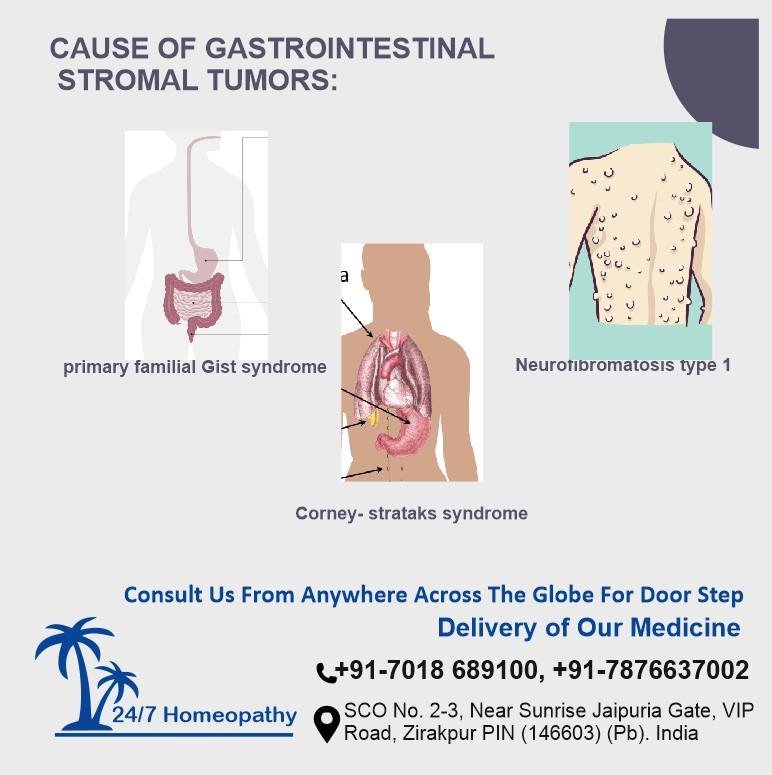
Causes and Risk Factors of Gastrointestinal Stromal Tumors
GISTs are associated with genetic changes or mutations that affect how certain cells grow.
According to the doctor’s original content, mutations involving the KIT gene are found in many cases of GIST. A smaller number of cases are associated with changes in the PDGFRA gene. Other genetic changes can also contribute to the development of these tumors.
These mutations may occur sporadically or, less commonly, as part of an inherited condition.
Risk Factors
Factors associated with a higher risk include:
- Age: GISTs are more commonly diagnosed in adults, particularly between approximately 40 and 70 years.
- Family history of GIST
- Primary familial GIST syndrome
- Neurofibromatosis type 1 (NF1)
- Carney-Stratakis syndrome
Having a risk factor does not mean that a person will definitely develop a gastrointestinal stromal tumor.
Diagnosis of Gastrointestinal Stromal Tumors
Doctors may use several investigations to identify a gastrointestinal stromal tumor, determine its location and assess its characteristics.
Physical Examination and Medical History
The doctor may examine the abdomen and ask about symptoms, previous illnesses and family history.
Imaging and Other Investigations
The doctor’s original content includes:
- X-ray
- Endoscopy
- CT scan
- MRI
- Barium swallow
- Enteroclysis
- Barium enema for selected colorectal or rectal investigations
- PET scan
The specific tests required depend on the patient’s symptoms and suspected location of the tumor.
Biopsy
A biopsy may be performed to obtain tissue for examination.
The doctor’s content includes:
- Needle biopsy
- Laparoscopy
Tissue examination can help doctors identify the type of tumor and determine important characteristics.
Immunohistochemistry
Immunohistochemistry may be performed on tumor tissue to identify specific markers that help confirm a GIST diagnosis.
Molecular Genetic Testing
Molecular testing may identify genetic changes such as mutations involving KIT or PDGFRA, which can be important in understanding the tumor and planning appropriate medical treatment.
Blood Tests
The doctor’s original content includes:
- Complete blood count (CBC)
- Liver function tests
A CBC may help identify anemia or other blood abnormalities, particularly when gastrointestinal bleeding is present.
Precautions and Lifestyle Tips
There is no specific lifestyle measure proven to prevent all gastrointestinal stromal tumors, particularly because many GISTs are associated with genetic changes.
However, maintaining general health can support overall wellbeing.
The doctor’s original recommendations include:
- Maintain a healthy lifestyle.
- Avoid excessive alcohol intake.
- Maintain a healthy body weight.
- Eat fresh and nutritious foods.
- Exercise regularly according to your health condition.
- Drink adequate water.
- Take appropriate care of your overall health.
If there is a family history of GIST or a known genetic syndrome, discuss appropriate medical monitoring and genetic evaluation with a qualified healthcare professional.
Homeopathic Treatment Approach for Gastrointestinal Stromal Tumors
At 247 Homeopathy, Zirakpur, homeopathic consultation is individualized according to the patient’s symptoms, medical history and overall condition.
The following remedies are included in Dr. Ruchi’s original homeopathic treatment section. Their selection is based on the individual symptom pattern rather than simply the diagnosis of a gastrointestinal stromal tumor.
Arsenicum Album
The doctor’s original indications include:
- Swollen and painful abdomen
- Enlarged and painful liver and spleen
- Sore and tender epigastric region
- Nausea, vomiting and retching after eating or drinking
- Heartburn
- Belching and gulping up acrid substances
- Induration or hardness of the stomach
- Weakness and easy exhaustion
- Fatigue and anemia
- Loss of appetite
- Weight loss
- Small, offensive, dark stools with marked weakness
- High-grade fever
Phosphorus
The doctor’s original indications include:
- A very weak or empty sensation throughout the abdomen
- Sharp, cutting abdominal pain
- Great weakness after passing stool
- Blood discharge from the rectum with stool
- Sour taste and sour eructation after meals
- A constricted sensation around the cardiac opening of the stomach
- Stomach pain and tenderness
- Nausea and vomiting
- Fever with profuse perspiration
- Weakness and fatigue
- Numbness in the arms and hands
Nux Vomica
The doctor’s original indications include:
- Sour taste
- Morning nausea, particularly after eating
- Flatulent abdominal distension with spasmodic colic
- Liver enlargement or engorgement with stitching pain and soreness
- Epigastric bloating with pressure as if from a stone
- Difficulty belching gas
- Bruised soreness of the abdominal wall
- Weakness
- Sensation of the arms and hands going to sleep
- Sudden loss of power in the legs and arms
- Fever with dry heat of the body
Frequently Asked Questions
Can a GIST cause a lump in the abdomen?
Yes. A larger gastrointestinal stromal tumor (GIST) may sometimes cause a noticeable abdominal lump or swelling. However, many abdominal lumps have other causes, so a new or unexplained lump should be medically evaluated.
Can a GIST cause constipation?
It can. Depending on its size and location, a GIST may put pressure on nearby parts of the digestive tract and contribute to changes in bowel habits, including constipation. Persistent or worsening constipation should be discussed with a healthcare professional.
Can a GIST cause severe abdominal pain?
Yes. A GIST can cause abdominal pain, and the pain may become significant if the tumor grows or causes complications such as bleeding or obstruction. Severe or sudden abdominal pain requires prompt medical assessment.
Can a GIST cause vomiting?
Yes. A GIST can sometimes cause nausea or vomiting, particularly if its location or size interferes with the normal movement of food through the gastrointestinal tract. Repeated vomiting or difficulty keeping food or fluids down should be evaluated promptly.
Can a GIST spread to other parts of the body?
Some GISTs can spread to other parts of the body, particularly to the liver or the lining of the abdomen. The risk of spread varies according to features such as tumor size, location and other pathological characteristics.
Can a GIST come back after treatment?
Yes. GIST can recur after treatment in some people. The likelihood of recurrence depends on factors such as the tumor’s size, location, mitotic activity and other risk features. Regular follow-up recommended by the treating specialist is important.
Consult 247 Homeopathy in Zirakpur
If you or a family member has been diagnosed with a gastrointestinal stromal tumor and you are considering complementary homeopathic consultation, you can consult Dr. Ruchi at 247 Homeopathy, Zirakpur, Punjab.
The consultation can be personalized according to the patient’s symptoms, medical history, investigation reports and overall condition.
247 Homeopathy also provides consultation options for patients who cannot visit the clinic in person.
If you have persistent abdominal pain, unexplained weight loss, repeated vomiting, blood in vomit or stool, or symptoms of significant anemia or weakness, seek appropriate medical evaluation promptly.


