CRANIAPHARYNGIOMA
Craniopharyngioma is a rare brain tumor that develops near the pituitary gland and hypothalamus, areas involved in important functions such as hormone regulation, growth, metabolism and other body processes.
It is generally a slow-growing tumor and is usually considered benign, meaning it does not typically behave like an aggressive cancer that spreads to distant parts of the body. However, because of its location near important structures of the brain, even a slow-growing craniopharyngioma can cause significant symptoms.
Craniopharyngioma can occur at different ages but is commonly diagnosed in children. The symptoms may involve vision, hormones, growth, headaches and general well-being.
What is Craniopharyngioma?
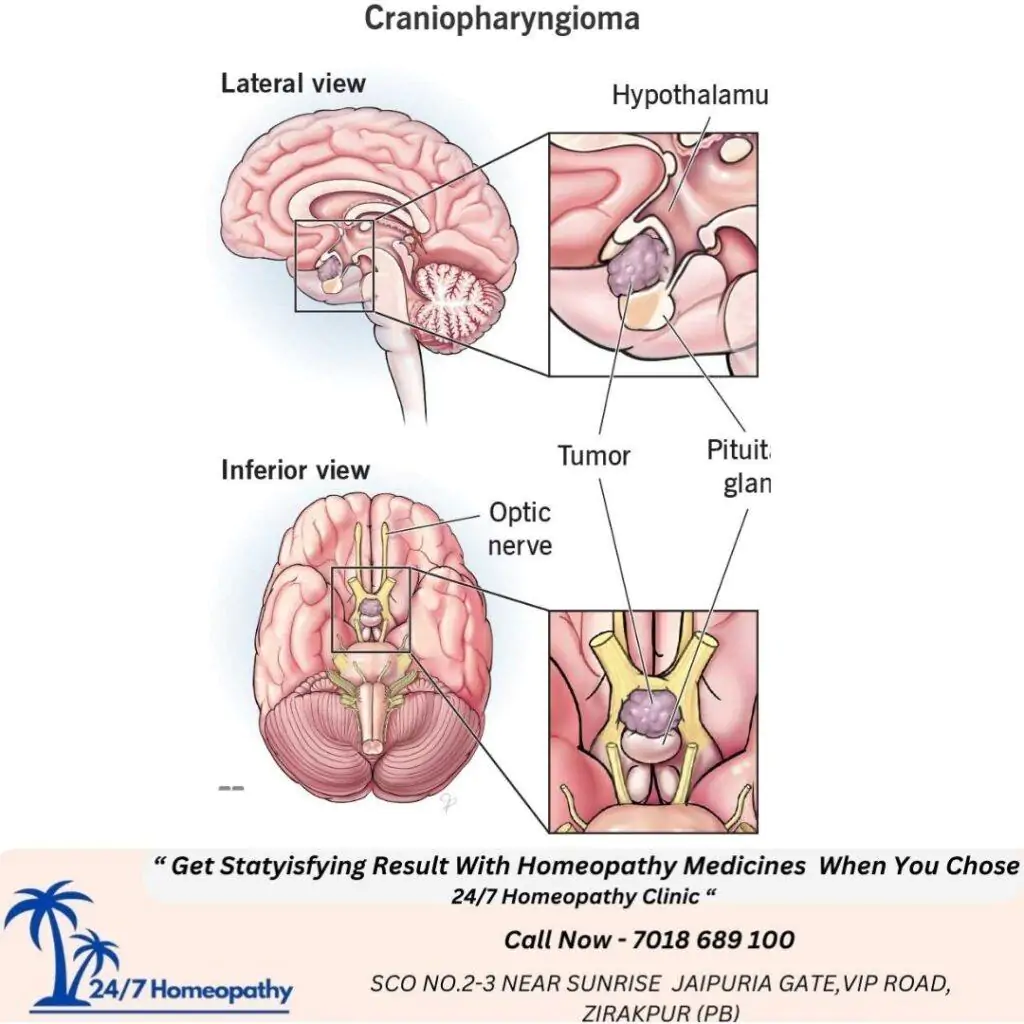
Craniopharyngioma develops in the region of the pituitary gland and hypothalamus.
The tumor can grow close to the optic nerves, pituitary gland and other important brain structures. As it enlarges, it may put pressure on nearby tissues and interfere with their normal function.
Although craniopharyngioma is generally slow-growing, its location means that medical evaluation and appropriate follow-up are important.
The original information provided describes craniopharyngioma as being more commonly found in children between 5 and 14 years of age.

Causes of Craniopharyngioma
The exact cause of craniopharyngioma is not fully understood.
The original information suggests that abnormal changes in cells in the region of the pituitary gland may cause these cells to multiply and grow, eventually forming a tumor.
In some cases, genetic changes have been identified. The provided information mentions mutations involving CTNNB1 or APC genes.
However, having a genetic mutation does not necessarily mean that a person will develop a tumor, and the exact factors responsible for most cases remain unclear.
Symptoms of Craniopharyngioma
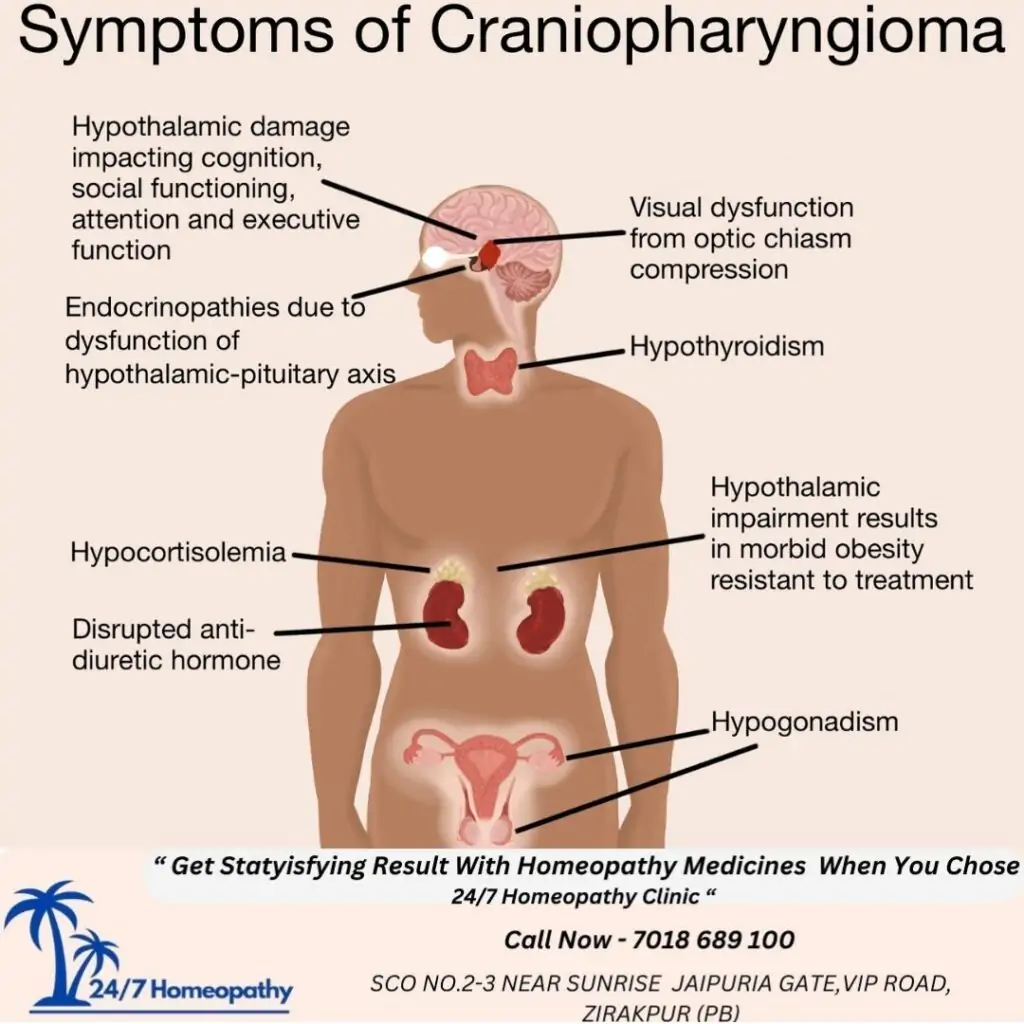
Symptoms can vary depending on the size and location of the tumor and the structures it affects.
Vision Changes
Gradual changes in vision can occur when the tumor puts pressure on the optic nerves or nearby visual pathways.
A child or adult may notice:
- Blurred or reduced vision
- Difficulty seeing clearly
- Progressive changes in eyesight
Any unexplained or progressive vision change should be medically evaluated.
Headache
Headaches may occur as the tumor grows or affects surrounding brain structures.
Nausea and Vomiting
Some patients may experience nausea or vomiting, particularly when the tumor affects pressure or structures within the brain.
Fatigue
Persistent tiredness or reduced energy may occur, particularly when hormonal function is affected.
Hormonal Problems
Because craniopharyngioma develops near the pituitary gland and hypothalamus, it can interfere with hormone production and regulation.
Possible effects include:
- Reduced growth or short stature in children
- Delayed puberty
- Unexplained weight gain
- Fatigue
- Increased sensitivity to heat or cold
- Other hormonal disturbances
Sleep Problems
Changes involving the hypothalamus can contribute to sleep disturbances or inadequate sleep.
Diagnosis of Craniopharyngioma
Diagnosis generally involves a combination of clinical assessment, imaging and hormonal evaluation.
Physical Examination
A doctor may assess symptoms, neurological function, growth patterns and general health.
MRI
Magnetic resonance imaging (MRI) provides detailed images of the brain and can help identify the location and characteristics of the tumor.
CT Scan
A CT scan can provide additional information about the tumor and surrounding structures.
Hormone Testing
Because the tumor is located near the pituitary gland and hypothalamus, blood tests may be performed to assess hormone levels.
These tests can help identify hormonal deficiencies or other abnormalities.
Biopsy
In selected cases, examination of tumor tissue may be required to establish or confirm the diagnosis.
The exact diagnostic approach depends on the patient’s symptoms, age, imaging findings and specialist assessment.
CRANIAPHARYNGIOMA HOMOEOPATHIC TREATMENT:
Precautions and Healthy Lifestyle Measures
There are no established lifestyle measures that can reliably prevent craniopharyngioma from developing.
However, the original information recommends measures that support overall health:
- Eat a balanced diet with fruits and vegetables.
- Maintain a healthy body weight.
- Drink adequate water.
- Manage stress.
- Avoid smoking.
- Avoid excessive alcohol intake.
- Follow regular medical checkups when advised.
- Follow recommended monitoring for vision, growth and hormonal changes.
Lifestyle measures can support general well-being but should not be considered a method to prevent or cure craniopharyngioma.
Children with unexplained growth problems, delayed puberty, persistent headaches or progressive vision changes should be assessed by an appropriate healthcare professional.
Homeopathic Treatment Approach for Craniopharyngioma
At 247 Homeopathy, the homeopathic approach is considered according to the patient’s individual symptoms, medical history and overall health.
The remedies mentioned in Dr. Ruchi’s original notes include Bryta Carb, Conium Maculatum and Kali Iodide.
Bryta Carb
The provided notes mention:
- Delayed growth and development or short stature
- Confusion and memory difficulties
- Puffy and pale facial appearance
- Difficulty hearing
- Frequent nosebleeds
- Vertigo
- A sensation involving the brain described in the original notes
- Weakness of the spine
- Weakness or numbness of the limbs
- Joint pain
Conium Maculatum
The provided notes mention:
- Vertigo when lying down or turning over in bed
- Stupefying headache with nausea and vomiting
- Sensation of a foreign body under the skull
- Dim or defective vision
- Difficulty hearing
- Easy nosebleeds
- Dull aching pain in the lumbar and sacral regions
- Muscular weakness
- Heavy or tired extremities
- Trembling
- Numbness of the fingers and toes
Kali Iodide
The provided notes mention:
- Severe headache
- A sensation of swelling or pressure involving the skull
- Sensation described as enlargement of the brain
- Noises in the ears
- Bony growths involving the orbit
- Severe bone pain
- Pain in the lumbosacral region and coccyx
- Weakness and fatigue
- Irritability
- Head congestion, heat and throbbing
Frequently Asked Questions
Can craniopharyngioma cause excessive thirst or urination?
Yes. A craniopharyngioma can affect the hypothalamus or pituitary region and may lead to diabetes insipidus, which can cause marked thirst and frequent urination.
Can craniopharyngioma cause memory or concentration problems?
Yes. Depending on its size and location, a craniopharyngioma may affect cognitive functions such as memory, concentration or learning. New or worsening changes should be evaluated by a healthcare professional.
Can craniopharyngioma cause changes in behavior or mood?
Changes in mood, behavior or emotional regulation can occur when a tumor affects nearby brain structures or hormone function. These symptoms can have many other causes and require appropriate assessment.
Can craniopharyngioma cause obesity or rapid weight gain?
Yes. Some people may develop significant weight gain or obesity because the tumor or its treatment can affect the hypothalamus, which helps regulate appetite and energy balance.
Can craniopharyngioma cause early or delayed puberty?
Yes. Because craniopharyngiomas can affect the pituitary gland and hormone pathways, they may lead to delayed puberty or, in some cases, abnormal timing of puberty.
Can craniopharyngioma come back after treatment?
Yes. Craniopharyngioma can
Consultation at 247 Homeopathy, Zirakpur
If you are looking for a homeopathic consultation regarding craniopharyngioma or related symptoms, 247 Homeopathy with Dr. Ruchi in Zirakpur, Punjab, provides individualized consultations based on the patient’s symptoms and health history.
Patients or parents can discuss symptoms, previous investigation reports, current medicines and ongoing medical treatment during consultation.
Any complementary homeopathic approach should be discussed with the treating specialists and should not delay recommended medical care.