Amenorrhea
Amenorrhea is the medical term for the absence of menstrual periods. While missing a period occasionally may not always indicate a health problem, the absence of menstruation for several months should be medically evaluated, especially if pregnancy has been ruled out.
Amenorrhea can occur naturally during pregnancy, breastfeeding, and menopause, but when it occurs outside these situations, it may indicate an underlying hormonal, reproductive, or medical condition that requires attention.
Early diagnosis can help identify the underlying cause and guide appropriate treatment. At 247 Homeopathy, Dr. Ruchi provides individualized homeopathic consultations as a complementary approach to support women’s reproductive health alongside conventional medical evaluation and treatment when needed.
What is Amenorrhea?
Amenorrhea refers to the absence of menstrual periods in girls or women of reproductive age.
During a normal menstrual cycle:
- The hypothalamus signals the pituitary gland.
- The pituitary gland releases hormones that stimulate the ovaries.
- The ovaries produce estrogen and progesterone and release an egg (ovulation).
- If pregnancy does not occur, the uterine lining sheds as a menstrual period.
Disruption at any stage of this hormonal process can result in amenorrhea.
Missing periods for more than three months (when pregnancy is excluded) should be evaluated by a healthcare professional.
Types of Amenorrhea
Primary Amenorrhea
Primary amenorrhea occurs when:
- A girl has not started menstruating by age 15, despite normal growth and secondary sexual characteristics, or
- Menstruation has not begun within approximately three years of breast development.
Possible causes include:
- Genetic or chromosomal conditions
- Congenital abnormalities of the reproductive organs
- Hormonal disorders affecting puberty
- Ovarian disorders
- Pituitary or hypothalamic conditions
Secondary Amenorrhea
Secondary amenorrhea occurs when a woman who previously had regular menstrual cycles does not have a period for three consecutive months or longer.
Common causes include:
- Pregnancy
- Breastfeeding (lactational amenorrhea)
- Menopause
- Hormonal contraceptives
- Polycystic Ovary Syndrome (PCOS)
- Thyroid disorders
- Excessive exercise
- Significant weight loss
- Stress
- Chronic medical conditions
- Certain medications
Causes and Risk Factors
Several medical and lifestyle factors may contribute to amenorrhea.
Risk factors include:
- Pregnancy
- Breastfeeding
- Menopause
- Polycystic Ovary Syndrome (PCOS)
- Thyroid disorders
- Premature ovarian insufficiency
- Pituitary gland disorders
- Chronic illnesses
- Eating disorders
- Poor nutrition
- Obesity
- Excessive physical exercise
- Emotional stress
- Certain medications
- Ovarian tumors (rare)
Symptoms of Amenorrhea
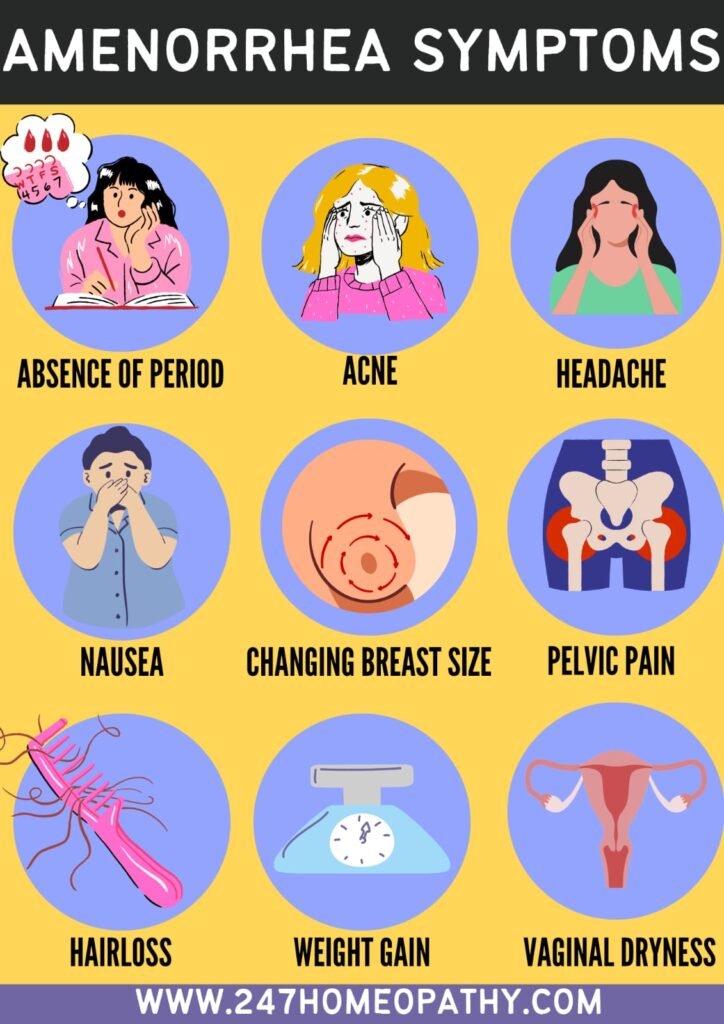
The primary symptom is the absence of menstrual periods. Depending on the underlying cause, other symptoms may occur.Common symptoms include:- Missed menstrual periods
- Pelvic pain
- Weight gain or unexplained weight changes
- Hair loss
- Excess facial or body hair (hirsutism)
- Acne
- Breast size changes
- Vaginal dryness
- Headaches
- Mood swings
- Irritability
- Nausea
- Difficulty becoming pregnant (in some cases)
When Should You See a Doctor?
You should seek medical evaluation if:- Your periods stop for three months or more and you are not pregnant.
- You have never had a menstrual period by age 15.
- You experience severe pelvic pain.
- You notice abnormal nipple discharge.
- You develop excessive facial hair or voice changes.
- You have sudden weight changes along with missed periods.
Diagnosis
Diagnosis focuses on identifying the reason for absent menstrual periods.Your doctor may recommend:Medical History and Physical Examination
This includes:- Menstrual history
- Pregnancy history
- Medication history
- Family history
- Lifestyle assessment
- Pelvic examination when appropriate
Laboratory Tests
Depending on symptoms, tests may include:- Pregnancy test
- Thyroid function tests (TSH)
- Follicle-Stimulating Hormone (FSH)
- Luteinizing Hormone (LH)
- Estrogen levels
- Prolactin levels
- Testosterone and androgen levels (especially if PCOS is suspected)
Imaging
- Pelvic ultrasound (USG)
- MRI of the pituitary gland (if indicated)
Conventional Treatment
Treatment depends entirely on the underlying cause.Management may include:- Hormonal therapy
- Treatment of thyroid disorders
- PCOS management
- Nutritional counseling
- Weight management
- Stress reduction
- Fertility treatment when required
- Surgery for structural abnormalities (selected cases)
Precautions and Lifestyle Tips
Healthy lifestyle measures can support menstrual health.Helpful recommendations include:
- Maintain a healthy body weight.
- Eat a balanced diet rich in iron, calcium, protein, and vitamins.
- Exercise regularly but avoid excessive physical training.
- Manage stress through relaxation techniques.
- Sleep 7–9 hours daily.
- Track your menstrual cycle.
- Stay well hydrated.
- Avoid smoking and excessive alcohol consumption.
- Ensure adequate calcium and vitamin D intake for bone health.
- Attend regular gynecological check-ups.
Homeopathic Treatment Approach
Amenorrhea is a symptom rather than a disease itself, and successful management depends on identifying its underlying cause. Homeopathy should not replace appropriate medical evaluation, especially when amenorrhea is associated with pregnancy, hormonal disorders, significant weight changes, or other medical conditions.At 247 Homeopathy, Dr. Ruchi provides individualized homeopathic consultations after carefully assessing each patient’s:- Menstrual history
- Hormonal profile
- Physical symptoms
- Emotional well-being
- Lifestyle
- Medical and family history
Frequently Asked Questions (FAQs)
What is amenorrhea?
Amenorrhea is the absence of menstrual periods in a girl or woman of reproductive age.Is missing one period normal?
Yes. A missed period may occur due to stress, illness, travel, or hormonal changes. However, if periods are absent for three months or longer, medical evaluation is recommended.Can stress cause amenorrhea?
Yes. Significant emotional or physical stress can disrupt hormonal signals that regulate the menstrual cycle and lead to temporary amenorrhea.Can PCOS cause amenorrhea?
Yes. Polycystic Ovary Syndrome (PCOS) is one of the most common causes of irregular or absent menstrual periods.Can amenorrhea affect fertility?
Depending on the underlying cause, amenorrhea may affect ovulation and fertility. Many causes are treatable, so early evaluation is important.Can homeopathy cure amenorrhea?
There is no scientific evidence that homeopathy can cure all causes of amenorrhea. Homeopathy may be used as a complementary, individualized approach to support overall well-being while appropriate medical diagnosis and treatment address the underlying cause.Consult Dr. Ruchi at 247 Homeopathy, Zirakpur
If you are experiencing missed periods, irregular menstrual cycles, or symptoms related to amenorrhea, timely evaluation is important to identify the underlying cause and begin appropriate management.At 247 Homeopathy, Dr. Ruchi offers personalized homeopathic consultations that complement conventional gynecological care. Each treatment plan is individualized based on your menstrual history, hormonal profile, symptoms, lifestyle, and overall health.Whether you are in Zirakpur, Chandigarh, Mohali, Panchkula, or another location in India or abroad, consultations are available in person and online, with medicine delivery available where appropriate.Book your consultation today to receive compassionate, individualized support for your menstrual health.


