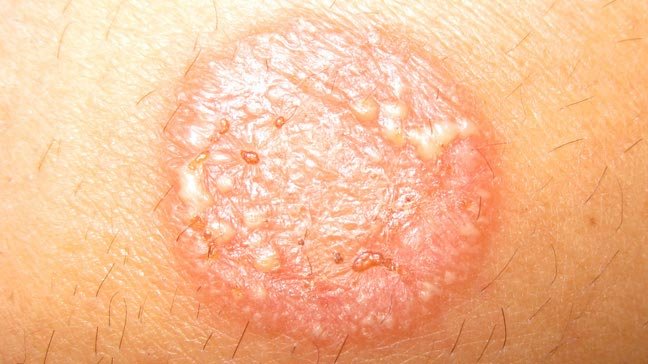
RINGWORM
Ringworm is a common fungal infection of the skin, medically known as tinea corporis when it affects the body. Despite its name, ringworm is not caused by a worm.
It often appears as an itchy, circular or ring-shaped rash with clearer skin in the centre. The infection can occur on different parts of the body and may spread through contact with an infected person, animal or contaminated personal items.
Mild cases of ringworm are commonly treated with antifungal medicines applied to the skin. More extensive or persistent infections may require prescription antifungal treatment.
At 247 Homeopathy in Zirakpur, Dr. Ruchi provides individualized consultations for patients seeking supportive homeopathic care for recurrent or persistent skin complaints.
What Is a Ringworm?
Ringworm is a contagious infection caused by dermatophytes, a group of fungi that grow on keratin-rich tissues such as the outer layer of the skin, hair and nails.
Different forms of this fungal infection include:
- Tinea corporis: Ringworm of the body
- Tinea pedis: Athlete’s foot
- Tinea cruris: Jock itch
- Tinea capitis: Ringworm of the scalp
Ringworm can affect people of all ages.
Ringworm Symptoms
The appearance of ringworm can vary depending on the affected area and the person’s skin tone.
Common signs and symptoms include:
- Itchy, circular or ring-shaped patches
- Scaly or dry skin
- Slightly raised edges of the rash
- Clearer or less affected skin in the centre
- Red, brown, grey, purple or reddish areas depending on skin tone
- Small bumps around the edge of the affected area
- Gradual expansion of the ring-shaped rash
- Multiple or overlapping rings
- Burning or irritation in some cases
Ringworm commonly affects the trunk, arms, legs and buttocks, although it can occur elsewhere.
What Causes Ringworm?
Ringworm is caused by fungal organisms called dermatophytes.
How Does Ringworm Spread?
Ringworm can spread through:
Person to person:
Direct skin-to-skin contact with an infected person can transmit the fungus.
Animal to person:
Dogs, cats and other animals can sometimes carry ringworm. Touching or grooming an infected animal may result in transmission.
Contaminated objects:
The infection can spread through shared clothing, towels, bedding, combs, brushes and other personal items.
Contaminated surfaces or soil:
Less commonly, infection may occur through contact with contaminated soil or surfaces.
Because ringworm is contagious, treating the infection and avoiding transmission to others are both important.
Risk Factors for Ringworm
Your risk may be higher if you:
- Live in or spend considerable time in a warm, humid environment
- Have close contact with an infected person or animal
- Share towels, clothing or bedding
- Participate in contact sports such as wrestling
- Wear tight or restrictive clothing for long periods
- Sweat excessively
- Have a weakened immune system
- Spend time in shared environments such as gyms, locker rooms or sports facilities
Ringworm Diagnosis
A healthcare professional can often identify ringworm by examining the appearance of the rash.
If the diagnosis is uncertain or the infection is persistent, additional testing may be recommended, such as:
- Examination of skin scrapings under a microscope
- Fungal culture
- Other laboratory testing when required
A proper diagnosis is important because several skin conditions can look similar to ringworm but require different treatments.
Ringworm Treatment and Management
Treatment depends on the location and severity of the infection.
Common medical treatment may include topical antifungal medicines for limited skin infections. More widespread, recurrent or difficult-to-treat infections may require oral antifungal medicines prescribed by a healthcare professional.
To support recovery:
- Keep the affected area clean and dry.
- Avoid scratching the rash.
- Wash hands after touching the affected area.
- Do not share towels, clothes, bedding or personal items.
- Wash clothing, towels and bedding regularly.
- Keep sports equipment and shared areas clean.
- If a pet appears to have a fungal skin infection, have it examined by a veterinarian.
- Complete the recommended antifungal treatment even if the rash starts improving.
Do not use steroid-containing creams on a suspected fungal infection without medical advice, as steroids can sometimes alter the appearance of ringworm and allow the fungal infection to worsen.
How Can Ringworm Be Prevented?
Good hygiene and avoiding contact with infected sources can reduce the risk.
- Wash your hands regularly.
- Keep the skin clean and dry.
- Change sweaty clothes promptly.
- Avoid sharing towels, clothing, combs and sports equipment.
- Wear appropriate footwear in shared showers and locker rooms.
- Shower after contact sports.
- Keep shared gym and sports areas clean.
- Avoid close contact with an infected person until appropriate treatment has started.
- Have pets checked if they develop suspicious hair loss or skin lesions.
Possible Complications
Ringworm usually remains limited to the skin and can be treated successfully. However, persistent scratching can damage the skin and may lead to a secondary bacterial infection.
People with weakened immune systems may have more extensive or persistent fungal infections and should seek medical advice promptly.
Homeopathic Management for Ringworm
At 247 Homeopathy, Zirakpur, homeopathic care is individualized according to the patient’s symptoms, skin appearance, recurrence pattern and other relevant factors.
The following remedies were included in the doctor’s original treatment notes. They are presented as traditional homeopathic indications, not as proven antifungal treatments.
Dulcamara
Traditionally considered when ringworm-like eruptions appear in clusters, with redness and scaling. The original notes particularly describe grouped eruptions that may bleed.
Mercurius Solubilis
Traditionally considered when eruptions are associated with burning or irritating sensations, scaling and possible discharge.
Sepia
Traditionally used in some homeopathic approaches for recurrent ringworm-like eruptions, particularly when symptoms follow a recurring seasonal pattern.
Frequently Asked Questions About Ringworm
What does ringworm look like on the skin?
Ringworm often causes a red, itchy, scaly rash that may have a ring-like appearance with clearer skin toward the center. Its appearance can vary depending on the affected body area.
Can ringworm cause itching?
Yes. Itching is a common symptom of ringworm, although the degree of itching can vary. Persistent or worsening itching with a spreading rash should be evaluated.
Can ringworm spread to other parts of the body?
Yes. Ringworm can spread to other areas of the skin, particularly through scratching or contact with infected skin or contaminated items.
Can pets give humans ringworm?
Yes. Infected cats, dogs, and other animals can sometimes transmit ringworm to people through direct contact. Pets with suspicious skin or hair changes should be assessed by a veterinarian.
Can ringworm affect the scalp or nails?
Yes. Fungal infections related to ringworm can affect the scalp and nails. These infections may require medical evaluation and treatment because they can be more difficult to manage than infections limited to the skin.
Can ringworm cause hair loss?
Yes. Ringworm affecting the scalp can cause areas of hair loss along with scaling, itching, or other scalp changes. Hair loss or a scaly scalp rash should be evaluated by a healthcare professional.
Ringworm Treatment in Zirakpur – 247 Homeopathy
If you are experiencing a recurrent or persistent fungal skin complaint, 247 Homeopathy in Zirakpur offers individualized consultations with Dr. Ruchi.
During consultation, your symptoms, medical history and previous treatments can be reviewed to determine an appropriate care approach. Patients can also discuss online consultation options if they are unable to visit the clinic in person.
Book a consultation with Dr. Ruchi at 247 Homeopathy, Zirakpur, to discuss your skin concerns and treatment options.


