DANDRUFF
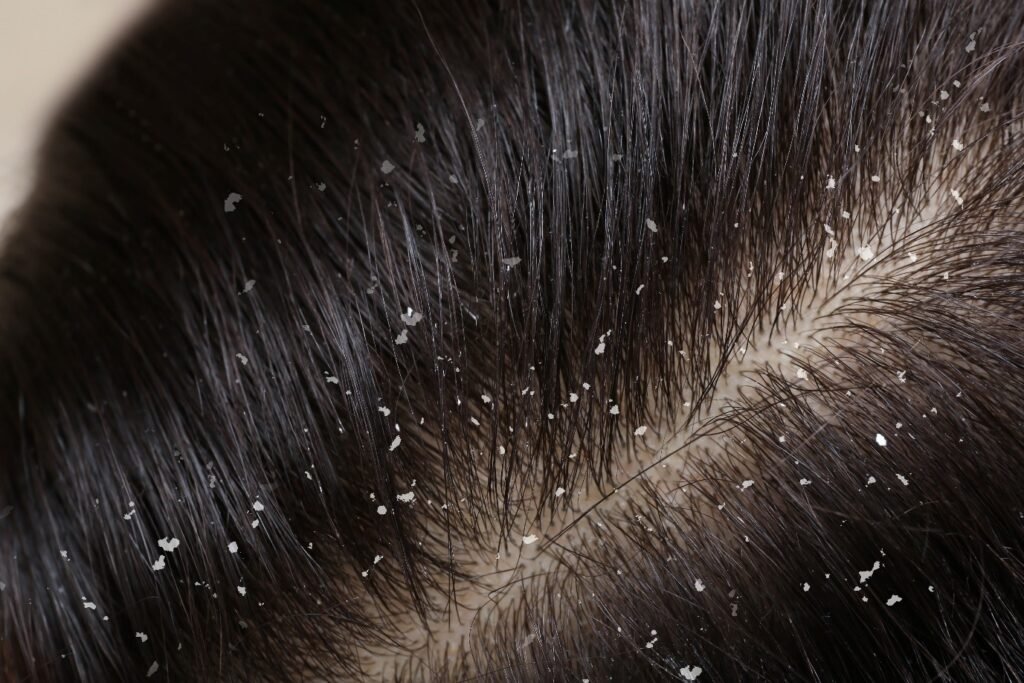
Dandruff is a common scalp condition that causes visible flakes of skin, often accompanied by itching. The flakes may be white, greyish, or sometimes yellowish and greasy.
Dandruff is not usually a serious medical condition, and it is not contagious. It also does not mean that a person has poor hygiene. However, persistent or severe scalp flaking may sometimes be related to another skin condition and may need evaluation.
Dandruff can improve with appropriate scalp care and treatment, but it may return from time to time because it can be a recurring condition.
What Is Dandruff?
Dandruff occurs when the scalp sheds skin cells more noticeably than usual. The exact cause is not always clear, but factors such as scalp oil production, skin-cell turnover, individual susceptibility, and the growth of a yeast called Malassezia can contribute to dandruff.
Dandruff can range from fine, dry flakes to larger, greasy flakes. It may affect only the scalp or occur along with flaking around areas such as the hairline, eyebrows, ears, or sides of the nose.
Unlike some infectious scalp conditions, ordinary dandruff does not spread from one person to another.
What Causes Dandruff?
There is not always one specific cause of dandruff. Several factors may contribute to its development or make it worse.
Malassezia Yeast
Malassezia naturally lives on the skin of many adults. In some people, its activity on the scalp can contribute to irritation and increased shedding of skin cells.
Excess Scalp Oil
Oil produced by the scalp can interact with microorganisms and skin cells, contributing to greasy flakes and scalp irritation.
Individual Skin Sensitivity
Some people are more prone to scalp inflammation and flaking than others. Genetic and environmental factors may influence this tendency.
Cold or Dry Weather
Dandruff can become more noticeable during colder or drier periods of the year. Changes in weather may affect the scalp and aggravate existing symptoms.
Stress
Stress may worsen dandruff or make existing scalp symptoms more noticeable in some people.
Hair and Scalp Products
Certain hair-care products, fragrances, dyes, or styling products can irritate the scalp or cause contact dermatitis, which may resemble or worsen dandruff.
Underlying Skin Conditions
Persistent scalp flaking may sometimes be related to conditions such as:
- Seborrheic dermatitis
- Psoriasis
- Eczema
- Contact dermatitis
- Certain fungal infections
This is why severe, persistent, or unusual scalp scaling should not automatically be assumed to be simple dandruff.
Is Poor Hygiene the Cause of Dandruff?
No. Dandruff is not simply caused by poor hygiene.
Infrequent hair washing may make flakes and oil more visible, but dandruff can occur in people who maintain good scalp hygiene.
Regular washing with a suitable shampoo can help remove excess oil and accumulated skin cells and may reduce visible flaking.
Signs and Symptoms of Dandruff
The most common symptoms include:
- White or greyish flakes on the scalp
- Yellowish or greasy flakes in some cases
- Itchy scalp
- Dry or oily scalp
- Visible flakes on the hair or shoulders
- Scalp irritation or redness
Flaking may sometimes extend beyond the scalp, particularly around:
- Hairline
- Eyebrows
- Ears
- Sides of the nose
- Beard area
- Centre of the chest
If the scalp becomes very red, painful, swollen, develops thick plaques, or produces pus or fluid, another scalp condition may be present and medical assessment is advisable.
Dandruff Risk Factors
Dandruff can affect people of different ages, but some factors may increase the likelihood of developing or worsening it.
Possible risk factors include:
- Oily scalp
- Individual tendency toward dandruff
- Stress
- Cold or dry weather
- Certain skin conditions
- Irritating hair-care products
- Some neurological conditions
- Certain medical conditions that affect immune function
Some people with conditions such as Parkinson’s disease or HIV may have an increased risk of seborrheic dermatitis or related scalp problems. However, these conditions are not ordinary causes of dandruff in otherwise healthy people.
Is Dandruff a Serious Condition?
Ordinary dandruff is usually not dangerous and does not generally cause serious health complications.
However, persistent scalp flaking can sometimes be a sign of another condition, particularly when symptoms are severe or unusual.
See a dermatologist or healthcare professional if:
- Dandruff does not improve with appropriate treatment
- The scalp is very red or swollen
- There is significant pain
- Thick scales or plaques develop
- Hair loss occurs in affected areas
- There are sores, crusting, pus, or bleeding
- Symptoms spread significantly to other parts of the body
- The diagnosis is uncertain
Diagnosis of Dandruff
Dandruff can usually be diagnosed by examining the scalp and reviewing the patient’s symptoms.
A dermatologist may look for:
- Type and appearance of scaling
- Redness or inflammation
- Greasy or dry skin
- Distribution of the flakes
- Signs of another scalp condition
A skin biopsy is not routinely required for ordinary dandruff. It may occasionally be considered when the diagnosis is uncertain or another skin condition needs to be ruled out.
Dandruff Management and Scalp Care
Dandruff can often be controlled with appropriate scalp care.
Use a Suitable Shampoo
Regular washing can help remove excess oil and accumulated skin cells.
If mild dandruff is present, a gentle shampoo may be sufficient for some people.
Consider an Anti-Dandruff Shampoo
When regular shampoo does not control symptoms, an anti-dandruff shampoo containing an appropriate active ingredient may help.
Depending on the product, ingredients may include:
- Ketoconazole
- Zinc pyrithione
- Selenium sulfide
- Salicylic acid
- Coal tar
Follow the product instructions because different shampoos may need to remain on the scalp for a specific amount of time before rinsing.
Avoid Excessive Hair Products
Frequent use of gels, waxes, sprays, and other styling products may contribute to scalp build-up or irritation in some people.
Avoid Scratching
Scratching can further irritate the scalp and may cause small breaks in the skin. Keep nails short and try to avoid repeatedly scratching itchy areas.
Identify Irritating Products
If dandruff-like symptoms began after using a new hair dye, shampoo, conditioner, oil, or styling product, consider whether the product could be causing scalp irritation.
Maintain a Balanced Diet
A balanced diet provides nutrients important for overall skin health. Omega-3 fatty acids are part of a healthy diet, but there is not enough evidence to recommend increasing omega-3 intake specifically as a treatment for dandruff.
Manage Stress
Stress management may be useful because stress can aggravate some inflammatory skin conditions.
Be Careful With Sun Exposure
Short periods of sunlight may sometimes improve certain inflammatory scalp conditions, but deliberate sun exposure is not a recommended primary treatment for dandruff. Excessive ultraviolet exposure increases the risk of skin damage and skin cancer.
If using coal-tar products, follow the product-specific instructions regarding sun exposure.
Homeopathic Treatment Approach for Dandruff
The following remedies are traditionally considered in homeopathic practice:
Badiaga
Badiaga is traditionally considered when the scalp is dry, scaly, and associated with dandruff-like flaking.
Thuja
Thuja is traditionally considered when there is noticeable scalp flaking, dry or brittle hair, and significant itching of the scalp.
Kali Sulphuricum
Kali sulphuricum is traditionally considered for persistent dandruff with yellowish flakes and scalp itching or irritation.
Frequently Asked Questions About Dandruff
1. Can dandruff cause an itchy scalp?
Yes. Itching is a common symptom of dandruff and may become more noticeable when scalp flaking is present. Persistent or severe itching may also occur with other scalp conditions.
2. Can dandruff cause scalp redness?
Mild dandruff may occur without significant redness, but redness can be more noticeable when there is inflammation, such as with seborrheic dermatitis. Persistent or marked redness should be evaluated.
3. Can dandruff cause white flakes on dark clothes?
Yes. Loose scalp flakes can fall onto the hair, shoulders, or clothing and may be particularly noticeable on dark fabrics. The amount of visible flaking can vary between people.
4. Can dandruff affect the eyebrows or beard?
Yes. Dandruff-related conditions, particularly seborrheic dermatitis, can affect areas with oil-producing skin such as the eyebrows, beard, ears, and sides of the nose, in addition to the scalp.
5. Can dandruff cause an oily scalp?
Yes. Dandruff can occur on an oily scalp, and excess scalp oil may contribute to the environment associated with dandruff. Oily scaling may also be seen with seborrhe
Consult 247 Homeopathy in Zirakpur
At 247 Homeopathy, Zirakpur, Punjab, Dr. Ruchi provides individualized homeopathic consultations based on the patient’s symptoms and overall health history.
Patients from Zirakpur and nearby areas can consult the clinic, with online consultation options available where appropriate.


