Coccyx / tailbone pain
Coccyx pain, also known as coccydynia, is pain felt in and around the coccyx, the small triangular bone at the bottom of the spine, just above the cleft of the buttocks. It may develop after an injury, prolonged sitting, childbirth, repetitive strain or sometimes without an obvious cause.
Tailbone pain can range from mild discomfort to sharp or severe pain that makes sitting, standing up or certain daily activities difficult. Understanding the possible cause is important because treatment depends on the underlying problem.
At 247 Homeopathy in Zirakpur, Dr. Ruchi provides individualized consultations for patients experiencing coccyx or tailbone pain. Online consultations are also available for patients in India and worldwide.
What Is Coccyx / Tailbone Pain?
The coccyx is the lowest part of the spine. Although it is small, it provides attachment points for several muscles, ligaments and tendons and contributes to stability when sitting.
Coccydynia refers to pain and tenderness in the coccyx region. The pain may be localized to the tailbone or may spread to the surrounding buttocks and lower back.
Pain may become more noticeable when:
During sexual activity in some people
Sitting for a long time
Sitting on a hard or narrow surface
Leaning backward while sitting
Getting up from a chair
Bending or changing position
Having a bowel movement
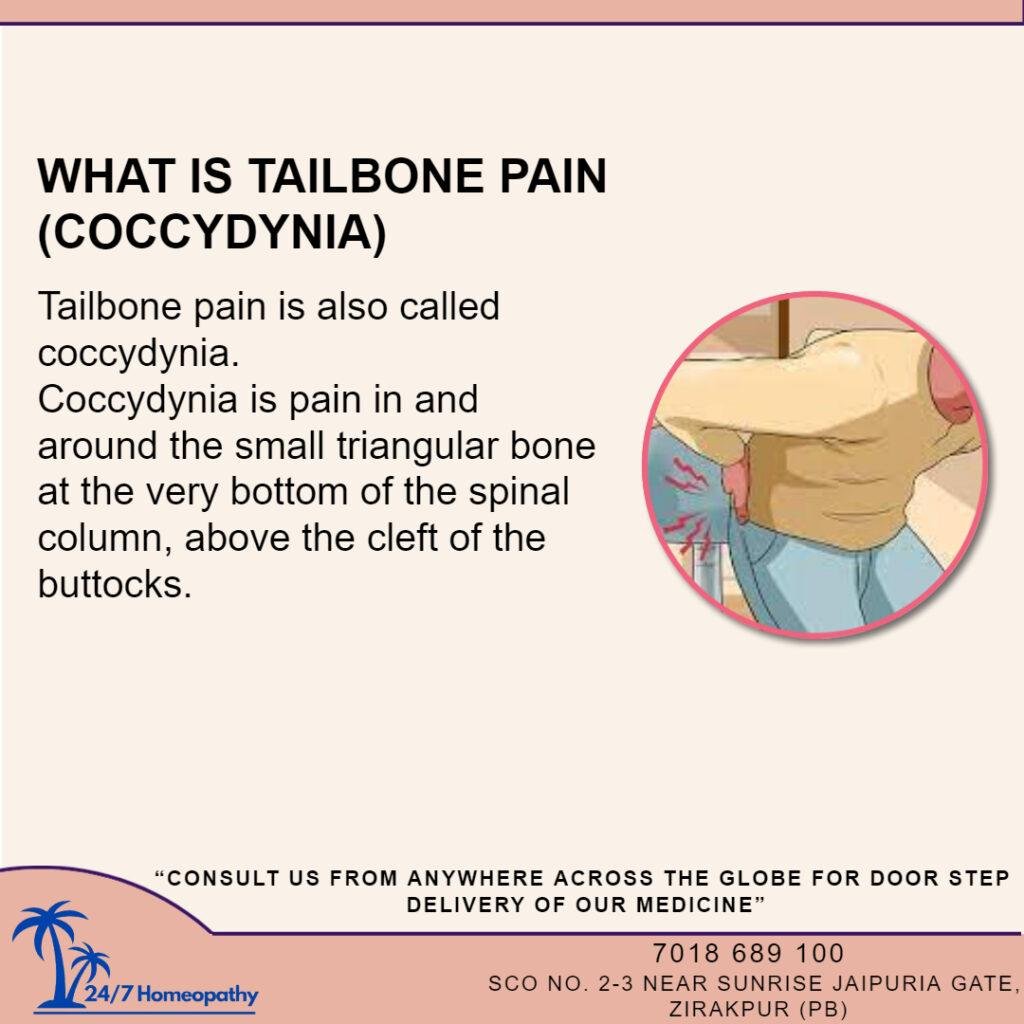
Causes of Coccyx / Tailbone Pain
Several factors can contribute to coccydynia.
1. Injury or External Trauma
A backward fall directly onto the tailbone is a common cause. Depending on the injury, the coccyx or surrounding tissues may become bruised, strained, fractured or displaced.
2. Prolonged Sitting
Sitting for long periods, particularly on a hard or narrow surface, can place repeated pressure on the coccyx and aggravate pain.
3. Repetitive Strain
Activities such as cycling, rowing and other movements that repeatedly place stress on the lower spine and pelvic region may contribute to irritation around the coccyx.
4. Pregnancy and Childbirth
During pregnancy, changes in body weight and posture can increase pressure on the coccyx. During childbirth, movement and stretching of the pelvic structures may sometimes contribute to tailbone pain.
5. Weight Changes
Higher body weight may increase pressure on the coccyx while sitting. Significant or rapid weight loss can also reduce the natural cushioning around the tailbone in some people.
6. Other Causes
Less commonly, coccyx-region pain can be associated with conditions such as infection, an abscess, or a tumour. These causes require appropriate medical assessment.
Sometimes, no specific cause can be identified.
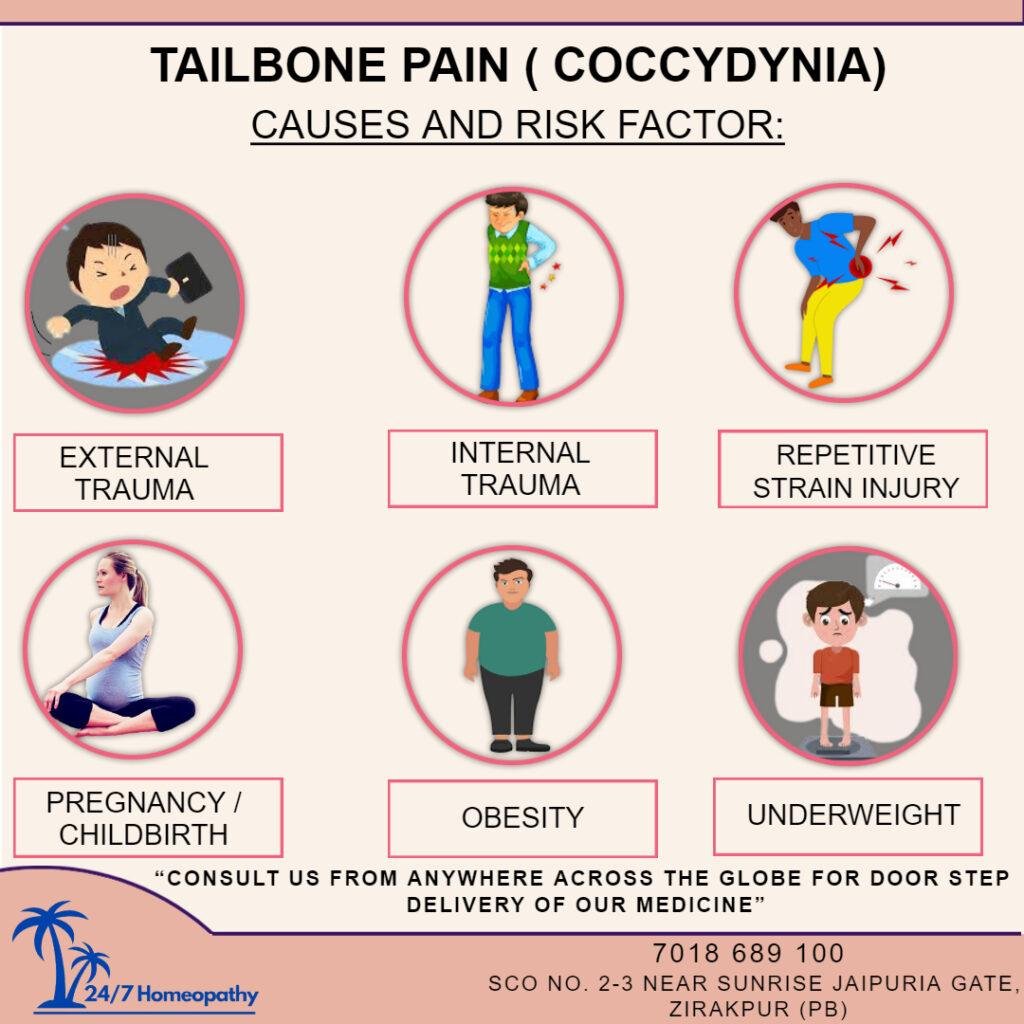
Symptoms of Coccydynia
The symptoms can vary depending on the cause and severity of the condition.
Common symptoms include:
- Aching or sharp pain around the tailbone
- Tenderness when pressure is applied to the coccyx
- Increased pain after prolonged sitting
- Pain when getting up from a sitting position
- Pain while sitting on a hard surface
- Pain during bowel movements
- Pain during sexual activity in some cases
- Pain or discomfort around the buttocks
- Associated lower-back discomfort
- Difficulty finding a comfortable sitting position
Persistent pain may also interfere with sleep, work, exercise and everyday activities. Ongoing pain can affect mood and overall quality of life.
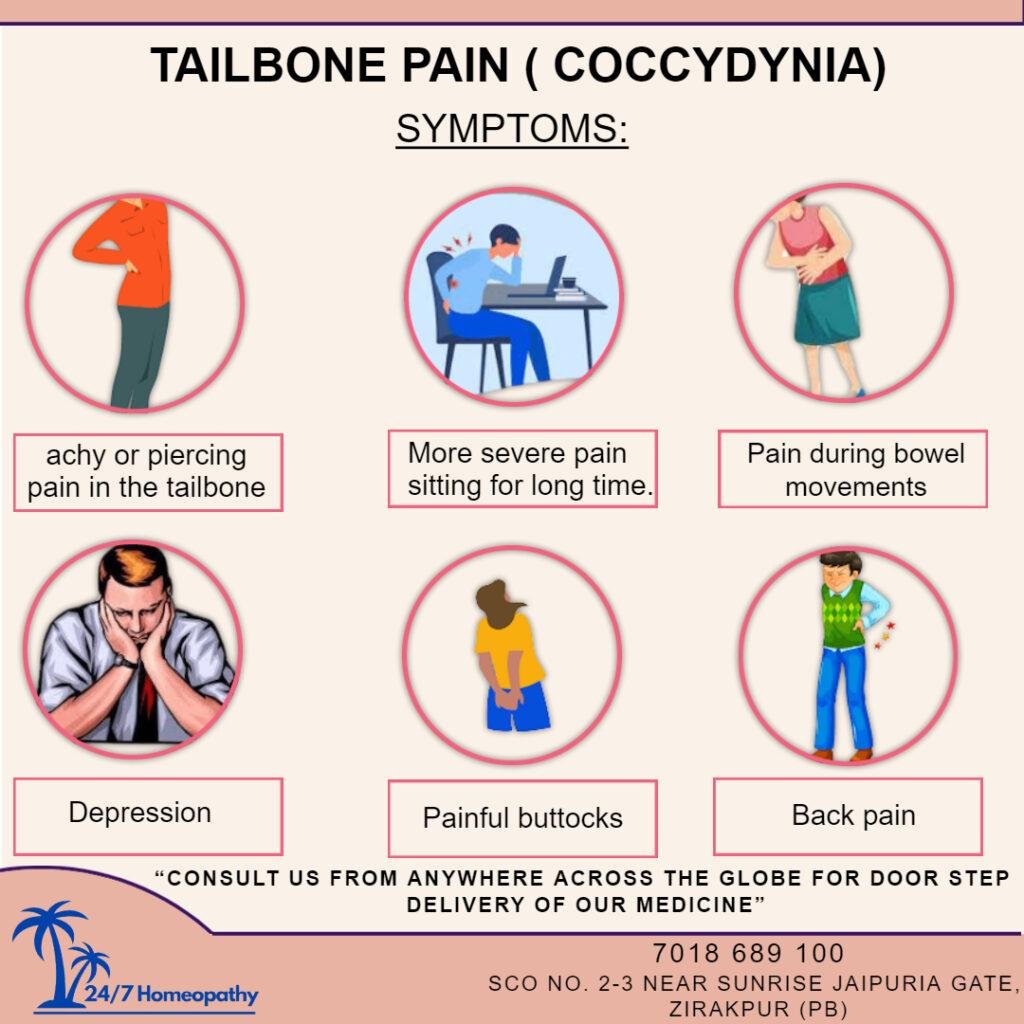
Risk Factors for Coccyx Pain
Your risk of developing tailbone pain may be higher if you have:
- A previous fall or injury to the tailbone
- Activities involving repetitive pressure on the coccyx
- Prolonged sitting
- Pregnancy or recent childbirth
- Higher body weight
- Significant or rapid weight loss
- Poor sitting posture
- Previous problems affecting the lower back or pelvic region
How Is Coccyx Pain Diagnosed?
Diagnosis usually begins with a medical history and physical examination. A healthcare professional may ask about an injury, childbirth, duration of pain, sitting habits, bowel symptoms and other associated symptoms.
Imaging is not necessary for every case of coccyx pain. Depending on the history and examination, a doctor may recommend investigations when an injury, infection, tumour or another underlying condition needs to be evaluated.
Possible investigations include:
- X-ray: May be considered when a bone injury is suspected.
- CT scan: Can provide more detailed images of bones when required.
- MRI: May help assess soft tissues and investigate causes that are not clearly explained by an X-ray.
- Other tests: May be recommended depending on the suspected cause.
The appropriate investigation should be decided by a qualified healthcare professional rather than performed routinely for every patient.
When Should You Seek Medical Attention?
Tailbone pain after a minor injury is often not serious, but persistent or unusual symptoms should be evaluated.
Seek medical attention promptly if coccyx pain is associated with:
- Severe or rapidly worsening pain
- Fever or signs of infection
- Swelling, redness or drainage near the tailbone
- Unexplained weight loss
- A lump or mass near the coccyx
- Significant trauma
- New weakness or numbness in the legs
- Loss of bladder or bowel control
- Persistent pain without an obvious explanation
These symptoms may require investigation for causes other than uncomplicated coccydynia.
Self-Care and Lifestyle Tips for Tailbone Pain
Depending on the cause, some simple measures may help reduce pressure and discomfort around the coccyx.
Reduce Prolonged Sitting
Avoid sitting continuously for long periods. Take regular breaks and change your position when possible.
Use Appropriate Sitting Support
A suitable coccyx cushion may reduce direct pressure on the tailbone while sitting. The type of cushion that works best can vary from person to person.
Avoid Hard Surfaces
Try to avoid prolonged sitting on hard or narrow surfaces, particularly when these clearly worsen your symptoms.
Maintain a Healthy Weight
If excess body weight is contributing to pressure around the coccyx, gradual and sustainable weight management may be beneficial.
Stay Physically Active
Gentle movement can help prevent stiffness. However, activities that clearly aggravate the pain should be reduced until the cause has been assessed.
Follow Medical Advice After an Injury
If your pain started after a fall, accident or childbirth and does not improve, seek an appropriate medical evaluation.
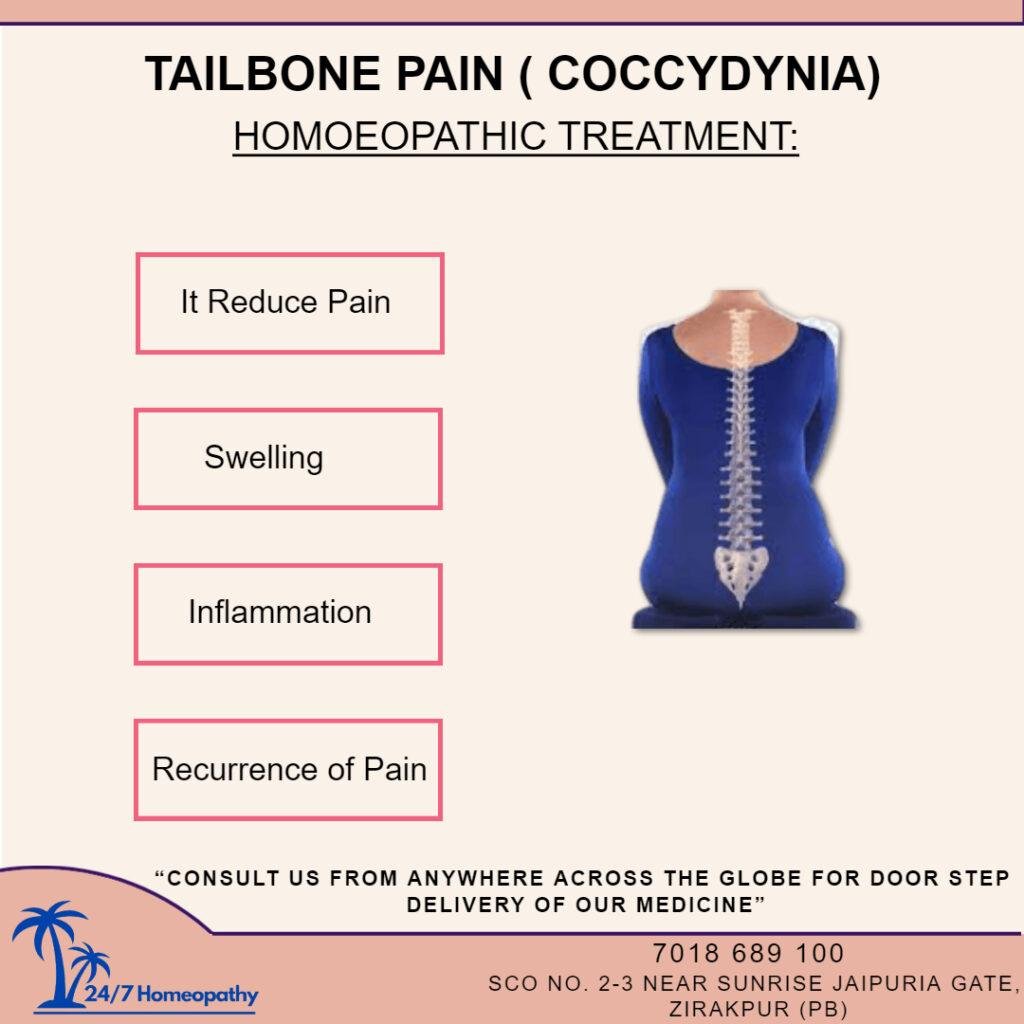
Homeopathic Treatment Approach for Coccyx Pain
At 247 Homeopathy, Zirakpur, Dr. Ruchi takes an individualized approach to patients experiencing coccyx or tailbone pain. The consultation considers factors such as the cause of pain, location and character of the pain, aggravating and relieving factors, previous injury, sitting-related symptoms and the person’s overall health.
Homeopathic medicines are selected according to the individual symptom pattern rather than simply prescribing one medicine for everyone with coccydynia.
Homeopathic Medicines Traditionally Considered by Dr. Ruchi
The following remedies are part of the homeopathic approach traditionally considered for particular symptom patterns. They should not be self-prescribed solely on the basis of a symptom or diagnosis.
Hypericum
Hypericum may be considered in a homeopathic consultation when severe nerve-related pain follows an injury, particularly after a fall involving the coccyx. The pain may be intense and make sitting or movement uncomfortable.
Rhus Toxicodendron
Rhus tox may be considered when coccyx discomfort is associated with stiffness and soreness, particularly following overexertion. Symptoms that improve with continued gentle movement or warmth may be relevant when selecting a remedy.
Ruta
Ruta may be considered when coccyx pain has a bruised or sore character following a blow, fall or mechanical strain. The complete symptom picture is considered before selecting a remedy.
Magnesia Phosphorica
Mag phos may be considered when pain is cramping, shooting or intermittent and is reported to improve with warmth or pressure.
Lachesis
Lachesis may be considered in certain patterns of persistent coccyx pain, particularly when symptoms are prominent while sitting or when getting up from a seated position.
Important: Homeopathic remedies should be selected individually by a qualified practitioner. There is currently limited scientific evidence that homeopathy is effective for treating coccydynia itself. It should not replace appropriate medical evaluation, pain management, physiotherapy, or treatment of an underlying condition when these are indicated.
FAQs About Coccyx / Tailbone Pain
What is the most common cause of tailbone pain?
A fall or direct injury to the coccyx is a common cause. Prolonged sitting, repetitive strain, pregnancy and childbirth can also contribute to tailbone pain.
Why does my tailbone hurt when I sit?
Sitting places pressure on the coccyx. Pain may be more noticeable when sitting for a long time or on a hard or narrow surface, particularly when the tissues around the coccyx are irritated.
How long does coccyx pain take to improve?
Recovery varies depending on the cause and severity. Pain following an injury may take weeks or longer to settle. Persistent, worsening or unexplained pain should be medically evaluated.
Can coccyx pain occur without an injury?
Yes. Coccydynia can sometimes develop without a clear history of trauma. Prolonged sitting, repetitive strain, pregnancy, changes in body weight and other conditions may contribute.
Can coccyx pain cause pain during bowel movements?
Yes. Because the muscles and tissues around the coccyx are involved in pelvic movement, some people experience increased pain during bowel movements.
Should I get an X-ray for tailbone pain?
Not necessarily. Imaging is not routinely required for every case. A doctor may recommend an X-ray or another investigation when the history and examination suggest an injury or another underlying cause.
Can homeopathy help with coccyx pain?
A homeopathic practitioner may offer individualized supportive care based on the person’s symptoms and overall health. However, evidence for homeopathy as a treatment for coccydynia is limited, so persistent or severe pain should receive appropriate medical evaluation and conventional care when indicated.
When should I see a doctor for tailbone pain?
You should seek medical evaluation if the pain is severe, persistent, worsening, follows significant trauma, or occurs with fever, swelling, drainage, unexplained weight loss, neurological symptoms or bladder/bowel changes.
Coccyx Pain Treatment in Zirakpur and Online Worldwide
If you are experiencing persistent coccyx or tailbone pain, an individualized consultation can help identify possible contributing factors and determine whether further medical assessment is appropriate.
247 Homeopathy in Zirakpur, Punjab, provides consultations with Dr. Ruchi for patients from Zirakpur and nearby areas, including Chandigarh, Panchkula, Mohali, Dera Bassi and surrounding regions.
Online consultations are also available for patients across India and worldwide, making it possible to discuss your symptoms remotely when an in-person consultation is not practical.


